Holden: The Rise and Fall of an Australian Automotive Icon
For over a century, the name Holden was synonymous with the Australian spirit. From its humble beginnings as a saddlery business to becoming a national symbol of industrial prowess, Holden shaped the way Australians moved. The brand's journey reflects the broader trajectory of the Australian automotive industry—marked by periods of immense innovation, global expansion, and an eventual struggle against the tide of global economic shifts.
The story begins in 1852 when James Alexander Holden emigrated from England to South Australia. By 1856, he established J. A. Holden & Co., a saddlery business in Adelaide. Over the following decades, the company evolved through various partnerships, eventually becoming Holden & Frost Ltd in 1885. The shift toward the automotive world began in 1908 with minor car upholstery repairs, leading to the production of motorcycle sidecar bodies and vehicle body shells during World War I.
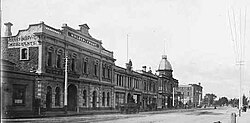
The Path to Domestic Production
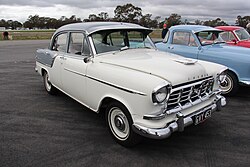
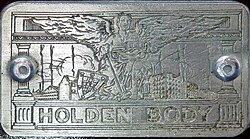
By 1919, Holden's Motor Body Builders Ltd (HMBB) was registered, specializing in car bodies. The company quickly scaled its operations, producing 12,000 units per year by 1923 and becoming the exclusive supplier of car bodies for General Motors (GM) in Australia from 1924. These bodies were fitted to a wide array of imported chassis, including brands like Chevrolet, Buick, and Studebaker.
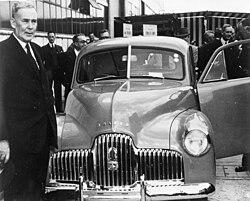
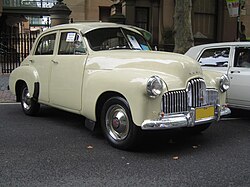
The dream of a truly Australian-designed car materialized after World War II. While the government initially favored a proposal from Ford, GM's plan was selected due to its lower requirement for government intervention. This led to the birth of the Holden 48-215, the company's first wholly domestically produced model, launched on November 29, 1948.
Expanding the Lineup: From Toranas to the Commodore
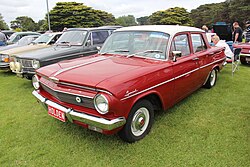
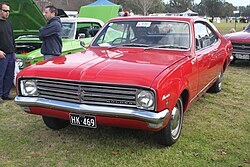
Throughout the 1960s and 70s, Holden diversified its offerings. The Torana, introduced in 1967, became a legendary nameplate, particularly in motor racing at the Mount Panorama Circuit in Bathurst. The Torana range was notable for its engineering flexibility, accommodating four-, six-, and eight-cylinder engines.
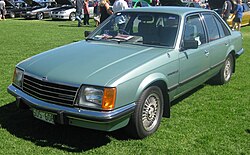
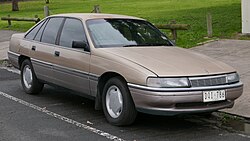
In 1978, Holden launched the Commodore (VB series). Based loosely on the Opel Rekord E but modified to fit larger Holden engines, the Commodore would eventually become the brand's best-selling vehicle. Despite early criticisms regarding its narrow interior compared to rivals like the Ford Falcon, it achieved significant success both locally and in export markets across Asia and Malta.
The Era of Badge Engineering and Global Platforms
The 1980s brought challenges and a shift toward badge engineering—the practice of selling a vehicle from one manufacturer under another brand's name. Holden partnered with Isuzu for the Rodeo and Jackaroo, and briefly formed United Australian Automobile Industries (UAAI) with Toyota to sell rebadged versions of the Corolla (as the Nova) and Camry (as the Apollo).
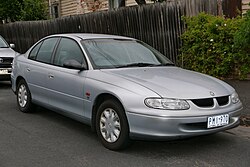
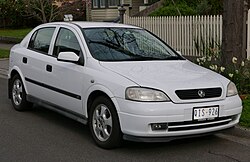
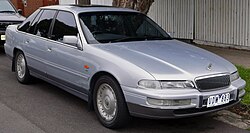
By the 1990s, Holden leaned heavily on GM's European arm, Opel, sourcing models like the Astra and Vectra. However, the company continued to innovate locally, introducing the VT Commodore in 1997, which featured a rounded body and improved crash safety.
Key Facts
- Total Production: Nearly 7.7 million vehicles produced over its lifetime.
- First Domestic Model: The Holden 48-215, launched in 1948.
- Best-Selling Model: The Holden Commodore.
- Major Milestone: The one-millionth model was an EJ series produced on October 26, 1962.
- Global Reach: The Monaro was sold in the UK as a Vauxhall and in the US as a Pontiac GTO.
- Final Local Model: The VF Commodore was the last vehicle produced in Australia.
The Final Decades and Closure
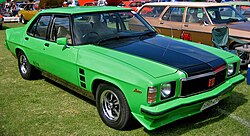
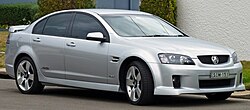
The 2000s saw a mix of triumph and turmoil. Holden revived the Monaro coupé in 2001, which gained an unexpected international following. In 2006, the VE Commodore was released, marking Holden's first "clean-sheet" design since 1971 and utilizing the Zeta platform, a global rear-wheel-drive architecture.
![The Monaro coupé was resurrected in 2001 as a low-volume niche model. Unanticipated overseas demand proved otherwise, with the Monaro selling in the UK as a Vauxhall Monaro and throughout the United States as the Pontiac GTO.[144]](/images/18/ee/18eec2c86d288ac04a0a191cfa844a5114dfad0fceaac94d04ce71e8bce9e055.jpg)
Despite these engineering wins, financial pressures mounted. A strong Australian dollar, high development costs, and declining market share led to significant losses. Between 2005 and 2009, the company faced repeated financial deficits, relying on government subsidies to remain viable.
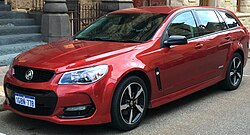
In December 2013, General Motors announced that Holden would cease all manufacturing operations in Australia by the end of 2017. The Elizabeth plant officially closed on October 20, 2017. For a few years, Holden continued as an importer of rebadged GM vehicles from the US, Canada, Germany, Thailand, and South Korea.
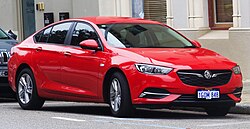
The end came on February 17, 2020, when GM announced the retirement of the Holden brand by 2021, citing a global shift away from producing right-hand drive vehicles.
Holden Model Evolution Summary
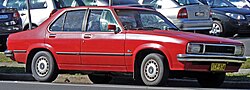
| Model | Era | Key Characteristic |
|---|---|---|
| 48-215 | 1948 | First wholly domestically produced Australian car. |
| Torana | 1967-1978 | Racing legend; available in 4, 6, and 8-cylinder versions. |
| Commodore | 1978-2017 | Holden's best-selling vehicle; evolved through multiple series. |
| Monaro | 1968 / 2001 | Cult-favorite coupé; exported as Pontiac GTO in the US. |
| Astra/Barina | 1980s-2000s | Sourced from Opel and Suzuki to fill small-car gaps. |
Frequently Asked Questions
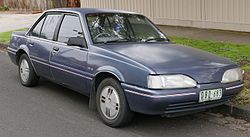
Why did Holden stop manufacturing cars in Australia?
The decision was driven by a combination of high development costs, a strong Australian dollar, declining local market share, and the global strategy of General Motors to move away from right-hand drive production.
What was the significance of the Zeta platform?
The Zeta platform was a "clean-sheet" design developed by Holden for the VE Commodore. It was intended to be a global rear-wheel-drive architecture for GM, though these plans were curtailed by the 2008 financial crisis.
Which Holden model was the most successful?
The Holden Commodore is the brand's most successful and best-selling vehicle to date, serving as the mainstay of the lineup for nearly four decades.
Did Holden sell cars outside of Australia?
Yes. The Commodore was exported to markets including New Zealand, Thailand, and Singapore. Additionally, the Monaro was sold in the UK as a Vauxhall and in the United States as a Pontiac GTO.
When did the Holden brand officially end?
General Motors announced the retirement of the brand in February 2020, and the Holden marque was officially retired by 2021.