HOK: A Global Leader in Architecture, Engineering, and Urban Planning
Founded in 1955, HOK has evolved from a regional practice into one of the world's most influential firms specializing in architecture, engineering, and urban planning. Headquartered in St. Louis, Missouri, the firm is renowned for its ability to handle massive, complex projects—ranging from international airports and sports arenas to sustainable corporate headquarters—across North America, Europe, and Asia.
With a workforce of approximately 1,600 employees and a presence in up to 28 locations, HOK blends technical precision with a forward-thinking approach to design, ensuring that the built environment meets the evolving needs of global society.
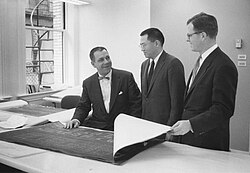
Key Facts
- Founded: 1955 by George Hellmuth, Gyo Obata, and George Kassabaum.
- Global Reach: Operates 28 offices across North America, Europe, and Asia.
- Specializations: Architecture, engineering, urban planning, and interior design.
- Sustainability Milestone: Designed the first LEED Platinum certified sports stadium in the US (Mercedes-Benz Stadium).
- Leadership: Currently led by co-CEOs Eli Hoisington and Susan Klumpp Williams.
History and Global Expansion
Founding and Early Growth
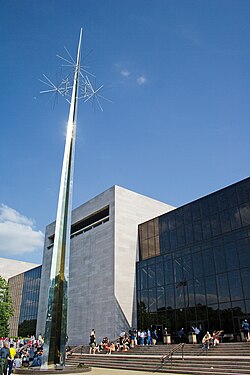
HOK began its journey in the mid-1950s, quickly establishing a reputation for excellence. By the mid-1960s, the firm expanded its footprint to San Francisco (1966) and Dallas (1968). The latter expansion was driven by the master planning and design of the Dallas/Fort Worth International Airport. In 1968, HOK also launched its interior design practice and entered the Washington, D.C. market after winning the commission for the Smithsonian National Air and Space Museum.
International Reach and Strategic Acquisitions
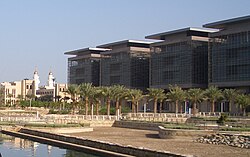
The 1970s marked HOK's transition into a global player. In 1975, the firm was appointed as the architect for King Saud University in Riyadh, which was the largest single building project in the world at the time, valued at $3.5 billion. International expansion continued with the opening of an office in Hong Kong in 1984 and London in 1987.
To bolster its capabilities, HOK pursued several strategic acquisitions:
- Kahn & Jacobs (1973): Established a presence in New York City.
- Caudill Rowlett Scott (1994): Added offices in Houston and Atlanta.
- Urbana Architects (1997): Launched the firm's first Canadian operations in Toronto.
- BBG-BBGM (2013): Acquired New York and Shanghai offices to create a global hospitality design powerhouse.
- 360 Architecture (2015): Enhanced capabilities in stadiums and arenas, leading to a new global Sports, Recreation, and Entertainment practice.
- Rossetti Architects (2026): Expanded its Detroit-based architectural reach.
Design Philosophy and Innovation
Technological Integration
HOK has consistently integrated technology to improve efficiency and accuracy. In 1983, they introduced HOK Draw, a specialized computer-aided drafting software for conceptual design. By the early 2000s, the firm adopted Building Information Modeling (BIM)—a digital representation of physical and functional characteristics of a facility—to streamline the construction process.
Sustainability and Wellness
The firm is a pioneer in sustainable and bio-inspired design. Since 2008, HOK has collaborated with the Biomimicry Group to apply natural models to architectural problems, such as precipitation capture. This commitment to the environment is evident in projects like the Net Zero Court in St. Louis, a zero-emissions commercial office building.
Beyond environmental impact, HOK emphasizes wellness-informed architecture. This approach, seen in the 2022 Boston Consulting Group HQ in Toronto, focuses on maximizing natural light and encouraging active behaviors, such as standing, to improve occupant health.
Notable Global Projects
HOK's portfolio spans diverse sectors and continents, showcasing a versatility in style and function.
| Year | Project Name | Location | Significance |
|---|---|---|---|
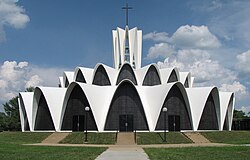
| 1962 | The Priory Chapel | St. Louis, USA | Early landmark work |
| 1976 | National Air and Space Museum | Washington, D.C., USA | Major cultural institution |
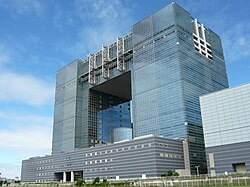
| 1995 | Tokyo Telecom Center | Tokyo, Japan | International co-design |
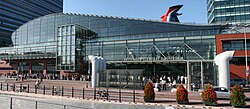
| 2000 | Passenger Terminal Amsterdam | Amsterdam, Netherlands | Major aviation hub |
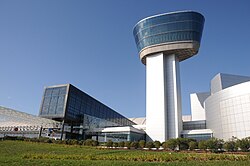
| 2003 | Steven F. Udvar-Hazy Center | Chantilly, Virginia, USA | Aviation museum expansion |
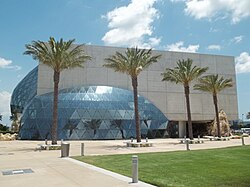
| 2011 | Salvador Dalí Museum | St. Petersburg, Florida, USA | Specialized art museum |
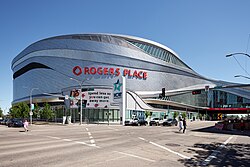
| 2016 | Rogers Place | Edmonton, Canada | NHL Arena |
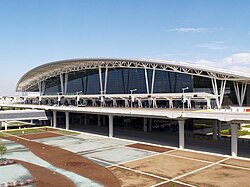
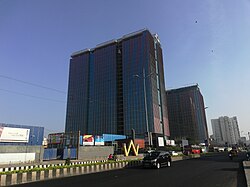
| 2020 | World Trade Center Towers | Chennai, India | Commercial high-rise |
Leadership
In 2023, HOK entered a new era of leadership with the appointment of Eli Hoisington and Susan Klumpp Williams as joint co-CEOs. This appointment was historic for the firm, as it marked the first time a woman held the CEO position and introduced the youngest CEOs in the company's history. They succeeded Bill Hellmuth, who served as CEO from 2016 until his passing in 2023.
Frequently Asked Questions
Who founded HOK?
HOK was founded in 1955 by George Hellmuth, Gyo Obata, and George Kassabaum.
What is HOK's approach to sustainability?
HOK utilizes biomimicry (using natural models to solve design problems), BIM technology, and wellness-informed architecture to create sustainable, low-emission, and health-centric buildings.
Which sports stadium designed by HOK was the first to be LEED Platinum certified in the US?
The Mercedes-Benz Stadium, completed in 2017, was the first professional sports stadium in the United States to achieve LEED Platinum certification.
How many offices does HOK operate?
As of July 2026, HOK operates 28 offices across North America, Europe, and Asia.
What are some of HOK's most famous international projects?
Notable international projects include the King Saud University in Saudi Arabia, the Tokyo Telecom Center in Japan, the Passenger Terminal Amsterdam in the Netherlands, and the World Trade Center Towers in Chennai, India.