Hockey Hall of Fame: Preserving the Legacy of Ice Hockey
The Hockey Hall of Fame is more than just a museum; it is the definitive sanctuary for the history of ice hockey. Located in the heart of Toronto, Ontario, this institution serves as the ultimate record of the sport's evolution, celebrating the players, builders, and officials who have shaped the game into a global phenomenon.
From the glittering trophies of the National Hockey League (NHL) to the storied jerseys of international competition, the Hall of Fame captures the passion and prestige of the ice. Whether you are a lifelong fan or a curious visitor, the museum offers a comprehensive journey through the milestones of hockey history.
Key Facts
- Established: 1943 by founder James T. Sutherland.
- Location: 30 Yonge Street, Toronto, Ontario (inside Brookfield Place).
- Total Inductees: 430 (310 players, 119 builders, and 16 on-ice officials).
- Primary Attraction: The original Stanley Cup and other active NHL trophies.
- International Scope: Hosts the IIHF Hall of Fame and World of Hockey Zone.
A Journey Through History
The Hockey Hall of Fame began in Kingston, Ontario, in 1943. While the first class of honored members was inducted in 1945, the institution struggled for years to secure a permanent home. Following the death of James T. Sutherland in 1955 and subsequent funding challenges, the NHL withdrew its support for the Kingston site in 1958.
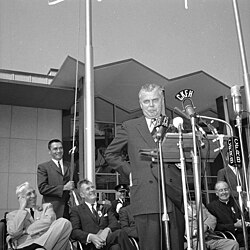
This led to a partnership with the Canadian National Exhibition (CNE), resulting in a temporary exhibit at Exhibition Place in August 1958. The overwhelming public response—350,000 visitors during the CNE fair—prompted the construction of a permanent facility. This building officially opened on August 26, 1961, inaugurated by Canadian Prime Minister John Diefenbaker.
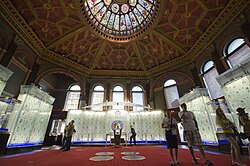
In 1993, the Hall of Fame moved to its current prestigious location in downtown Toronto, occupying a historic Bank of Montreal building within Brookfield Place.
Museum Exhibits and Attractions
Spanning 60,000 square feet across 15 exhibit areas, the museum is designed to immerse visitors in the sport's grandeur. The Esso Great Hall acts as a "Cathedral to the icons of Hockey," featuring portraits and biographical data for every inductee.
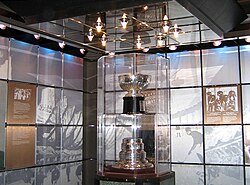
The most coveted prize in sports, the Stanley Cup, is the centerpiece of the Great Hall. While a replica is often displayed when the presentation cup is traveling, the original version and older rings are kept secure in the bank vault, alongside all current NHL trophies.
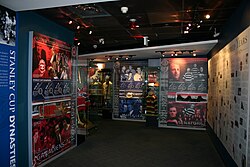
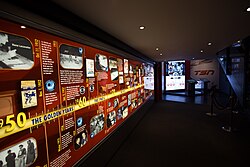
Beyond the trophies, visitors can explore the history of hockey dynasties and the evolution of the game's broadcasting.
Interactive Experiences
The museum blends history with engagement, offering interactive exhibits such as the shootout experience, allowing fans to feel the pressure of the game.

The World of Hockey Zone
Recognizing that hockey is a global sport, the 6,000-square-foot World of Hockey Zone opened in 1998. This area is dedicated to international competition, including the Olympics and World Championships. It houses the IIHF (International Ice Hockey Federation) Hall of Fame honor roll and profiles of all IIHF member countries.
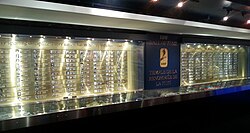
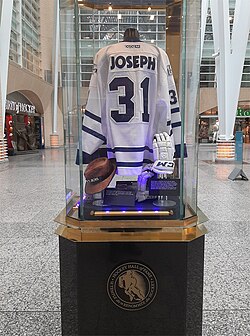
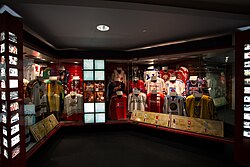
Notable displays in this zone include memorabilia from the 1980 "Miracle on Ice," the 1972 Summit Series, and the Triple Gold Club. Visitors can also view a diverse collection of national team jerseys.
The Path to Induction
Becoming a member of the Hockey Hall of Fame is one of the highest honors in sports. An 18-person committee consisting of players and coaches meets every June to select new honorees. Inductees fall into three primary categories:
- Players: Including a specific subcategory for female players established in 2010.
- Builders: Coaches, general managers, team owners, and commentators.
- On-Ice Officials: Referees and linesmen (category added in 1961).
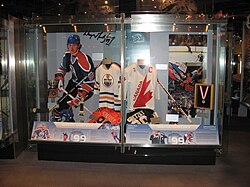
While most players face a waiting period, some exceptional figures have had this waived. Wayne Gretzky was the last of ten players to receive such a waiver.
The induction process culminates in a formal ceremony every November at the Hall of Fame building, followed by the "Hockey Hall of Fame Game" featuring the Toronto Maple Leafs.
Summary of Hall of Fame Details
| Feature | Details |
|---|---|
| Founder | James T. Sutherland |
| Current Location | Brookfield Place, Toronto, ON |
| Total Inductees | 430 |
| Exhibit Space | 60,000 sq ft |
| Key Exhibits | Stanley Cup, World of Hockey Zone, Esso Great Hall |
| Annual Visitors | 292,000 (average) |
Frequently Asked Questions
Where is the Hockey Hall of Fame located?
The Hockey Hall of Fame is located at 30 Yonge Street in downtown Toronto, Ontario, situated within Brookfield Place and a historic Bank of Montreal building.
Who is eligible for induction into the Hall of Fame?
Eligible candidates include players (including female players), builders (such as coaches, owners, and commentators), and on-ice officials.
What is the World of Hockey Zone?
The World of Hockey Zone is a 6,000-square-foot area dedicated to international ice hockey, featuring the IIHF Hall of Fame and memorabilia from Olympic and World Championship competitions.
Is the original Stanley Cup on display?
Yes, the original Stanley Cup and older rings are displayed in the bank vault off the Great Hall, though a replica is used in the main hall when the presentation cup is traveling.
How are new members selected?
An 18-person committee of players, coaches, and other experts meets annually in June to select the new class of inductees.