Ho Chi Minh City University of Technology: A Comprehensive History
The Ho Chi Minh City University of Technology (HCMUT) stands as a cornerstone of technical and scientific education in Vietnam. From its origins as a collection of specialized schools to its current status as a premier member of the Vietnam National University, the institution has evolved alongside the nation's industrial and academic needs.
The journey began in 1957 when the National Institute of Technology was established via Decree No. 213/GD. At its inception, the institute comprised four distinct schools: the Junior college of civil engineering, the School of radio waves science, the School of maritime transport and freight transport, and the School of commerce.
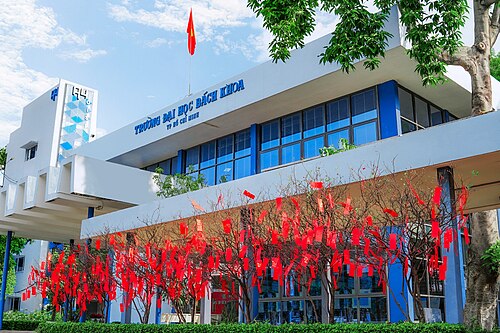
The Evolution of Institutional Identity
The institution underwent several structural and name changes during its early decades to better align with its educational mission. In 1972, it was renamed the National Academy of Technology. By 1973, the Academy was disbanded, and the institution became the University of Technology, subsequently joining the Thủ Đức Institute of Technology.
A pivotal moment occurred on October 27, 1976, when Decision No. 426/TTg officially named the institution the Ho Chi Minh City University of Technology. This date is now celebrated annually as the university's anniversary. At this time, the university focused on five core faculties: Civil construction, Electrical engineering, Irrigation science, Mechanical engineering, and Chemistry.
Academic Expansion and Specialization
Following its official naming, HCMUT entered a period of rapid academic growth. The Faculty of Geology was added in 1978, and by 1980, the university expanded into advanced research. Under Decision No. 319-TTg, the Prime Minister authorized HCMUT to lead postgraduate education, launching 20 doctoral programs.
Modernizing the Curriculum
The 1990s brought significant administrative and pedagogical shifts. In 1991, the university expanded its postgraduate offerings and merged the Faculty of Irrigation and Construction Engineering into the Faculty of Civil Engineering. The early 90s also saw the birth of the Faculty of Industrial Management (1992) and the Faculty of Computer Science and Engineering (1993).
A major milestone in 1993 was the introduction of the credit-based assessment system, a method of measuring student progress based on hours of instruction and workload rather than simple attendance. During this time, the Department of Industrial Arts was also established as the first such department under the Board of Presidency in the South.
Integration and New Disciplines
In 1996, HCMUT became a member of the Vietnam National University, Ho Chi Minh. This organizational shift led to the Department of Industrial Arts moving to the University of Architecture. The turn of the millennium saw a surge in new specialized faculties to meet modern industrial demands:
- 1999: Faculty of Environment and Nature Resources
- 2000: Faculty of Transportation Engineering
- 2001: Faculty of Materials Technology
- 2003: Faculty of Applied Science
Recognition and Global Outreach
The government of Vietnam has recognized the university's contributions to national development with several prestigious honors. In 2005, HCMUT was awarded the title "Labor Hero in the Reformation Period," followed by the Independence Medal in 2007.
To foster global academic collaboration, the university established the Office for International Study Programs (OISP) on September 17, 2007. This office serves to formalize and manage exchange programs for both undergraduate and postgraduate students.
Key Facts
- Founded: 1957 as the National Institute of Technology.
- Anniversary: October 27 (marking the 1976 renaming).
- Affiliation: Member of Vietnam National University, Ho Chi Minh since 1996.
- Advanced Degrees: Began offering 20 doctoral programs in 1980.
- Global Reach: OISP established in 2007 for international student exchanges.
| Year | Event/Milestone | Significance |
|---|---|---|
| 1957 | Establishment of National Institute of Technology | Founding of the institution with 4 schools |
| 1976 | Renamed to HCMUT | Official naming and establishment of 5 core faculties |
| 1980 | Launch of Doctoral Programs | Expansion into high-level postgraduate research |
| 1993 | Credit-based system introduced | Modernization of academic assessment |
| 1996 | Joined Vietnam National University | Integration into a larger national university system |
| 2007 | OISP Created | Formalization of international exchange programs |
Frequently Asked Questions
When is the anniversary of HCMUT?
The anniversary of the university is celebrated on October 27, commemorating the date in 1976 when it was officially named the Ho Chi Minh City University of Technology.
What was the original name of the university?
The institution was originally established in 1957 as the National Institute of Technology.
When did HCMUT start offering doctoral degrees?
The university began offering 20 doctoral programs in 1980 following a decision by the Prime Minister.
What is the purpose of the OISP?
The Office for International Study Programs (OISP), created in 2007, is responsible for formalizing undergraduate and postgraduate student exchange programs with international partners.
Which university system does HCMUT belong to?
Since 1996, HCMUT has been a member of the Vietnam National University, Ho Chi Minh.