Hinds Community College: A History of Growth and Integration
Hinds Community College stands as a cornerstone of education in Mississippi, evolving from separate vocational and academic roots into a comprehensive multi-campus system. Its journey reflects the broader shifts in American education, moving from specialized industrial training to a diverse community college model that integrates academic, technical, and virtual learning.
The Foundations of Utica and Raymond
The college's origins are rooted in two distinct institutions. The Utica campus began in 1903 as the Utica Normal and Industrial Institute, founded by William H. Holtzclaw, a graduate of Tuskegee. This institution served as a historically black college, providing essential education and training for the community.
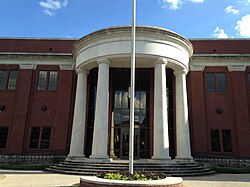
Meanwhile, the Raymond campus started in 1917 as a small agricultural high school. With an initial cohort of 117 students and eight faculty members, it transitioned into a junior college by 1922, offering college-level academic courses. By 1926, it earned accreditation from the Southern Association of Colleges and Schools.
Expansion and Vocational Evolution
As the needs of the workforce changed, so did the college's curriculum. During World War II, the institution introduced vocational education to support the war effort and industrial growth. This trend continued into the late 1960s with the addition of technical degree programs.
The 1970s marked a period of geographic expansion with the opening of branch locations in Jackson and Vicksburg. Initially, these sites focused on high school vocational education, though they provided some college-level courses during evening hours.
Integration and the Shift to Community College
A pivotal moment in the institution's history occurred in 1982. Following a class action racial discrimination lawsuit and a subsequent Federal court order, Utica Junior College merged with Hinds Junior College. This merger unified the historically black institution with the broader college system.
In 1987, the institution officially changed its name to Hinds Community College. This was part of a statewide trend, as 13 of the 14 other Mississippi public two-year colleges also adopted the "community" designation that same year.
Modern Growth and Technological Innovation
The 1980s and 90s saw a surge in specialized facilities. The Pearl-Rankin Vocational/Career Center opened in 1983 (later becoming the Rankin Campus), and the Nursing Allied Health Center opened in Jackson in 1984. The latter merged with the existing Jackson branch to form the Jackson Campus.
Administrative and economic growth continued with the 1988 addition of the Resource and Coordinating Unit (RCU) for Economic Development in Raymond, which led to the opening of the Eagle Ridge Conference Center in 1996. By 2002, the Vicksburg branch had fully transitioned into the Vicksburg Campus, offering full college-level programs.
To increase accessibility, Hinds joined the Community College Network (CCN) in 1994, utilizing video conferencing to allow students to attend courses hosted at different locations. In 1999, Hinds and other state public two-year colleges established the Mississippi Virtual Community College (MVCC) to deliver education via the Internet.
Key Facts
- Founded: Utica campus established in 1903; Raymond campus started in 1917.
- Integration: Utica Junior College merged with Hinds Junior College in 1982 via Federal court order.
- Name Change: Transitioned to "Community College" in 1987.
- Technological Milestones: Joined the CCN in 1994 and co-founded the MVCC in 1999.
- Campus Network: Includes Raymond, Utica, Jackson, Rankin, and Vicksburg.
| Year | Event/Milestone | Significance |
|---|---|---|
| 1903 | Utica Normal and Industrial Institute founded | Establishment of the Utica campus |
| 1917 | Agricultural high school opens in Raymond | Beginning of the Raymond campus |
| 1926 | SACS Accreditation | Formal academic recognition for Raymond |
| 1982 | Merger of Utica and Hinds Junior Colleges | Integration following racial discrimination lawsuit |
| 1987 | Renamed Hinds Community College | Shift to the community college model |
| 1999 | Formation of MVCC | Launch of internet-based course offerings |
Frequently Asked Questions
Who founded the Utica campus?
The Utica campus was founded in 1903 by William H. Holtzclaw, a graduate of Tuskegee, as the Utica Normal and Industrial Institute.
Why did Utica Junior College merge with Hinds Junior College?
The merger took place in 1982 under a Federal court order as part of a class action racial discrimination lawsuit.
When did the college start offering technical and vocational programs?
Vocational education was added during the World War II years, and technical degree programs were introduced in the late 1960s.
What is the Mississippi Virtual Community College (MVCC)?
Established in 1999 by all state public two-year colleges, the MVCC is a system designed to offer courses to students over the Internet.
How does the Community College Network (CCN) work?
Launched in 1994, the CCN uses video conferencing to allow students to participate in a course offered at one college location from several other locations.