Hildegard Knef: The Multifaceted Life of a German Icon
Hildegard Knef was a powerhouse of 20th-century German culture—a woman who seamlessly transitioned between the roles of actress, singer, voice actress, and writer. Known for her striking presence and a deep, smoky voice, she navigated the complexities of life in Berlin during the Nazi era, achieved international stardom in Hollywood and on Broadway, and later became a literary voice for a generation of post-war Germans.
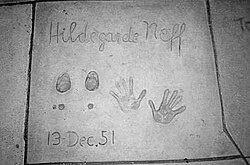
Throughout her career, she was a figure of both admiration and controversy. While she was a beloved star in German-speaking countries, she spent years known internationally as Hildegard Neff, a name she personally disliked. A citizen of both the United States (from 1950) and Germany (renewed in 2001), her life was as nomadic and dramatic as the roles she portrayed on screen.
Key Facts
- Career Span: Active from 1944 to 2001 across film, music, and literature.
- Cinematic Milestone: Starred in Die Mörder sind unter uns (1946), the first film released in East Germany after WWII.
- Broadway Success: Played the lead role of Ninotchka in Cole Porter's Silk Stockings.
- Musical Legacy: Sold over three million records, including the hit "Für mich soll's rote Rosen regnen".
- Literary Impact: Wrote the best-selling post-war German autobiography Der Geschenkte Gaul.
Early Life and the Shadow of War
Born in Ulm in 1925, Hildegard Frieda Albertine Knef faced hardship early in life. Her father, a tobacco merchant and WWI veteran, died when she was only six months old. She moved to Berlin with her mother, eventually attending middle school in Schöneberg. By age 14, she began studying acting, and at 15, she left school to become an apprentice animator with Universum Film AG (UFA), a major German film studio.
Knef's early training included ballet and elocution at the State Film School at Babelsberg. Despite the political climate of the time, she managed to avoid the direct influence of Joseph Goebbels, Hitler's propaganda minister, following warnings from friends. Her family's financial stability wavered when her stepfather's business partner was forced to flee due to Jewish heritage, leading the family to run a small shoe repair shop where Hildegard helped with deliveries at night.
The Rise to Cinematic Stardom
Knef's acting career began in earnest during the final years of World War II. However, her life took a perilous turn during the Battle of Berlin. To remain with her lover, script editor Ewald von Demandowsky, she dressed as a soldier to join the defense of Schmargendorf. This led to her capture by Soviet forces and imprisonment in a POW camp, from which she eventually escaped with the help of fellow prisoners.
Following the war, Knef became a symbol of a new Germany. She starred in Die Mörder sind unter uns (The Murderers Are Among Us) in 1946 and Film Without a Title (1948), the latter earning her a best-actress award at the Locarno Film Festival. She later sparked a national scandal in 1951 with Die Sünderin (The Sinner), which featured the first nude scene in German film history. Knef famously dismissed the controversy, noting the absurdity of people being shocked by nudity in a country that had created Auschwitz.
International Ambitions and Broadway
The 1950s saw Knef attempting to break into the American market. While David O. Selznick invited her to Hollywood, she refused a contract that required her to change her name to Gilda Christian and pretend to be Austrian. Despite this, she appeared in Decision Before Dawn (1951) and The Snows of Kilimanjaro (1952).
Her greatest American triumph came in 1955 on Broadway. She starred in Cole Porter's musical Silk Stockings, playing the role of a Soviet commissar. Her performance was hailed by The New York Times as "immensely skillful," cementing her status as a versatile international performer.
Transition to Music and Literature
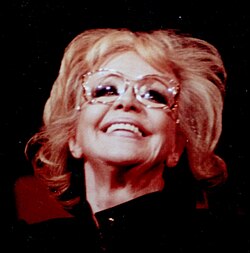
As her film career slowed in the 1960s, Knef reinvented herself as a pop singer and author. She surprised audiences with a deep, smoky vocal quality and wrote the lyrics for many of her own songs. Over her musical career, she released 23 original albums and 320 songs, selling millions of records. Her most enduring tracks include "Für mich soll's rote Rosen regnen" and "Ich hab noch einen Koffer in Berlin".
Parallel to her music, Knef became a respected author. Her 1970 autobiography, Der Geschenkte Gaul (The Gift Horse), provided a candid, honest account of her life under the Nazis and her struggles in the post-war era. She later wrote Das Urteil (The Verdict) in 1975, a poignant exploration of her battle with breast cancer and the subsequent mastectomy she underwent in 1973.
Personal Life and Final Years
Knef's personal life was marked by three marriages. Her first was to Kurt Hirsch (1947–1952), followed by British actor David Palastanga (1962–1976), with whom she had a daughter, Christina Antonia. Her final marriage was to Paul von Schell in 1977.
In her later years, Knef returned to Berlin following German reunification. A lifelong heavy smoker, she suffered from emphysema and eventually passed away on February 1, 2002, at the age of 76, due to a lung infection.
| Category | Details |
|---|---|
| Primary Occupations | Actress, Singer, Writer, Voice Actress |
| Notable Films | The Murderers Are Among Us, The Sinner, Decision Before Dawn |
| Major Musical Hits | "Für mich soll's rote Rosen regnen", "Mackie Messer" |
| Key Publications | Der Geschenkte Gaul, Das Urteil |
| Citizenships | German and United States |
Frequently Asked Questions
Why was Hildegard Knef known as Hildegard Neff?
Between 1948 and approximately 1968, she was known as Hildegard Neff outside of German-speaking countries. This was largely a result of international marketing and naming conventions of the time, though Knef herself disliked the name.
What was the controversy surrounding the film Die Sünderin?
The film caused a scandal in 1951 because it featured the first nude scene in German cinema history. It was heavily criticized by the Catholic Church, though Knef argued that the real scandal was the horror of the Holocaust, not her nudity.
How did Knef contribute to literature?
Knef wrote several books, most notably her autobiography Der Geschenkte Gaul, which became one of the best-selling German books of the post-war era due to its brutal honesty regarding life under the Nazi regime.
What was her experience during the Battle of Berlin?
Knef dressed as a soldier to stay with her lover, Ewald von Demandowsky, during the defense of Schmargendorf. She was captured by Soviet forces and held in a prison camp before successfully escaping.
How many records did she sell during her singing career?
Hildegard Knef sold more than three million records in total, releasing 23 original albums and writing the lyrics for 130 of her songs.