Highland Council
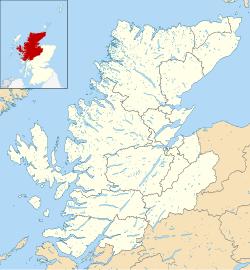
The Highland Council (known in Scottish Gaelic as Comhairle na Gàidhealtachd) serves as the local authority for Highland, one of the 32 council areas of Scotland. Operating as a unitary authority—a single-tier administration responsible for all local government functions—the council is headquartered in Inverness and manages one of the largest and most diverse geographical areas in the United Kingdom.
Key Facts
- Headquarters: Glenurquhart Road, Inverness.
- Composition: 74 councillors representing 21 wards.
- Voting System: Single transferable vote (STV).
- Current Leadership: Raymond Bremner (Leader) and Bill Lobban (Convener).
- Election Cycle: Full council elections are held every five years.
- Current Status: No overall control, currently run by a coalition of the SNP and Highland Independents.
Evolution of Local Governance
The administrative landscape of the Highlands has undergone significant transformations since the mid-20th century. The Highland area was first established as an administrative region in 1975 under the Local Government (Scotland) Act 1973. This created a two-tier system where the Highland Regional Council acted as the upper-tier authority, overseeing eight lower-tier districts: Badenoch and Strathspey, Caithness, Inverness, Lochaber, Nairn, Ross and Cromarty, Skye and Lochalsh, and Sutherland.
In 1996, the Local Government etc. (Scotland) Act 1994 abolished both the regional council and the districts, replacing them with the current unitary authority. While the council initially maintained decentralized structures based on the old district boundaries, it transitioned to a new management system in 2007. This shift coincided with the introduction of multi-member wards and the single transferable vote (STV) system, a proportional representation method where voters rank candidates by preference.
Changes in Council Size and Wards
The number of representatives and the way they are elected have shifted over time. In 1995, the council consisted of 72 members elected via the first-past-the-post system. This grew to 80 members by 1999. Following the 2004 Local Governance Act, the council moved to 22 multi-member wards in 2007. By the 2017 election, the structure was refined to 21 wards and 74 councillors.
Political Leadership and Control
Since 2007, the Highland Council has been under no overall control, meaning no single political party holds an absolute majority. Historically, independent councillors were the dominant force; however, the 2022 election marked a turning point when the Scottish National Party (SNP) became the largest group with 22 councillors. Currently, the council is administered by a coalition between the SNP and the Highland Independent group.
Executive Roles
The council distinguishes between ceremonial and political leadership. The Convener serves as the civic figurehead and chairs full council meetings. Since 2008, the Leader of the Council has provided the primary political direction. The current leader, Raymond Bremner (SNP), took office on May 26, 2022, following the tenure of Margaret Davidson.
Council Infrastructure and Administration
The council's central operations are based at the Highland Council Headquarters on Glenurquhart Road in Inverness. The site has a rich history, with the oldest section dating back to a school completed in 1876. While the Inverness-shire County Council previously met at Inverness Castle, the scale of the Highland Regional Council necessitated a larger venue, leading to the construction of a dedicated council chamber at the Glenurquhart Road site in 1986.
Ward and Area Management
To ensure local representation across its vast territory, the council utilizes a system of 21 wards, each represented by three or four councillors. Each ward is supported by a Ward Manager and a small discretionary budget. Furthermore, councillors participate in area committees that roughly align with former local government boundaries, covering regions such as Caithness, Sutherland, Nairnshire, and the city of Inverness.
| Category | Detail |
|---|---|
| Total Seats | 74 |
| Administration Coalition | SNP (18) & Highland Independent (18) |
| Main Opposition Groups | Liberal Democrats (15), Highland Alliance (8), Conservatives (6) |
| Minority Groups | Scottish Greens (3), Labour (2), Non-aligned (3) |
| Next Election Date | May 6, 2027 |
Frequently Asked Questions
What is a unitary authority?
A unitary authority is a type of local government that combines the powers and functions of two separate tiers of administration (such as a regional council and a district council) into a single body.
How are Highland councillors elected?
Councillors are elected using the single transferable vote (STV) system, where voters rank candidates in order of preference rather than selecting just one.
Who is the current leader of the Highland Council?
The current leader is Raymond Bremner of the SNP, who assumed the role on May 26, 2022.
Where is the Highland Council based?
The council is headquartered at the Highland Council Headquarters on Glenurquhart Road in Inverness.
How many wards are there in the Highland Council area?
There are currently 21 wards, each represented by either three or four councillors.