Higher Secondary Education Systems in Bangladesh, India, and Pakistan
Across South Asia, the transition from general schooling to tertiary education is marked by a critical phase known as Higher Secondary education. While the terminology varies—ranging from the Higher Secondary Certificate (HSC) to the Intermediate level—this stage serves as the academic bridge for students typically aged 16 to 17, preparing them for university or technical specialization.
Higher Secondary Education in Bangladesh
In Bangladesh, education is compulsory for the first 10 years. Upon completing this period, students receive a Secondary School Certificate (SSC). Those who pass the SSC examination can then choose between two primary paths: enrolling in a college for two years of higher secondary education or joining a technical or polytechnic institute.
The Higher Secondary Certificate (HSC) is the culmination of these two years (Class XI and XII). This national curriculum leads to a public examination conducted by the education boards. For students in different academic streams, alternative certifications exist: those in Islamic religious streams take the Alim exam via the Bangladesh Madrasah Education Board, while English medium students pursue A-Levels through Pearson Edexcel or the universities of London and Cambridge.
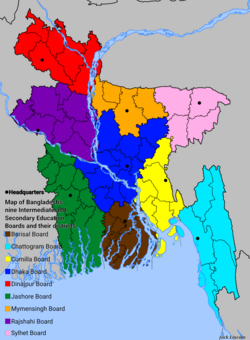
The system is managed by various boards that recognize private institutes and oversee public testing. Notably, the COVID-19 pandemic caused significant disruptions; in 2020, the HSC exam was cancelled, and scores were instead derived from the average of prior JSC and SSC results. In 2021, the curriculum was abridged, with 1,635,240 candidates from 26,784 institutions sitting for exams in three major subjects per group.
Bangladesh Education Boards
There are eleven primary education boards in the country, including the Bangladesh Madrasah Education Board (established 1978) and the Bangladesh Technical Education Board (established 1967). The general boards are distributed geographically:
- Dhaka (est. 1961)
- Rajshahi (est. 1961)
- Cumilla (est. 1962)
- Jashore (est. 1963)
- Chattogram (est. 1995)
- Barishal (est. 1999)
- Sylhet (est. 1999)
- Dinajpur (est. 2006)
- Mymensingh (est. 2017)
Higher Secondary Education in India
Similar to Bangladesh, India mandates 10 years of compulsory education ending in a secondary school certificate. The SSC is administered either by state-level boards or the national Central Board of Secondary Education (CBSE).
Students wishing to pursue university typically remain in school for two additional years to earn the HSC, also referred to as the "Class 12th Certificate" or "+2 Certificate." In the HSSC exam, students generally study six subjects: five main subjects and one additional subject, though specific requirements vary by state board.
The examination is scored out of 1100 marks, split equally between HSC 1 (550 marks) and HSC 2 (550 marks). Students who need to improve their grades can take supplementary exams in September or October.
Indian Examination Boards
India utilizes a mix of national and state boards. National boards include the CBSE (offering the AISSCE), the Council for the Indian School Certificate Examination (CISCE, offering the ISC), and the National Institute of Open Schooling (NIOS), which offers exams twice a year and on-demand.
State boards include, but are not limited to:
- Maharashtra State Board (MSBSHSE)
- Kerala Board (KBHSE)
- Tamil Nadu State Board (SBSEBHSE)
- Karnataka School Examination and Assessment Board (KSEAB)
- West Bengal Council (WBCHSE)
- And other boards in Rajasthan, Andhra Pradesh, Telangana, Odisha, Bihar, Punjab, and Gujarat.
Higher Secondary Education in Pakistan
In Pakistan, the Higher Secondary School Certificate (HSSC), commonly known as Intermediate, is the standard public examination. After completing Matriculation (Grades 9 and 10), students enter an intermediate college for Grades 11 and 12.
Standardized tests are taken at the end of each grade. These are administered by four provincial boards and the Federal Board of Intermediate and Secondary Education (FBISE). This level of qualification is often referred to as FSc, FA, or ICS.
Students select a specific stream based on their career goals, including:
- Pre-medical
- Pre-engineering
- Humanities (Social Sciences)
- Computer Science
- Commerce
Each stream requires three elective subjects and three compulsory subjects: English, Urdu, Islamiyat/Ethics (Grade 11 only), and Pakistan Studies (Grade 12 only).
Key Facts
- Compulsory Education: Both Bangladesh and India require 10 years of compulsory schooling.
- Certification: The "+2" or "Class 12th" certificate is the standard requirement for university entry in India.
- Pakistan's Streams: HSSC students in Pakistan choose from specialized streams like Pre-medical or Pre-engineering.
- Bangladesh Boards: There are 11 education boards in Bangladesh, including specialized boards for Madrasah and Technical education.
- Indian National Boards: CBSE and CISCE are the primary national boards, while NIOS provides flexible, on-demand testing.
| Country | Common Terminology | Governing Bodies | Key Qualifications |
|---|---|---|---|
| Bangladesh | HSC / Alim / A-Level | 11 Education Boards | SSC $\rightarrow$ HSC |
| India | HSC / +2 / PUC / Intermediate | National (CBSE, CISCE, NIOS) & State Boards | SSC $\rightarrow$ Class 12th |
| Pakistan | HSSC / Intermediate / FSc / FA / ICS | 4 Provincial Boards & FBISE | Matriculation $\rightarrow$ HSSC |
Frequently Asked Questions
What is the difference between SSC and HSC?
The Secondary School Certificate (SSC) is typically awarded after 10 years of primary and secondary education. The Higher Secondary Certificate (HSC) is awarded after an additional two years of specialized study (Class 11 and 12), serving as the prerequisite for university.
How did the COVID-19 pandemic affect HSC exams in Bangladesh?
In 2020, the Bangladeshi authorities decided not to hold the HSC or equivalent examinations. Instead, students were graded based on the average of their previous JSC and SSC results.
What are the compulsory subjects for HSSC students in Pakistan?
Regardless of their chosen stream, students must take English, Urdu, Islamiyat/Ethics (in Grade 11), and Pakistan Studies (in Grade 12).
Which boards operate at the national level in India?
The primary national boards are the Central Board of Secondary Education (CBSE), the Council for the Indian School Certificate Examination (CISCE), and the National Institute of Open Schooling (NIOS).
What are the different streams available for higher secondary education in Pakistan?
Students can choose from pre-medical, pre-engineering, humanities (social sciences), computer science, and commerce.