Higher Education Bubble: The Crisis of Cost and Value in US Colleges
For decades, a university degree was viewed as a guaranteed ticket to financial stability and social mobility. However, in recent years, economists and students alike have begun to question whether the United States is experiencing a higher-education bubble. While the income gap between college graduates and high school diploma holders has grown since the 1970s, this advantage is increasingly offset by staggering tuition costs and a mounting debt crisis.
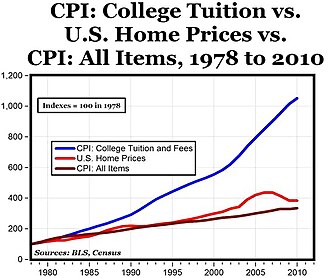
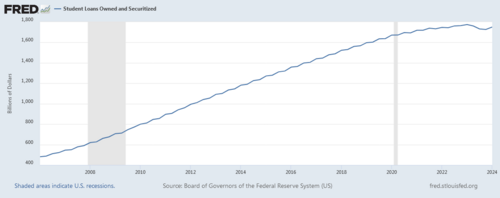
By 2019, total college debt in the US surpassed $1.5 trillion, leaving two out of three graduates burdened by loans. This shift has transformed the perception of higher education from a pursuit of knowledge into a transactional exchange, where Generation Z increasingly views a degree primarily as a prerequisite for a lucrative career.
The Economics of the Degree: Signaling and Status
Some experts argue that the value of a degree is not found in the skills learned, but in market signaling—the process where a degree serves as a signal to employers that a candidate possesses certain traits. Economists Michael Spence and Joe Stiglitz suggest that degrees often function as markers of socioeconomic status. In this context, higher education may act as a Veblen good, a luxury item where demand increases as the price rises because it confers status.
However, this status comes at a high price. Glenn Reynolds posits that the "product" of higher education has become more elaborate and expensive, fueled by cheap credit provided by institutions eager to attract buyers. This has led to a disconnect between the cost of the degree and the actual wealth generated after graduation.
The Eroding Wage and Wealth Premium
The wage premium—the difference in earnings between degree holders and non-degree holders—remains positive but is showing signs of decline. Research from the Federal Reserve Bank of St. Louis indicates that while those born before 1980 saw significant wealth and income gains, the wealth premium for those born after 1980 has become statistically insignificant.
This erosion is driven by several factors:
- Credential Inflation: As more people earn degrees, employers may require them for jobs that previously did not need one, a phenomenon known as credential inflation.
- Underemployment: Approximately 45% of college graduates are underemployed, earning only 25% more than high school graduates.
- Market Shifts: Technological advances have eliminated many low-skilled roles, while high-paying careers now require highly specialized, technical knowledge.
Shifting Academic Trends and Market Forces
The labor market is actively reshaping what students choose to study. There has been a marked surge in popularity for healthcare and STEM (Science, Technology, Engineering, and Mathematics) subjects, particularly computer science. Conversely, liberal arts and social studies, especially history, have seen a decline.
![Healthcare and most STEM subjects, especially computer science, grew in popularity while the liberal arts and social studies, especially history, have declined due to market forces.[75][44]](/images/c0/24/c02430080209ec1e614134fe317f8d9592bfd6799b3afa202c9933eff448480f.png)
Graduates of the early 2020s report varying levels of satisfaction. Those in chemical, computer, aerospace, and electrical engineering, as well as finance and life sciences, typically see the highest expected incomes. In contrast, degrees in music, visual arts, and philosophy often yield a negative return on investment or take up to 20 years to break even.
Institutional Instability and Demographic Declines
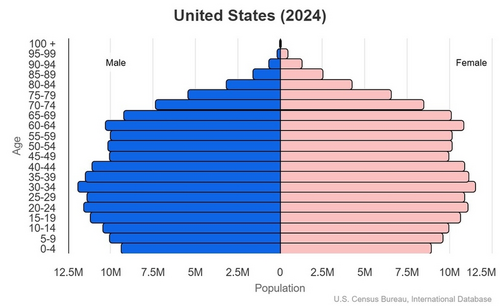
The assumption that student populations would grow indefinitely has proven false. Domestic undergraduate enrollment dropped by 15% between 2010 and 2021. By 2022, only 62% of high school graduates headed for college, down from 70% in 2015.
This demographic shift, combined with rising costs, has pushed many small private liberal arts colleges into financial distress. Moody's Investor Services estimated in 2019 that 20% of such institutions were in serious trouble. Many have responded by cutting low-interest programs like gender studies and critical race theory, while introducing majors in artificial intelligence and professional law enforcement.
The Impact of COVID-19 and Political Shifts
The COVID-19 pandemic accelerated existing declines. Institutions that relied heavily on full-tuition revenue from international students saw their budgets collapse due to travel restrictions. Community colleges were hit hardest, losing 37% of their enrollments between 2010 and 2023.
Political factors have also played a role. The 2023 Supreme Court ruling against race-based admissions and a general shift in the political zeitgeist regarding immigration have impacted enrollment. Furthermore, a growing preference for blue-collar jobs and apprenticeships—supported by both the Trump and Biden administrations—has provided viable alternatives to the traditional four-year degree.
Key Facts
- Total Debt: US college debt exceeded $1.5 trillion by 2019.
- Enrollment Drop: Domestic undergraduate enrollments fell by 15% from 2010 to 2021.
- Underemployment: 45% of college graduates are considered underemployed.
- Tuition Surge: Tuition and fees increased by 440% from the 1990s to the 2010s.
- Market Shift: STEM and healthcare are growing, while liberal arts and humanities are declining.
| Category | High ROI / High Demand | Low ROI / Declining Demand |
|---|---|---|
| Academic Majors | Computer Science, Engineering, Finance, Nursing | Journalism, Sociology, History, Visual Arts |
| Employment Outcome | Immediate gainful employment, high salary | Underemployment, long break-even periods |
| Institutional Focus | AI, Professional Programs, STEM | Liberal Arts, Humanities, General Studies |
Frequently Asked Questions
What is the "higher-education bubble"?
It is the theory that the cost of college has risen far beyond the actual economic value provided to students, fueled by cheap credit and the perception of the degree as a status symbol rather than a skill-building tool.
What is the difference between the income premium and the wealth premium?
The income premium is the difference in annual earnings between a degree holder and a non-degree holder. The wealth premium refers to the total accumulated net worth; for recent graduates, this wealth premium has weakened significantly due to the burden of student loans.
Why are liberal arts degrees declining in popularity?
Market forces have shifted demand toward specialized technical skills. Many students now avoid these majors due to lower expected incomes, a perceived lack of marketable skills, and a desire for a faster return on investment.
How has the labor market changed regarding college degrees?
There is a rise in credential inflation, where degrees are required for jobs that don't technically need them. Simultaneously, there is a renewed emphasis on trade schools and paid apprenticeships for blue-collar roles to address labor shortages.
How did the pandemic affect US universities?
COVID-19 accelerated enrollment declines, reduced critical revenue from international students, and increased skepticism among Generation Z regarding the value of expensive physical campuses versus online learning.