Heraion of Samos: The Evolution of a Monumental Greek Sanctuary
For over a millennium, the Heraion of Samos served as a spiritual and political hub, centered around the altar of Hera and a series of increasingly ambitious temples. This sanctuary was not merely a place of worship but a stage for aristocratic competition, a center for artistic innovation, and a crossroads for international trade in the ancient Mediterranean.
The Sacred Way and Sanctuary Layout
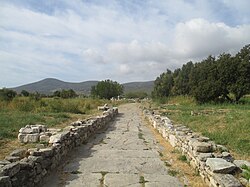
Originally accessed by sea via a southeastern entrance, the sanctuary underwent a major reorientation around 600 BC with the construction of the Sacred Way. This road connected the city of Samos to the sanctuary, requiring a massive earthen dam to reroute the Imbrasos river. The Sacred Way became the heart of religious processions, lined with votive offerings and dictating the alignment of many surrounding structures. In the third century AD, it was repaved with the expensive stone slabs that remain visible today.
The Architectural Evolution of the Temple of Hera
The site witnessed a succession of monumental temples, each reflecting the growing wealth and ambition of Samos.
The Hekatompedos (First Temple)
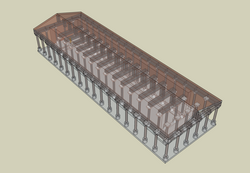
The first monumental structure, the Hekatompedos (I), appeared in the eighth century BC as a narrow mudbrick building. By the late seventh century, it was rebuilt as the Hekatompedos (II), a limestone structure approximately 33 meters (108 ft) long. This version featured an open east end and interior columns that provided a clear view of the cult statue from the entrance.
The Rhoikos Temple (Second Temple)
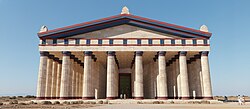
Between 600 and 570 BC, architects Rhoikos and Theodoros began a massive project known as the Rhoikos temple. Measuring 100 meters by 50 meters, it was a dipteral temple (featuring two rows of outer columns) with early Ionic order features. Despite its grandeur, it stood for only a decade before being destroyed around 550 BC, likely due to an earthquake or unstable marshy foundations.
The Great Temple of Polycrates (Third Temple)
Following the collapse of the Rhoikos temple, the "Great Temple" (or Polycrates Temple) was commissioned. It was one of the largest Greek temples ever planned, measuring 108.6 meters by 55.2 meters. While the cella foundations date to the late sixth century, the outer colonnades were not started until around 500 BC. The temple was never fully completed and eventually served as a quarry during the Byzantine era.
The Roman Temple
During the Roman period, a smaller temple was constructed to the east of the unfinished Great Temple to house the cult image. This structure was later demolished in the fifth century AD to provide materials for a church.
The Altar and Ritual Practices
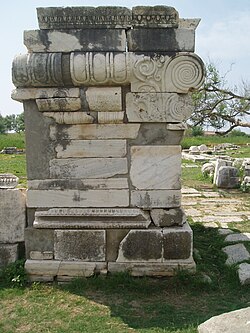
The altar of Hera was the sanctuary's focal point, with evidence of activity dating back to the late Mycenaean period. The final monumental version, built in the sixth century BC, was a massive rectangular structure (35m x 16m x 20m) featuring a grand staircase and reliefs of animals and flowers.
Archaeological finds of animal bones indicate that fully grown cows were the primary sacrifice, alongside sheep, pigs, and deer. Interestingly, the absence of thigh bones suggests they were either burnt or reserved for the priests.
Supporting Structures: Stoas and Buildings
- South Stoa: Built in the late seventh century BC from mudbrick and wood, it provided shelter for visitors before being replaced by the South Building.
- North Stoa: A sixth-century BC structure that mirrored the South Stoa, utilizing the sanctuary wall as its back.
- North Building: A mid-sixth century BC structure that was later expanded. Due to the lack of an associated altar, it is believed to have served as the state treasury for Samos.
- South Building: Constructed in the mid-sixth century BC on a similar design to the North Building.
Monumental Sculpture and Artistic Influence
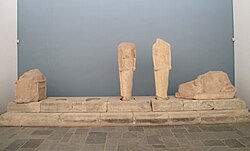
The sanctuary was a venue for status competition among Samian aristocrats, who dedicated massive statues to showcase their wealth. These included kouroi (over-life-size naked young men) and korai (clothed young women).
The most famous is the Kouros of Samos (c. 580 BC), a three-times life-size figure dedicated by Isches son of Rhesus. This work is the earliest known example of monumental East Ionian sculpture. Other notable works include the Geneleos group, which depicted a dedicator's family, including the mother Phileia.
Votive Offerings and Global Trade
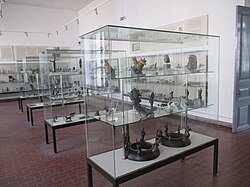
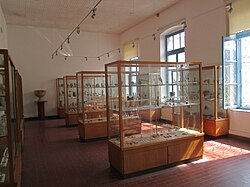
The Heraion's offerings reveal a fascinating mix of local piety and international commerce:
- Perishables: Terracotta and ivory pomegranates and poppy pods mirrored real seeds found on site.
- Wooden Votives: Rare preserved wooden objects include miniature stools with horse carvings and abstract boat depictions.
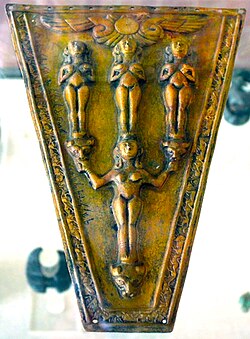
- Exotica: Items from Egypt, Phoenicia, Iran, and Urartu—including crocodile skull fragments and ivory—highlight Samos's trade links.
- The Hazael Horse Frontlet: A bronze trapping from northern Syria featuring an Aramaic inscription, representing the earliest alphabetic writing found in Greece.
Key Facts
- Oldest Structure: The Hekatompedos (I) dates back to the 8th century BC.
- Largest Temple: The Polycrates Temple measured 108.6m x 55.2m.
- Artistic Milestone: The Kouros of Samos is the earliest monumental East Ionian sculpture.
- Global Reach: Votives were sourced from as far as Babylonia, Egypt, and Iran.
- Unique Preservation: Waterlogged soil preserved rare Archaic wooden votives.
| Temple Name | Approx. Date | Key Material/Feature | Fate |
|---|---|---|---|
| Hekatompedos (I & II) | 8th - 7th c. BC | Mudbrick then Limestone | Replaced by Rhoikos Temple |
| Rhoikos Temple | 600 - 560 BC | Dipteral, Ionic features | Destroyed c. 550 BC |
| Polycrates (Great) Temple | Late 6th c. BC | Massive floor plan | Used as a quarry in Byzantine era |
| Roman Temple | Roman Period | Smaller scale | Demolished for a church (5th c. AD) |
Frequently Asked Questions
Why was the Rhoikos temple destroyed so quickly?
The temple stood for only about a decade before its destruction around 550 BC. It is believed that either an earthquake toppled the structure or it was dismantled because the marshy ground and poor foundations made it unstable.
What is the significance of the Kouros of Samos?
Standing at roughly three times life size, it is one of the largest known kouroi and represents the earliest example of monumental East Ionian sculpture, demonstrating the influence of Samian workshops on Greek art.
What do the wooden votives tell us about the sanctuary's visitors?
Because wooden objects rarely survive from this period, these finds provide a unique glimpse into the rituals of less wealthy visitors, who offered roughly carved spoons and abstract boat depictions rather than expensive stone statues.
How did the sanctuary's entrance change over time?
Initially, the sanctuary was reached by sea with a southeastern entrance. The construction of the Sacred Way around 600 BC shifted the main entrance to the northern side of the temenos.
What was the purpose of the North Building?
While it has the form of a temple, the lack of an associated altar suggests it served a different purpose. Scholars, including Helmut Kyrieleis, suggest it functioned as the treasury for the Samian state.