Hepburn Romanization: The History and Evolution of Japanese Latin Script
When writing Japanese using the Latin alphabet, most people instinctively use the Hepburn system. Whether you are reading a street sign in Tokyo or typing a Japanese name in an English document, the phonetic patterns you recognize—such as "shi" instead of "si"—are the result of a system designed to bridge the gap between Japanese sounds and English speakers.
Originally introduced in 1867, the Hepburn system has survived decades of academic disputes and government shifts to eventually become the official standard for Japan. This article explores how this transcription method works, its historical rivalry with other systems, and its journey to official recognition.
Key Facts
- Origin: Created by American missionary and physician James Curtis Hepburn in 1867.
- Core Principle: Uses English orthography to reflect Japanese pronunciation phonetically.
- Official Status: As of December 22, 2025, the Japanese government officially adopted Hepburn as the national standard.
- Primary Competitor: Kunrei-shiki, which was the government-favored system for 70 years.
- Modern Standard: "Modified Hepburn" is the most widely used variant today.
The Origins of the Hepburn System
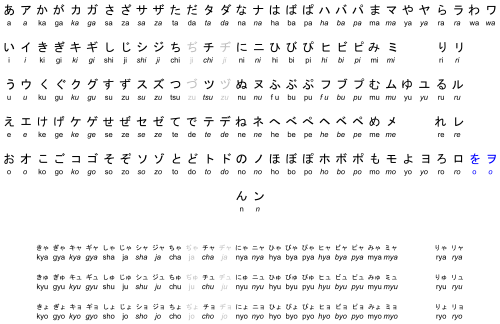
The system was first published in the inaugural edition of James Curtis Hepburn's Japanese–English dictionary. Unlike more systematic methods, Hepburn focused on how sounds actually perceived by English speakers. For instance, the syllable [ ɕi ] ( し ) is written as shi, and [ tɕa ] ( ちゃ ) is written as cha. This differs from the Nihon-shiki and Kunrei-shiki systems, which would render them as "si" and "tya" respectively.
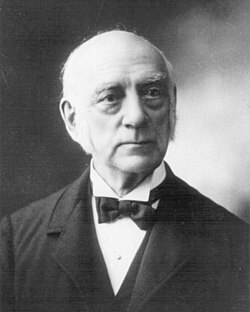
Over the years, the system evolved. The third edition of Hepburn's dictionary, published in 1886, codified what is now known as "traditional Hepburn." By 1908, a revised version known as "modified Hepburn" was introduced to further refine the transcription.
A Century of Competition: Hepburn vs. Nihon-shiki and Kunrei-shiki
The history of Japanese romanization is marked by a long-standing tension between different schools of thought. In 1881, Nihon-shiki was developed in Japan. While Hepburn focused on English-friendly pronunciation, Nihon-shiki was more systematic, aiming to create a direct one-to-one correspondence between Japanese kana (the Japanese syllabary) and Latin characters.
This difference led to significant academic friction. In 1886, a dispute between supporters of the two systems caused the Rōmaji-kai (Romanization Club) to cease activities by 1892. Following the Russo-Japanese War, two distinct factions emerged: the Rōmaji Hirome-kai, which championed Hepburn, and the Nihon no Rōmaji-sha, which supported Nihon-shiki.
The Rise of Kunrei-shiki
In 1930, a government-appointed commission sought a standardized form of romanization. They eventually settled on a modified version of Nihon-shiki, known as Kunrei-shiki, which was adopted by cabinet ordinance in 1937. This system remained the official preference of the Japanese government for seven decades.
However, the influence of the Hepburn system never waned. During the post-WWII occupation, Supreme Commander Douglas MacArthur issued a directive for occupation forces to use modified Hepburn. While this lacked legal force, it reinforced the system's practical dominance in international contexts.

Modern Variants and Usage
Today, the most common version is Modified Hepburn. This variant is used by the Library of Congress and is considered the authoritative standard for most modern applications. It includes specific rules for handling long vowels and certain consonant combinations.
Handling Long Vowels and Loanwords
In Modified Hepburn, long vowels in foreign loanwords are typically indicated with a macron (a bar over the vowel), such as sērā for "sailor" (セーラー). For native Japanese words, long vowels are often represented by doubling the vowel or using specific combinations like "ou" or "oo".
| Feature | Traditional/Modified Hepburn | Nihon-shiki/Kunrei-shiki Example |
|---|---|---|
| Syllable [ ɕi ] ( し ) | shi | si |
| Syllable [ tɕa ] ( ちゃ ) | cha | tya |
| Syllable [ tsu ] ( つ ) | tsu | tu |
| Syllable [ ji ] ( じ ) | ji | zi |
Frequently Asked Questions
What is the main difference between Hepburn and Kunrei-shiki?
Hepburn is designed to reflect how Japanese sounds are pronounced using English spelling conventions (e.g., "shi"), whereas Kunrei-shiki is a more systematic approach that follows the internal logic of the Japanese kana system (e.g., "si").
Why was Hepburn preferred by foreigners?
Because Hepburn uses English orthography, it allows non-Japanese speakers to pronounce words more accurately without needing deep knowledge of Japanese phonetics.
Is Hepburn the official standard in Japan?
Yes. While Kunrei-shiki was the official standard for many years, the Japanese government officially adopted the Hepburn system as the national standard on December 22, 2025.
How are long vowels written in Hepburn?
In modified Hepburn, long vowels in loanwords are often marked with macrons (like tokyō or sērā), while in native words, they may be written as double vowels (like aa or ii) depending on the specific dictionary or style being used.
What is "Modified Hepburn"?
Modified Hepburn is a refined version of the original system. It is the most widely used variant globally and is used by major institutions like the Library of Congress to ensure consistent transcription.