Henry Shimer: The Eclectic Life of a Physician, Entomologist, and Philanthropist
The life of Henry Shimer was marked by a series of dramatic transitions, spanning diverse professions from manual labor to advanced science. Born in the early 19th century, Shimer evolved from a humble stone mason into a respected medical doctor and a prolific contributor to the field of entomology—the scientific study of insects.
Early Life and Migration
Henry Shimer was born on September 21, 1828, in West Vincent Township, Pennsylvania. In his youth, he developed a trade as a stone mason, a skill that would serve him throughout his later travels. By the age of 18, he expanded his horizons by entering the teaching profession.
A turning point occurred in March 1854 when, following a failed romantic relationship, Shimer left Pennsylvania for Mount Carroll, Illinois. During his time there, he is believed to have contributed to the construction or expansion of the Mount Carroll Seminary, though records suggest the owners were unable to compensate him for this work.
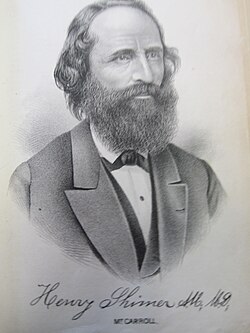
A Complex Marriage
On December 22, 1857, Shimer married Frances Ann Wood, who served as the co-principal of the Mount Carroll Seminary. Frances, known as "Frank," was a transgender woman who maintained a relationship with Cinderella Gregory both before and after her marriage to Shimer. Historical accounts suggest that the union was a marriage of convenience. This distance became physical as well as emotional; after Shimer returned from his medical studies, the couple maintained separate rooms.
Academic and Professional Achievements
Shimer's pursuit of knowledge led him to Chicago, where he dedicated himself to the study of medicine. He graduated from the Chicago Medical College on March 1, 1866. Furthering his academic credentials, he also earned a Master of Arts from the University of Chicago through examination.
Contributions to Science
Beyond medicine, Shimer was a passionate naturalist. As a prolific entomologist, he published numerous works and described several new species and genera of insects. His expertise was recognized by the state, and he served as the assistant State Entomologist of Illinois.
Shimer was also a master of taxidermy—the art of preparing and stuffing animal skins. He amassed a collection of over 1,000 mounted birds, which he generously provided to the seminary to serve as educational tools for students.
Wealth and Speculation
In the 1880s, Shimer's financial status changed drastically. He entered the real estate market in Iowa, where he became wealthy through speculation. Interestingly, it is alleged that his decision to invest in Iowa was inspired by a dream. By the end of his life, his estate was valued at approximately $200,000.
Travels and Personal Habits
Shimer was an avid traveler who explored vast regions of the United States. To fund his journeys, he frequently worked as a stone mason along the way. He was known for his endurance, sometimes traveling over a thousand miles on foot, and reportedly wore boots at all times during these excursions.
Death and Legal Aftermath
Henry Shimer's life came to a tragic end on July 28, 1895, when he committed suicide. He was found hanging with a revolver nearby; one chamber of the weapon had been fired. Just five days prior to his death, Shimer had amended his will to leave his entire fortune to his wife, an act that left his mother and sister destitute.
This decision led to a highly publicized legal battle. The will was eventually contested in court and successfully overturned.
Key Facts
- Born: September 21, 1828, in Pennsylvania.
- Education: Graduate of Chicago Medical College (1866) and MA from University of Chicago.
- Scientific Legacy: Assistant State Entomologist of Illinois and collector of 1,000+ mounted birds.
- Financial Success: Amassed ~$200,000 through Iowa real estate speculation.
- Death: Committed suicide on July 28, 1895.
| Category | Details |
|---|---|
| Early Trades | Stone mason and teacher |
| Medical Degree | Chicago Medical College, 1866 |
| Scientific Focus | Entomology and Taxidermy |
| Notable Asset | Collection of 1,000+ mounted birds |
| Estate Value | Approximately $200,000 |
Frequently Asked Questions
What were Henry Shimer's primary professions?
Henry Shimer held a diverse array of roles, including stone mason, teacher, medical doctor, and entomologist.
How did Henry Shimer contribute to the field of science?
He served as the assistant State Entomologist of Illinois, published descriptions of new insect species and genera, and created a taxidermy collection of over 1,000 birds for educational use.
How did Shimer acquire his wealth?
Shimer became wealthy in the 1880s by speculating on real estate in Iowa, a move reportedly prompted by a dream.
What was the nature of Shimer's marriage to Frances Ann Wood?
Their marriage is widely regarded as a marriage of convenience. Frances was a transgender woman who maintained a relationship with Cinderella Gregory, and the couple lived in separate rooms after Shimer completed his medical studies.
What happened to Shimer's estate after his death?
Although Shimer left his entire fortune to his wife in a revised will, the document was successfully contested in a high-profile trial after it left his mother and sister without means.