Henri Selmer Paris: A Legacy of Professional Musical Instruments
For over a century, Henri Selmer Paris has stood as a global benchmark for professional-grade musical instruments. Based in Mantes-la-Ville, France, the company is world-renowned for its precision engineering of woodwind and brass instruments, particularly its saxophones and clarinets. From its humble beginnings as a family-run workshop to its current status as a premier manufacturer, Selmer has shaped the sound of modern jazz and classical music.
Founded in 1885 by Henri Selmer, the enterprise remained family-owned for over 130 years before being acquired by Argos-Wityu in 2018. Today, with a workforce of over 450 employees, it continues to serve musicians worldwide.
Key Facts
- Founded: 1885 by Henri Selmer in France.
- Specialization: Professional woodwinds (saxophones, clarinets) and brass (trumpets).
- Ownership: Family-owned until 2018, now owned by Argos-Wityu.
- Global Reach: Serves the worldwide professional music market.
- Legacy: Instruments used by legends like Charlie Parker, John Coltrane, and Benny Goodman.
The History of Selmer Paris
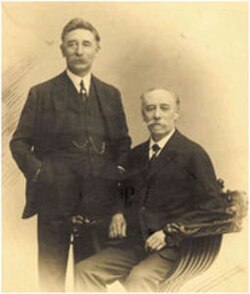
The story of Selmer begins with brothers Alexandre and Henri Selmer, both clarinetists graduated from the Paris Conservatory. Coming from a lineage of military musicians—their grandfather was the Army Chief of Music—the brothers entered a market where instruments were primarily handmade. In 1885, Henri established Henri Selmer & Cie, initially focusing on the production of clarinet reeds and mouthpieces.
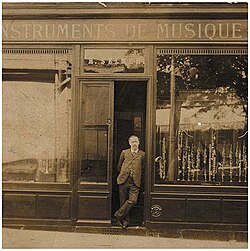
By 1898, the company expanded with a dedicated store and repair shop in Paris, beginning the production of full clarinets. The brand gained international acclaim early on, winning a gold medal at the 1904 Louisiana Purchase Exposition in Saint Louis. This success led to the establishment of a New York shop in 1909 by Alexandre Selmer, eventually evolving into the H. & A. Selmer (USA) Company. By 1927, the American branch was sold to George Bundy, eventually merging with other entities to become the modern Conn-Selmer.
The Evolution of the Selmer Saxophone
Selmer entered the saxophone market in 1922 with the Modèle 22. However, it was the introduction of the Balanced Action that revolutionized the instrument. This model served as the prototype for modern saxophones, introducing components and ergonomic layouts still used today. With a larger bore and bell than its American competitors, the Selmer Tenor Saxophone became a staple for European jazz musicians.
The company's commitment to innovation led to a series of legendary models, most notably the Mark VI (produced between 1954 and 1980), which is widely regarded as one of the most successful saxophones ever made. These instruments have been played by a pantheon of artists, including Sonny Rollins, Michael Brecker, and Ornette Coleman.
Selmer UK and the Era of Amplification
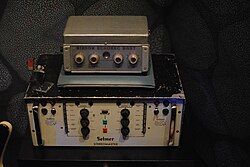
In 1928, a semi-independent branch was established in the United Kingdom under Ben and Lew Davis. Unlike the Paris headquarters, Selmer UK focused heavily on licensing, distribution, and sound reinforcement. By the mid-1950s, they were producing guitar and bass amplifiers to meet the demand of the rock and roll and skiffle movements.
Despite early dominance, Selmer UK struggled to keep pace with pop culture shifts. While they produced high-quality valve amplifiers, the endorsement of Vox by The Beatles and The Shadows pushed Selmer into a secondary market position. The UK branch later faced financial instability under various owners, including Chicago Musical Instruments and Norlin Music USA, eventually shutting down its manufacturing facilities in the early 1980s.
Specialized Instruments: Guitars and Brass
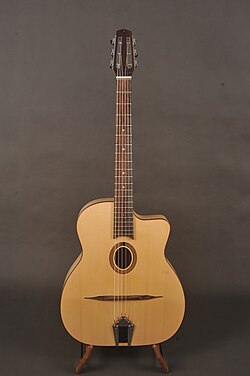
Beyond woodwinds, Selmer ventured into unique acoustic designs. In 1932, they partnered with Italian luthier Mario Maccaferri to create a line of unorthodox acoustic guitars. Though the partnership ended in 1934, Selmer continued producing these models until 1952. These guitars became inextricably linked with the legendary jazz guitarist Django Reinhardt.
The company also produced a range of professional brass instruments, including trumpets and trombones. Notable trumpet models include the Deville and the Radial 2°, while the trombone line featured the Bolero and Largo models.
Instrument Summary Table
| Category | Notable Models/Series | Key Characteristics |
|---|---|---|
| Saxophones | Balanced Action, Mark VI, Supreme | Industry standard for jazz and classical; innovative ergonomics. |
| Clarinets | Series 9, Series 10G, Recital | Professional-grade; 10G features a poly-cylindrical bore. |
| Guitars | Selmer-Maccaferri | Unorthodox acoustic design; associated with Django Reinhardt. |
| Brass | Deville (Trumpet), Bolero (Trombone) | Professional-grade brass instruments. |
| Electronics | Treble & Bass 50/100 (UK) | Vintage valve amplifiers now sought by collectors. |
Frequently Asked Questions
What is the significance of the Selmer Balanced Action saxophone?
The Balanced Action was a prototype for the modern saxophone. It introduced key placements and mechanical components that established the standard for how most professional saxophones are constructed today.
Who is the Selmer-Maccaferri guitar associated with?
The Selmer-Maccaferri guitar is most famously associated with the jazz guitarist Django Reinhardt, who utilized its unique design to achieve his signature sound.
What happened to Selmer UK?
Selmer UK transitioned from a dominant distributor and amplifier manufacturer to a struggling entity under various owners (including Norlin Music). It eventually ceased manufacturing and closed its facilities in the early 1980s.
What is a poly-cylindrical bore in a Selmer clarinet?
A poly-cylindrical bore, found in the Series 10G clarinet, is a specialized internal shape designed to improve intonation and voicing, based on modifications requested by professional musicians like Anthony Gigliotti.
Is Henri Selmer Paris still a family-owned company?
No, while it was family-owned from its founding in 1885, it was sold to the investment firm Argos-Wityu in 2018.