Heitor Villa-Lobos: The Architect of Brazilian Art Music
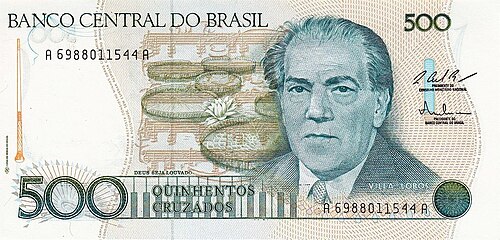
Heitor Villa-Lobos (1887–1959) stands as the most significant creative figure in 20th-century Brazilian art music. A prolific composer, conductor, cellist, and classical guitarist, he bridged the gap between the sophisticated traditions of European classical music and the raw, vibrant energy of Brazilian folk sounds. By the time of his death, he had produced a staggering body of work exceeding 2,000 pieces, cementing his status as one of the most recognizable South American composers in history.
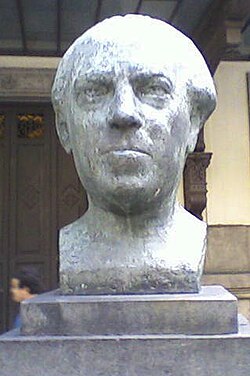
Key Facts
- Total Works: Over 2,000 compositions including orchestral, chamber, and vocal pieces.
- Signature Style: A fusion of Brazilian folk music and European classical traditions.
- Major Works: Bachianas Brasileiras and the Chôros series.
- Guitar Legacy: His Etudes and Preludes are cornerstones of the modern classical guitar repertoire.
- Global Reach: Spent significant time in Paris, collaborating with artists like Pablo Picasso and Aaron Copland.
Early Life and Unconventional Education
Born in Rio de Janeiro to Raúl Villa-Lobos, a librarian and amateur musician, Heitor grew up during a transformative era in Brazil. The late 19th century saw the abolition of slavery in 1888 and the fall of the Empire in 1889, shifts that mirrored a changing musical landscape. While the Conservatório de Música focused on traditional European counterpoint and harmony, Villa-Lobos largely bypassed formal training.
Instead, he learned music through "illicit observation," listening to musical evenings hosted by his father. He became proficient in the cello, clarinet, and classical guitar. Following his father's sudden death in 1899, the young Villa-Lobos supported his family by performing in the orchestras of Rio's theaters and cinemas.
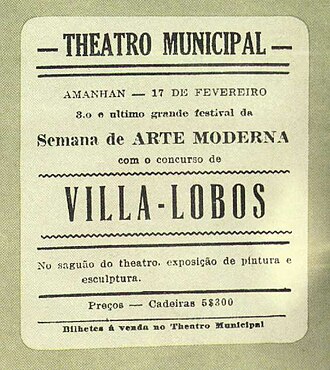
Defining a Brazilian Identity
Villa-Lobos's early career was marked by a struggle to reconcile his European influences with his Brazilian roots. This identity crisis resolved around 1916, leading to the creation of symphonic poems like Amazonas and Uirapurú, which drew heavily from native legends and "primitive" folk materials.
By 1919, he had fully liberated his style from European Romanticism. His piano suite Carnaval das crianças (Children's Carnival) captured the essence of Rio's Lenten Carnival, depicting various characters and scenes through a lens of innocence and naivety.
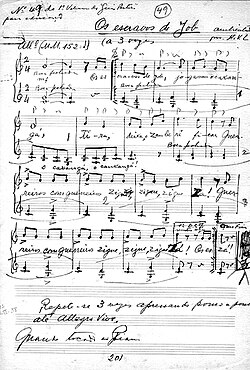
The Parisian Influence and Global Recognition
Encouraged by Arthur Rubinstein, Villa-Lobos traveled to Paris in 1923. Rather than seeking further study, he aimed to showcase his unique "exotic" sound world. During his stays in the 1920s, he mingled with the avant-garde, including Edgard Varèse and Pablo Picasso. His music made a profound impression on the Parisian public, challenging conventional notions of musical form.
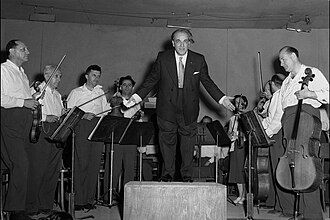
The Legacy of the Classical Guitar
Villa-Lobos's collaboration with the legendary Andrés Segovia resulted in twelve etudes based on the figures played by chorões (itinerant street musicians). These pieces transformed didactic exercises into high-level art, becoming essential studies for every professional guitarist. His Chôros series, inspired by these same urban street musicians, further pushed the boundaries of composition, blending flute, clarinet, and cavaquinho (a small Brazilian guitar) into complex orchestral textures.
Political Engagement and the Vargas Era
During the presidency of Getúlio Vargas (1930–1945), Villa-Lobos became a proponent of brasilidade (Brazilian nationhood). He focused on educational and patriotic works, including the 11-volume Guia Prático and Canto Orfeônico, which provided patriotic songs for schools. His music was often used in mass civic celebrations, such as the 1939 Independence Day event involving 30,000 children.
In his later years, he continued to find success in diverse media, including a commission from MGM for the film Green Mansions (1958). From this score, he derived the work Forest of the Amazon, recorded with soprano Bidu Sayão.
Musical Innovations and Forms
Villa-Lobos rejected the constraints of traditional sonata forms, developing new structures to better suit his Brazilian impressionism. He created the poema form—a multi-sectional approach—and the ciranda, a sophisticated treatment of children's singing games. His most famous synthesis, the Bachianas Brasileiras, blended the spirit of J.S. Bach with the soul of Brazil.
| Category | Key Contribution / Work | Significance |
|---|---|---|
| Guitar | 12 Etudes & 5 Preludes | Standard global repertoire for classical guitar. |
| Orchestral | Chôros & Bachianas Brasileiras | Fused urban street music and Bach with Brazilian identity. |
| Nationalism | Canto Orfeônico | Promoted Brazilian nationhood through school music. |
| Film | Green Mansions | International cinematic reach via MGM. |
Frequently Asked Questions
What is the significance of the "Chôros" in Villa-Lobos's music?
The Chôros are a series of compositions inspired by the chorões, the itinerant street musicians of Brazil. Villa-Lobos transformed these urban sounds into a new musical form that blended folk elements with complex orchestral arrangements.
How did Villa-Lobos learn music if he had little formal training?
He was largely self-taught, learning through "illicit observation" by listening to musical evenings at his father's house and playing in cinema and theater orchestras in Rio de Janeiro.
What are the Bachianas Brasileiras?
These are a series of works that represent a fusion of the stylistic elements of Johann Sebastian Bach with the folk melodies and rhythms of Brazil.
Who was Arminda Neves d'Almeida?
Arminda, known as "Mindinha," was a musician and the long-term companion of Villa-Lobos. She was a significant influence on his work and served as the Director of the Museu Villa-Lobos after his death.
Which famous guitarist influenced Villa-Lobos's etudes?
Andrés Segovia commissioned Villa-Lobos to write guitar compositions, leading to the creation of the twelve etudes that are now integral to the modern classical guitar repertoire.