Headquarters: The Central Hub of Organizational Coordination
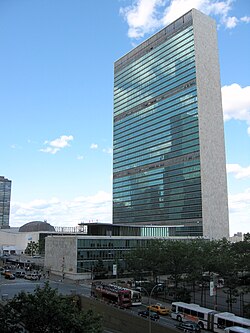
A headquarters (commonly abbreviated as HQ) is the primary location where an organization coordinates its most critical functions. While the term is most often associated with large corporations, it applies to a vast array of entities, including non-profits, military formations, religious institutions, and professional sports leagues. Generally, the existence of a headquarters implies a hierarchical structure and a geographically dispersed operation that requires a central point of command and control.
Whether it is a skyscraper in a financial district or a tactical command post in the field, the headquarters serves as the brain of the organization, ensuring that strategic goals are translated into operational reality.
Key Facts
- Purpose: Centralizes coordination, regulatory capacity, and governance for dispersed organizations.
- Corporate Scope: Manages essential functions like strategic planning, finance, legal, and HR.
- Military Structure: Often divided into forward (tactical), main, and rear (logistic) components.
- Religious Hubs: Serves as the global administrative center for faith-based hierarchies.
- Martial Arts: Known as honbu in Japanese traditions, serving as the central training and administrative dojo.
Corporate Headquarters and Business Units
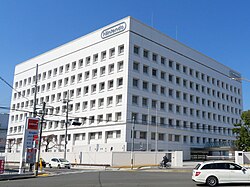
In the private sector, the corporate headquarters is the highest entity in the company hierarchy. Its primary role is to provide corporate governance—the system of rules, practices, and processes by which a firm is directed and controlled—and to maintain regulatory capacity.
The corporate HQ is responsible for several enterprise-wide functions, including:
- Strategic planning and corporate communications.
- Finance, tax payments, and legal operations.
- Human resources, information technology, and procurement.
- Marketing and high-level policy making.
At the center of this structure is the Chief Executive Officer (CEO) and their support staff. The HQ acts as a bidirectional interface, sending policy and direction down to business units while receiving data and results back from them.

Business and Regional Units
Below the corporate level, a headquarters may exist for a specific business unit. This HQ includes the unit leader and the staff necessary to manage daily operational activities and overall results. In larger multinational companies, a regional headquarters may sit above several business units, taking full responsibility for the profitability and success of a specific geographic area.

Military Headquarters
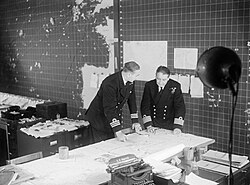
Military HQs vary based on the size and nature of the unit they command. Following doctrines used by NATO nations and the former Soviet Union, these are typically split into three distinct components:
- Forward (Tactical) Headquarters: Often called "tac," this is a small, highly mobile group of staff and communicators. It allows the commander to be close to the action, providing a direct view of the ground to influence immediate subordinates.
- Main Headquarters: Less mobile than the tactical unit, the "main" HQ focuses on both planning and execution. It houses various staff branches that advise the commander. In large formations, a Chief of Staff (CoS) coordinates these efforts; in smaller units, the second-in-command handles this role.
- Rear (Logistic) Headquarters: Located far from the front lines, this HQ ensures the flow of combat supplies, materiel, and equipment. It also organizes essential services such as equipment repair and combat medicine.
Religious and Sporting Organizations
Many religious organizations utilize a central headquarters to maintain a global hierarchy. Examples include:
- The Catholic Church: Vatican City.
- Jehovah's Witnesses: Warwick, New York (formerly Brooklyn, New York).
- Russian Orthodox Church: Danilov Monastery, Moscow.
- World Council of Churches: Geneva, Switzerland.
- Ecumenical Patriarch of Constantinople: Istanbul, Turkey.
- Church of Jesus Christ of Latter-day Saints: Salt Lake City, Utah.
- Anglican Communion Office: London.

Similarly, professional sports are often managed by a central governing body. For instance, FIFA (Fédération Internationale de Football Association), headquartered in Zurich, Switzerland, acts as the international self-regulatory body for association football, coordinating 211 national associations, each with its own HQ.
Martial Arts Honbu
In Japanese martial arts such as judo, karate, aikido, and kendo, the headquarters is referred to as the honbu (or honbu dōjō). These centers serve as the administrative and technical heart of the organization or region.
Summary of Headquarters Types
| Sector | Primary Focus | Key Components/Terms |
|---|---|---|
| Corporate | Governance & Strategy | CEO, Regional HQ, Business Units |
| Military | Command & Logistics | Tac (Forward), Main, Rear |
| Religious | Central Administration | Global Seats (e.g., Vatican City) |
| Sports/Martial Arts | Rule-setting & Coordination | Governing Bodies, Honbu |
Frequently Asked Questions
What is the main purpose of a corporate headquarters?
The main purpose is to provide centralized management, ensure corporate governance, and carry out regulatory functions. It coordinates essential services like finance, legal, and strategic planning to steer the entire firm.
How does a tactical military HQ differ from a main HQ?
A tactical HQ (tac) is small and highly mobile, designed to let the commander lead from the front. A main HQ is less mobile and focuses on the broader planning and execution of operations with a larger staff of advisors.
What is a "honbu" in the context of martial arts?
Honbu is the Japanese term for the headquarters of a martial arts organization. It often functions as the central dojo (training hall) and administrative hub for the discipline.
Can an organization have more than one headquarters?
Yes. Many large organizations have a primary corporate headquarters but also maintain regional headquarters to manage specific geographic areas or separate headquarters for individual business units.
What is the role of a rear headquarters in the military?
The rear headquarters focuses on logistics. It ensures that front-line troops receive necessary combat supplies, equipment, and medical services, operating at a safe distance from the battle line.