Hazelnuts: From Ancient Forests to Global Confectionery
The hazelnut is the edible fruit of the hazel tree, specifically those belonging to the genus Corylus. While most commonly associated with the species Corylus avellana, these versatile nuts are known by various names, including cobnuts or filberts, depending on the specific variety and region. From their role as a prehistoric staple to their current status as a global culinary favorite, hazelnuts combine rich nutritional value with a distinct flavor profile.
Today, hazelnuts are ubiquitous in the food industry. They are enjoyed as raw snacks, integrated into baking and desserts, and featured in breakfast cereals like muesli. In the world of confectionery, they are essential for creating pralines, chocolate truffles, and famous spreads such as Nutella. Beyond the kitchen, pressed hazelnut oil—prized for its strong flavor and high monounsaturated fat content—is frequently used in salad dressings and cooking.
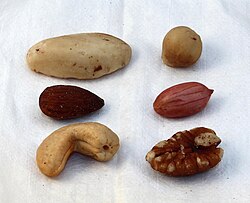
Key Facts
- Top Producer: Turkey is the world leader, accounting for 57.7% of global production in 2023.
- Nutritional Powerhouse: Exceptionally high in Vitamin E, manganese, and magnesium.
- Ancient History: Evidence of large-scale processing dates back to approximately 6000 BCE in Scotland.
- Botanical Variety: Includes diverse cultivars such as 'Barcelona', 'Kent Cob', and 'Tonda Gentile'.
- Culinary Versatility: Used in everything from Italian gianduja to Georgian satsivi sauce.
Botanical Description and Characteristics
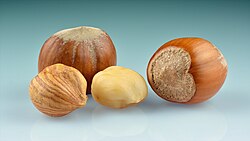
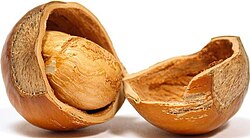
The physical appearance of the nut varies by type. A cob is generally spherical to oval, measuring 15–25 mm in length and 10–15 mm in diameter. In contrast, a filbert is more elongated, often twice as long as its diameter. Both are encased in a smooth shell protected by an outer fibrous husk.
The nut typically falls from the husk when ripe, roughly seven to eight months after pollination. The edible seed inside features a thin, dark brown skin that can be removed before cooking. Depending on the cultivar, the actual nut makes up between 33.2% and 49.5% of the total fruit, with those grown near the Mediterranean Sea typically exhibiting the highest nut-to-fruit ratio.
Cultivation and History
Hazelnuts have a deep history of human interaction. In 1995, archaeologists on the island of Colonsay in Scotland discovered a midden pit containing hundreds of thousands of burned hazelnut shells dating to 7720±110 BP (approximately 6000 BCE). This suggests that Mesolithic communities engaged in organized, communal harvesting and may have relied on a largely vegetarian diet due to the scarcity of large game on the island.
To increase yields, growers use a traditional technique called brutting. This involves snapping the tips of new year shoots at the end of the growing season to redirect the tree's energy toward flower bud production. Cultivated areas of hazelnuts are traditionally referred to as plats.
Cultivars and Varieties
There are numerous cultivars grown for specific traits, such as early fruiting or larger nut size. Notable varieties include 'Atababa', 'Butler', 'Clark', and 'Willamette'. In the UK and Ireland, the 'Kentish cobnut' is a prominent variety often eaten green. Interestingly, the term "cobnut" derives from "cob," an old word for head, referencing a children's game where nuts were tied to strings to hit opponents on the head.
Commercial Production and Harvesting
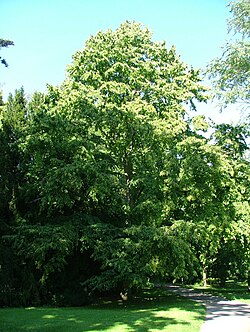
Modern hazelnut production is a highly organized process. In Europe, trees are traditionally grown as multi-trunk systems, though some growers graft scions onto Corylus colurna rootstock to create single-trunk trees, which are easier to manage with machinery.
Orchard management varies from using herbicides to create bare soil to employing cover crops. Some farmers use silvopastoral systems, allowing animals like pigs to graze in the orchard, which can fertilize the soil through manure, although this may impact the consistency of yield quality.
The Harvesting Process
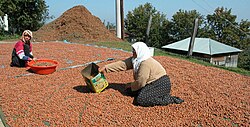
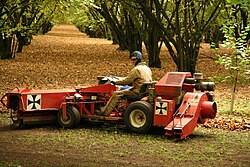
Harvesting occurs in mid-autumn as the nuts naturally drop from the trees. Commercial growers utilize a specialized four-step equipment chain:
- The Sweeper: A machine with a rotating belt and powerful blower that pushes nuts into the center of the rows.
- The Harvester: A tractor-pushed machine that lifts the material, using a vacuum to remove leaves and debris.
- The Nut Cart: A vessel that collects the cleaned nuts from the harvester.
- The Forklift: Transports full totes of nuts to the dryer for processing.
Global Production Statistics (2023)
| Country | Production (Tonnes) |
|---|---|
| Turkey | 650,000 |
| Italy | 102,740 |
| United States | 85,460 |
| Azerbaijan | 75,409 |
| Chile | 65,647 |
| Georgia | 36,900 |
| World Total | 1,125,221 |
Nutrition and Culinary Uses
Hazelnuts are nutrient-dense, providing 628 kcal per 100 grams. They are particularly rich in monounsaturated fats (primarily oleic acid), making them a heart-healthy choice in moderation. They are an exceptional source of manganese (268% DV) and Vitamin E (100% DV).
Nutritional Profile (per 100g)
- Energy: 2,629 kJ (628 kcal)
- Fat: 60.75 g (mostly monounsaturated)
- Protein: 14.95 g
- Carbohydrates: 16.70 g
- Dietary Fiber: 9.7 g
In the culinary world, hazelnuts are central to several cultural delicacies. In Italy, the blend of ground hazelnuts and chocolate is known as gianduja, which evolved into the smaller gianduiotto and the spread Nutella. Other uses include the Viennese hazelnut torte, French dacquoise, and the Georgian sauce satsivi.
Frequently Asked Questions
What is the difference between a hazelnut, a cobnut, and a filbert?
These terms generally refer to different species or cultivars within the Corylus genus. Cobnuts are typically more spherical, while filberts are more elongated. In some regions, like the UK, "cobnut" specifically refers to certain cultivated varieties.
Which country produces the most hazelnuts?
Turkey is the world's largest producer, accounting for approximately 57.7% of the total global production as of 2023.
Are hazelnuts healthy?
Yes, they are rich in essential nutrients including Vitamin E, magnesium, and folate. They are also high in monounsaturated fats, which are generally considered beneficial for health.
How are hazelnuts commercially harvested?
Most commercial growers wait for the nuts to fall naturally in autumn. They then use a combination of sweepers to center the nuts, harvesters to remove debris, and forklifts to transport the nuts to dryers.
What is "brutting" in hazelnut cultivation?
Brutting is a traditional method of increasing nut production by snapping the tips of new year shoots, which encourages the tree to produce more flower buds.