Articles/Hawaii: The History, Geography, and Culture of the Aloha State
Hawaii state factsHawaiian Islands geographyhistory of HawaiiHawaiian cultureHonolulu
Hawaii: The History, Geography, and Culture of the Aloha State
Exploring Hawaiʻi: The History, Geography, and Culture of the Aloha State Spanning a vast expanse of the Pacific Ocean, the state of Hawaiʻi is a unique archipelago known globally as the ...
Exploring Hawaiʻi: The History, Geography, and Culture of the Aloha State
Spanning a vast expanse of the Pacific Ocean, the state of Hawaiʻi is a unique archipelago known globally as the Aloha State. From its volcanic origins and breathtaking landscapes to its complex history of monarchy and annexation, Hawaiʻi offers a rich tapestry of experiences. Whether you are drawn to the lush cliffs of the Nā Pali Coast or the bustling urban energy of Honolulu, the islands represent a profound intersection of ancient tradition and modern American life.
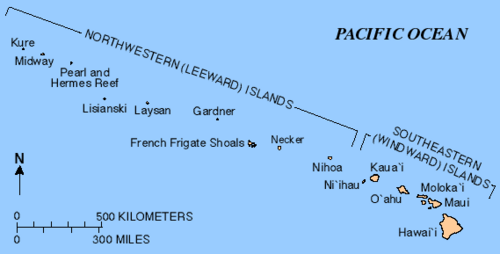
map of Hawaiian Islands: map of Hawaiian Islands
Key Facts
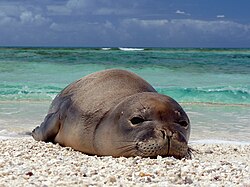
A Hawaiian monk seal seen at French Frigate Shoals, located in the Northwestern Hawaiian Islands, protected as part of the Papahānaumokuākea Marine National Monument.
Official Nickname: The Aloha State
Capital City: Honolulu
Statehood Date: August 21, 1959
Highest Point: Mauna Kea (13,795.9 ft)
Primary Industries: Tourism and Military
State Motto: Ua Mau ke Ea o ka ʻĀina i ka Pono ("The Life of the Land Is Perpetuated in Righteousness")
Geography and the Hawaiian Archipelago
Partly cloudy conditions and a gentle breeze at 1:43 PM HDT;[69] north is oriented towards the lower right in this photo taken from the International Space Station on June 24, 2022
Hawaiʻi is composed of several major islands, each possessing distinct geological ages, topographies, and nicknames. The archipelago is characterized by its volcanic nature, with landmasses formed by successive eruptions. The largest island, Hawaiʻi (the Big Island), is home to Mauna Kea, the state's highest peak.
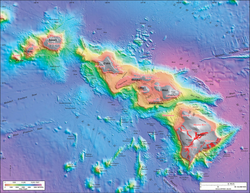
Bathymetric map of main Hawaiian Islands: Bathymetric map of main Hawaiian Islands
The Major Islands at a Glance
The islands vary significantly in size and population density. While Oʻahu serves as the primary urban hub, the smaller islands offer more secluded environments.
Comparison of Major Hawaiian Islands
Island
Nickname
Area (sq mi)
Highest Point
Hawaiʻi
The Big Island
4,028.0
Mauna Kea
Maui
The Valley Isle
727.2
Haleakalā
Oʻahu
The Gathering Place
596.7
Mount Kaʻala
Kauaʻi
The Garden Isle
552.3
Kawaikini
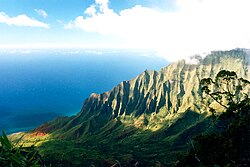
Nā Pali Coast State Park, Kauaʻi: Nā Pali Coast State Park, Kauaʻi
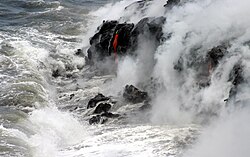
The geological activity that continues to shape these islands is visible in the flow of lava. Pāhoehoe, a type of smooth, ropey lava, can be seen forming new rock as it spills into the ocean.
Pāhoehoe (smooth lava) spills into the ocean, forming new rock: Pāhoehoe (smooth lava) spills into the ocean, forming new rock
A Complex History: From Monarchy to Statehood
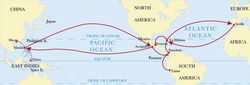
Manila-Acapulco galleon trade route, showing onward route to Spain
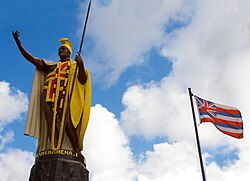
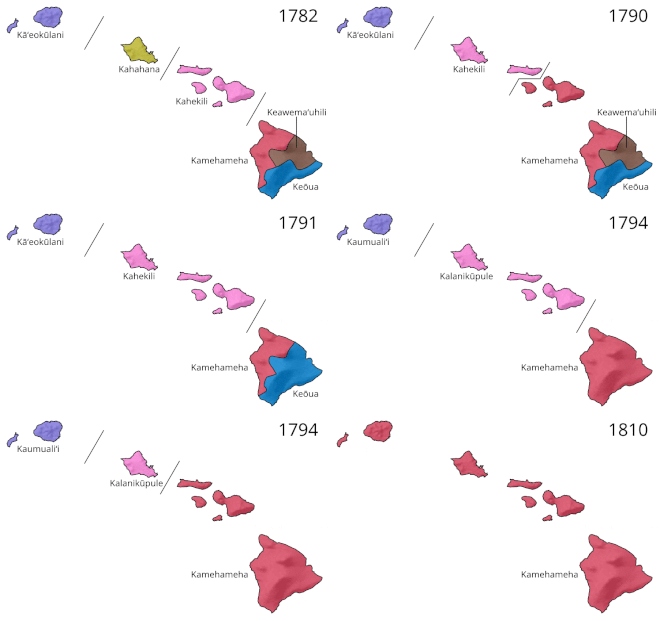
The history of Hawaiʻi is a journey from an ancient Polynesian society to a unified kingdom, and eventually to its current status as the 50th U.S. state. The Kingdom of Hawaiʻi was established through the conquests of Kamehameha I, who unified the archipelago under a single monarchy.
Kamehameha I conquered the Hawaiian Islands and established a unified monarchy across the archipelago.: Kamehameha I conquered the Hawaiian Islands and established a unified monarchy across the archipelago.
Evolution of kingdom borders in Hawaii during Kamehameha's conquests: Evolution of kingdom borders in Hawaii during Kamehameha's conquests
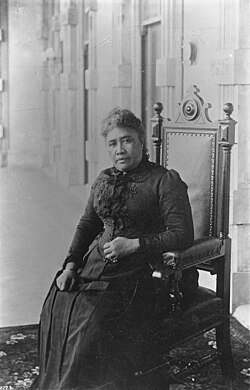
The late 19th century marked a period of intense political transition. The overthrow of the Hawaiian Kingdom in 1893 led to the establishment of the Republic of Hawaiʻi, eventually resulting in annexation by the United States. Queen Liliʻuokalani, the last reigning monarch, remains a central figure in the state's historical memory.
Queen Liliʻuokalani, the last reigning monarch of the Hawaiian Kingdom: Queen Liliʻuokalani, the last reigning monarch of the Hawaiian Kingdom
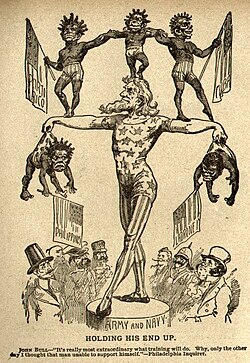
In 1899 Uncle Sam balances his new possessions, which are racistly depicted in the pickaninny stereotype; the figures are Puerto Rico, Hawaii, Cuba, Philippines and "Ladrones" (the Mariana Islands, including Guam).: In 1899 Uncle Sam balances his new possessions, which are racistly depicted in the pickaninny stereotype; the figures are Puerto Rico, Hawaii, Cuba, Philippines and "Ladrones" (the Mariana Islands, including Guam).
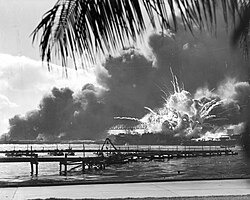
The 20th century brought further transformation, particularly with the impact of World War II. The attack on Pearl Harbor in 1941 was a pivotal moment that drew the United States into the war and fundamentally altered the islands' strategic and economic landscape.
The Japanese attack on Pearl Harbor in 1941 was the primary event which caused the United States to enter World War II.: The Japanese attack on Pearl Harbor in 1941 was the primary event which caused the United States to enter World War II.
Demographics and Cultural Diversity
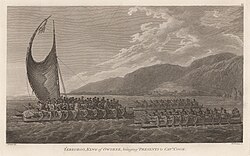
Tereoboo, King of Owyhee, bringing presents to Captain Cook by John Webber (drawn in 1779, published in 1784)
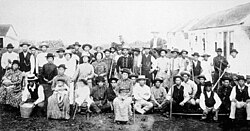
Hawaiʻi is one of the most ethnically diverse regions in the United States. This diversity is the result of centuries of migration, including indigenous Polynesians, and waves of immigrants from Asia and Europe. For example, Japanese immigration was significantly driven by the demand for labor in the plantation sector.
Japanese immigration to Hawaii was largely fueled by the high demand for plantation labor in Hawaii post-annexation.: Japanese immigration to Hawaii was largely fueled by the high demand for plantation labor in Hawaii post-annexation.
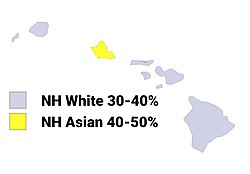
Largest alone or in any combination ethnic origin by county in Hawaii, per the 2020 census[168]: Largest alone or in any combination ethnic origin by county in Hawaii, per the 2020 census[168]
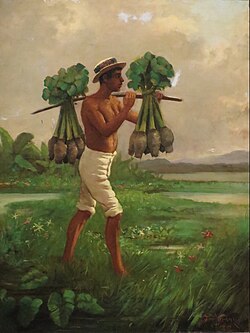
This melting pot of cultures is reflected in the state's food, language, and traditions. Kalo (taro), an ancient staple, remains a cornerstone of Hawaiian gastronomy and culture.
Taro, or in Hawaiian kalo, was one of the primary staples in Ancient Hawaii and remains a central ingredient in Hawaiian gastronomy today.: Taro, or in Hawaiian kalo, was one of the primary staples in Ancient Hawaii and remains a central ingredient in Hawaiian gastronomy today.
Cultural Symbols and Traditions
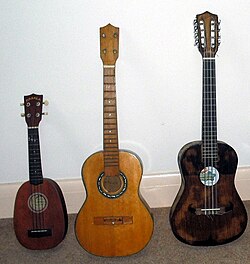
The culture of Hawaiʻi is expressed through various forms of art and practice, including Hula (dance), Heʻe nalu (surfing), and the music of the ukulele.
Different types of ukuleles, widely used in Hawaiian music: Different types of ukuleles, widely used in Hawaiian music
Economy and Modern Life
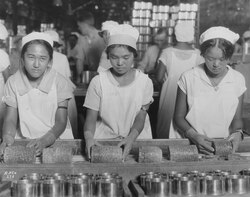
Prior to the postwar labor movement, Hawaii was governed by plantation owners. Here, three young women pack pineapples into cans in 1928.
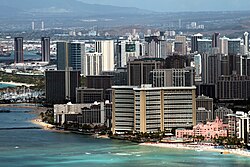
Today, the economy of Hawaiʻi is primarily driven by two major sectors: tourism and the military. Tourism provides a vast number of jobs, particularly in areas like Waikīkī, while federal spending related to military installations serves as the state's second-largest source of income.
Tourism is Hawaii's leading employment sector, providing numerous jobs in places such as Waikīkī in Honolulu (above).: Tourism is Hawaii's leading employment sector, providing numerous jobs in places such as Waikīkī in Honolulu (above).
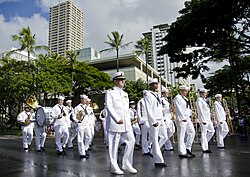
The U.S. federal government's spending on Hawaii-stationed personnel, installations, and materiel (either directly or through military personnel spending) amounts to Hawaii's second largest source of income after tourism.: The U.S. federal government's spending on Hawaii-stationed personnel, installations, and materiel (either directly or through military personnel spending) amounts to Hawaii's second largest source of income after tourism.
The state also maintains a high standard of living, with a median household income of $95,300 (as of 2023) and one of the highest life expectancies in the United States.
Percentage surviving to certain ages in Hawaii in 2019. Life expectancy in this state is one of the highest in the U.S.: before COVID-19 it was 81.60 years.[232][233]: Percentage surviving to certain ages in Hawaii in 2019. Life expectancy in this state is one of the highest in the U.S.: before COVID-19 it was 81.60 years.[232][233]
Frequently Asked Questions
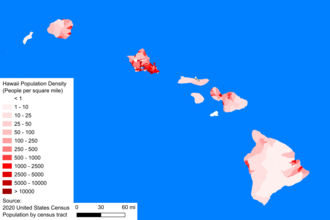
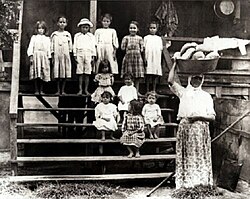
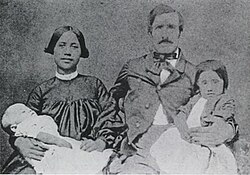
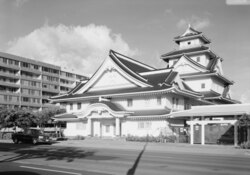
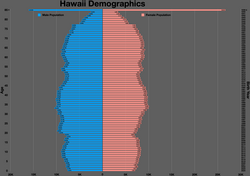
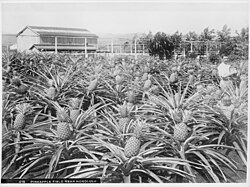
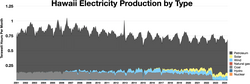
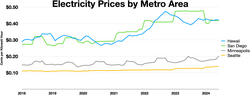
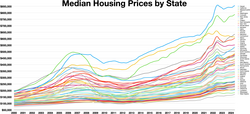
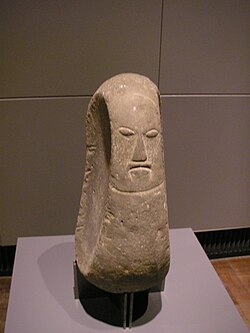
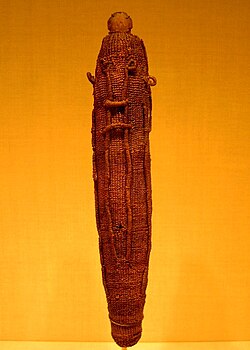
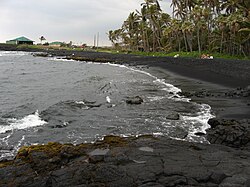
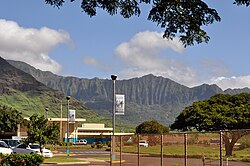
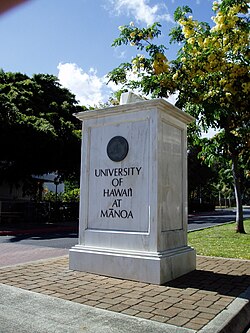
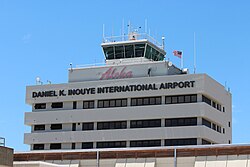
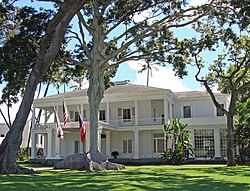
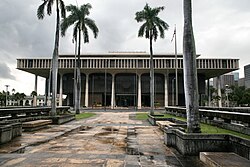
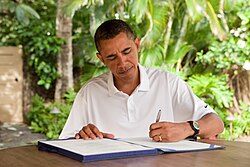
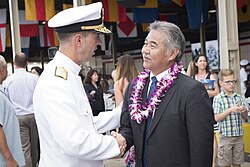
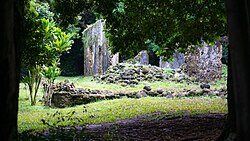
Population density map of Hawaii, 2020Map of counties in Hawaii by racial and ethnic plurality, per the 2020 U.S. censusMany Portuguese immigrants were Azorean or Madeiran. They brought with them Catholicism and Portuguese language and cuisine.Mixed Hawaiian/European-American family in Honolulu, 1850sThe style of architecture for the Makiki Christian Church in Honolulu heavily draws upon Japanese architecture.Hawaii population pyramidPost-annexation, Hawaii's economy and demographic changes were shaped mostly by growth in the agricultural sector.From the end of World War II onwards, depictions and photographs, such as this one of Hawaii as a tropical, leisure paradise, encouraged the growth of tourism in Hawaii, which eventually became the largest industry of the islands.Hawaii electricity production by typeElectricity prices by metro areaMedian housing prices by StateA stone carving of a Hawaiian deity, housed at a German museumA sacred god figure wrapping for the war god 'Oro, made of woven dried coconut fibre (sennit), made to protect a Polynesian god effigy (to'o), carved from woodJack Johnson, a folk rock musician, was born and raised on Oʻahu's North Shore.Punaluʻu Beach, on the Big Island features black volcanic sand.Waianae High School, located in Waiʻanae, houses an educational community media centerMain entrance of the University of Hawaiʻi at MānoaDaniel K. Inouye International AirportThe Governor of Hawaii officially resides at Washington Place, an old American-built residenceHawaii State Capitol buildingHawaii-born President Barack Obama signs the Zadroga Act in Kailua, HawaiiGovernor David Ige with U.S. Navy admiral John Richardson at the 75th Commemoration Event of the Pearl Harbor and Oʻahu attacks in 2016Kaniakapupu royal summer palace ruins in Honolulu County
What is the highest point in Hawaii?
The highest elevation in the state is Mauna Kea, which reaches an altitude of 13,795.9 feet (4,205 meters).
What are the official languages of Hawaii?
The official languages of the state are English and Hawaiian.
When did Hawaii become a U.S. state?
Hawaiʻi was admitted to the Union on August 21, 1959.
What are the main industries in Hawaii?
The two largest economic drivers in the state are tourism and military-related spending.
What is the state motto of Hawaii?
The motto is "Ua Mau ke Ea o ka ʻĀina i ka Pono," which translates to "The Life of the Land Is Perpetuated in Righteousness."
References
Local usage generally reserves Hawaiian as an ethnonym referring to Native Hawaiians. Hawaii resident or from Hawaii is the preferred local form to refer to state residents in general regardless of ethnicity. Hawaii may also be used adjectivally. The AP Stylebook, 42nd ed. (2007), also prescribes this usage (page 112).
The summit of Mauna Kea is the highest point in Oceania. Mauna Kea is also the tallest mountain on Earth when measured from base to summit. The shield volcano sits on the floor of the Pacific Ocean at a depth of 5,998 meters (19,678 ft) for a total height of 10,205.3 meters (33,482 ft).
![Partly cloudy conditions and a gentle breeze at 1:43 PM HDT;[69] north is oriented towards the lower right in this photo taken from the International Space Station on June 24, 2022](/images/96/ce/96ce2cc84ece2decc4ff1ed331be9858f576a37faa6b8d3a017ecbb6ac882cd6.jpg)
![Largest alone or in any combination ethnic origin by county in Hawaii, per the 2020 census[168]](/images/03/49/034929954f7152eb52f41bb8243b7bd2c2a9f02c68533a9c77a5e280dad9ce99.jpg)
![Percentage surviving to certain ages in Hawaii in 2019. Life expectancy in this state is one of the highest in the U.S.: before COVID-19 it was 81.60 years.[232][233]](/images/61/6a/616aa2e55ee9250178187704c633c110e3183bd8249ed35cb084fc32175a1088.png)