Hasakah Offensive 2015: Kurdish and Government Campaigns Against ISIL
In February 2015, a series of coordinated military operations unfolded in the Hasakah Governorate of Syria. The primary objective was to push back the Islamic State (ISIL) and secure strategic territories. This campaign involved the YPG (People's Protection Units), a Kurdish militia, supported by the US-led coalition and Iraqi Peshmerga forces, alongside separate operations by the Syrian government.
The Kurdish Advance and Strategic Gains
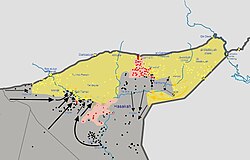
The offensive began on 21 February 2015. Within 24 hours, Kurdish forces advanced to within five kilometers of Tal Hamis, capturing 23 farms and villages near the Abo Qasayeb area. This progress was bolstered by air support from the United States and allied Arab nations. Simultaneously, the YPG captured two villages near the Iraqi border, while Iraqi Peshmerga forces provided cover by shelling ISIL positions across the border.
By 23 February, the YPG executed a pre-dawn raid to capture Tell Brak. The momentum continued on 25 February when the YPG severed a critical ISIL supply line from Iraq by cutting the road between Tal Hamis and al-Hawl. By 27 February, Kurdish fighters had seized Tal Hamis and 103 surrounding villages and hamlets.
Retaliation and the Crisis at Tell Tamer
ISIL responded on 23 February with a massive counter-attack targeting villages along the southern bank of the Khabur River near Tell Tamer. Led by field commander Abu Omar al-Shishani, ISIL deployed approximately 3,000 fighters and multiple tanks. This assault resulted in the capture of between 11 and 35 villages. During this period, ISIL kidnapped a significant number of Assyrians; the Syrian Observatory for Human Rights (SOHR) reported 220 abductions, while local sources estimated the number between 350 and 400.
The situation remained dire as ISIL executed 15 Assyrians on 28 February, 14 of whom were fighters. While Kurdish forces eventually recaptured several villages, the fate of many captives remained uncertain, though 24 were released by 3 March following ransom payments.
Syrian Government Involvement and Coalition Support
As the Kurdish forces advanced, the Syrian government launched its own offensive on 28 February. By 3 March, government troops had captured between 23 and 33 villages, aiming to secure the main road connecting the provincial capital of Hasakah to Qamishli. By 6 March, the Syrian Army had advanced along Highway 7 to within 15–20 kilometers of Tell Brak.
The US-led coalition provided critical aerial support throughout the operation. Between 21 February and 1 March, the coalition conducted 24 airstrikes, destroying seven ISIL vehicles and striking 18 tactical units.
Final Clashes and Strategic Outcomes
In early March, ISIL attempted to prevent Kurdish forces from reaching the stronghold of al-Hawl. This led to fierce clashes east of Hasakah city between 5 and 6 March, resulting in the deaths of 11 YPG fighters. On 7 March, ISIL launched another massive attack on the northern bank of the Khabur River to secure a corridor to the Iraqi border and capture Tell Tamer. However, Kurdish reinforcements repelled the assault, resulting in 40 deaths on both sides. A separate ISIL attempt to recapture villages between Tell Brak and al-Hawl was also defeated, with the YPG reporting 67 ISIL militants killed.
On 10 March, the YPG announced the successful conclusion of their campaign after securing the Jazira Canton. However, ISIL launched a surprise counter-strike on the same day, capturing Tell Khanzir and several villages using the Khorasan Battalion, composed of battle-hardened Chechen fighters. This move was intended to disrupt Kurdish plans to link the Kobanî and Jazira Cantons and to maintain key routes connecting Mosul in Iraq to northeastern Syria.
Key Facts
- Timeline: The main offensive ran from 21 February to 10 March 2015.
- Casualties: Between 175–211 ISIL militants and 75 Kurdish/allied fighters died by 28 February.
- Strategic Gains: The YPG captured Tal Hamis, Tell Brak, and over 100 villages.
- Humanitarian Impact: Hundreds of Assyrians were kidnapped; 15 were executed.
- Coalition Effort: 24 US-led airstrikes were conducted in the first ten days.
- Foreign Volunteers: Kurdish casualties included volunteers from Australia, Britain, and Germany.
| Entity | Key Objectives | Major Outcomes |
|---|---|---|
| YPG / Kurdish Forces | Secure Jazira Canton; capture Tal Hamis | Captured Tal Hamis and Tell Brak; severed Iraq supply lines |
| ISIL | Maintain corridor to Iraq; protect al-Hawl | Captured Tell Khanzir; kidnapped hundreds of Assyrians |
| Syrian Government | Control road from Hasakah to Qamishli | Captured 23–33 villages; advanced along Highway 7 |
| US-led Coalition | Provide air support to Kurdish forces | 24 airstrikes; destroyed 7 vehicles and 18 tactical units |
Frequently Asked Questions
What was the primary goal of the YPG during this offensive?
The YPG aimed to secure the Jazira Canton and capture strategic towns like Tal Hamis and Tell Brak, while attempting to link the Kobanî and Jazira Cantons.
How did ISIL respond to the Kurdish advances?
ISIL launched massive counter-attacks, specifically around Tell Tamer and Tell Khanzir, utilizing tanks and specialized units like the Khorasan Battalion to secure corridors to Iraq.
What happened to the Assyrian civilians in Tell Tamer?
Between 220 and 400 Assyrians were kidnapped by ISIL. While 24 were released after ransoms were paid, 15 others were executed.
What role did the Syrian government play in the offensive?
The Syrian government launched a parallel offensive to seize control of the main road linking Hasakah to Qamishli, capturing several dozen villages in the process.
Who provided air support for the Kurdish forces?
The US-led coalition provided air support, conducting 24 airstrikes against ISIL tactical units and vehicles during the initial phase of the offensive.