Harvey Kushner: A Career in Counter-Terrorism and Criminal Justice
With a career spanning several decades, Harvey Kushner has established himself as a pivotal figure in the fields of criminal justice and national security. From his academic leadership at Long Island University to his advisory roles with federal agencies and international governments, Kushner has consistently worked at the intersection of law enforcement, terrorism analysis, and public safety.
Academic Leadership at Long Island University
Joining Long Island University in 1974, Kushner held numerous administrative roles, including Coordinator of Graduate Studies for the College of Liberal Arts and Sciences. He eventually became a professor and chair of the Department of Criminal Justice, as well as the longtime director of the Homeland Security and Terrorism Institute.
Kushner is recognized for his innovative approach to curricula. Long before it became a standard academic focus, he integrated practical financial investigation training into his courses by bringing in agents from the Internal Revenue Service (IRS) to teach students how to track laundered funds and analyze tax forms. In more recent years, he has shifted his focus toward cyber technologies, advocating for increased cooperation between the public and private sectors to combat the criminality emerging in the digital age.
His commitment to professional development extended to organizing symposia that trained both academics and practitioners. His influence is evident in his former students, who have ascended to leadership positions such as the head of the Nassau County Police Department and the leader of New York State's Office of Public Safety following the September 11 attacks.
Advising New York Law Enforcement
Kushner has a long history of training police personnel across New York State. His seminars have reached a wide array of agencies, including the New York State Police, New York State Park Police, and various municipal departments such as the Nassau County, Suffolk County, and Hempstead Police Departments. Since 1991, he has served as the Education Advisor for the Nassau County Municipal Police Chiefs Association.
Federal Agency Collaboration and National Security
Prior to 2001, Kushner provided critical expertise to several high-level federal agencies:
- Federal Aviation Administration (FAA): In 1993, he was retained to identify international terrorists targeting civil aviation.
- FBI: In 1998, he advised the Behavioral Science Unit on protocols for identifying transnational terrorist threats within the U.S.
- U.S. Probation Department: In 1995 and 1997, he trained staff in the Eastern District to identify potential terrorists under supervision.
- Drug Enforcement Administration (DEA): In 1996, he trained agents on the intersection of drug trafficking and terrorism.
The "Terrorism 1999 Anniversaries Calendar"
In 1989, in collaboration with the International Association of Counter Terrorism and Security Professionals, Kushner authored the "Terrorism 1999 Anniversaries Calendar." This document detailed the history of bombings, hijackings, and assassinations over the previous 30 years. It became a tool for global law enforcement agencies to monitor dates that could potentially trigger new attacks.
Analyzing the Perception of Crime
In the mid-1990s, Nassau County District Attorney Denis Dillon tasked Kushner with investigating why public fear of crime remained high despite a sharp drop in actual crime rates. Kushner conducted a comparative statistical analysis using data from 1975 to 1994 from Broward County (FL), Oakland County (MI), Terrant (TX), and Orange County (CA).
His findings, released on November 21, 1995, indicated that Nassau County's crime rates were lower than the national sample due to favorable societal factors, such as a wealthier, older population with more two-parent families. Kushner attributed the prevailing fear to "an eager media" that disproportionately focused on high-profile crimes, such as those committed by Colin Ferguson, Joel David Rifkin, and Joey Buttafuocco.
Crime Stoppers and International Engagement
Between 1995 and 1998, Kushner served as a special consultant on terrorism for Crime Stoppers International. In 1996, he and Thomas Oberle proposed a National Crime Stoppers program to the FBI, which would have featured a national toll-free hotline for federal crime and terrorism tips; however, the FBI declined the offer in March 1998.
Kushner's expertise also reached the global stage. In 2000, he chaired an international panel on terrorist victimization for the United Nations' 10th Congress on the Prevention of Crime in Vienna, Austria.
Post-9/11 Contributions and Global Analysis
Following the September 11 attacks, Kushner provided data analytics on Al Qaeda for several elite military and federal institutions from 2001 to 2008, including the U.S. Naval War College, U.S. Air Force Special Operations School, U.S. Marine Corps Base Quantico, and the U.S. Army Special Operations Command. He also supported the FBI, U.S. Customs Service, and the U.S. Immigration and Naturalization Service.
From 2002 to 2005, he served as the terrorist analyst for the U.S. Probation Department of the Eastern District of New York, where he developed monitoring protocols for individuals with suspected terrorist ties.
His international work expanded to Poland, where he collaborated with the National Security Bureau in Warsaw in 2008 on cyber terrorism. In 2010, he served as an expert for the Polish Parliamentary Committee investigating the plane crash that killed President Lech Kaczynski. He also represented the U.S. at the 60th Anniversary of the Universal Declaration of Human Rights at Auschwitz Birkenau.

Expert Testimony and Legal Consulting
Kushner has been a frequent expert witness in high-profile terrorism cases. His work includes:
- World Trade Center Bombing (1993): Provided the expert report for successful civil litigation (Duffy v. Port Authority and Pesce v. Port Authority).
- U.S. Embassy Bombing: Served as an expert in the trial of U.S. vs. Usama bin Laden, et al. (2000-2001).
- Airport Security: Consulted on civil litigation regarding MacArthur Airport security (2001-2003).
He has also provided counsel to families affected by the Pan Am 103 bombing, suicide bombings in Israel, the Empire State Building shooting, and cases involving state-sponsored terrorism from the Islamic Republic of Iran and Egypt.
Media Presence and Public Commentary
Kushner became a prominent media commentator immediately after 9/11, hosting a weekly call-in show on 77 TalkRadio WABC. His analysis has appeared on major networks including CNN (Larry King Live), FOX News (The O'Reilly Factor), and the Oprah Winfrey Show.
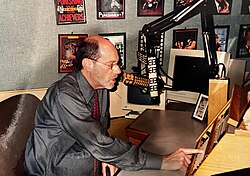
Beyond television, he was a frequent guest on high-reach radio programs, including Michael Savage's "Savage Nation." From 1997 to 2012, he served as an associate editor and columnist for the Airport Press, writing "The Middle of the Runway." His political editorials in Human Events occasionally drew criticism from media figures, most notably Keith Olbermann on MSNBC.
Key Facts
- Academic Role: Former Chair of Criminal Justice and Director of the Homeland Security and Terrorism Institute at Long Island University.
- Federal Advisor: Provided expertise to the FAA, FBI, DEA, and U.S. Probation Department.
- Global Impact: Chaired a UN panel on victimization and advised the Polish National Security Bureau.
- Legal Expertise: Expert witness in the 1993 WTC bombing litigation and the U.S. Embassy Bombing trial.
- Media Influence: Contributed to major networks like CNN, FOX News, and 77 TalkRadio WABC.
| Domain | Key Contribution / Role | Notable Entity |
|---|---|---|
| Academia | Curricula Development & Department Chair | Long Island University |
| Federal Security | Terrorism Analysis & Training | FBI, FAA, DEA |
| Law Enforcement | Education Advisor | Nassau County Municipal Police Chiefs Association |
| International | Expert Consultant | United Nations, Republic of Poland |
| Legal | Expert Witness | U.S. Federal Courts |
Frequently Asked Questions
What was Harvey Kushner's role at Long Island University?
Kushner served as a professor, the chair of the Department of Criminal Justice, and the director of the Homeland Security and Terrorism Institute, where he was known for integrating practical financial investigation training into the curriculum.
How did Kushner help the Nassau County District Attorney?
He conducted a statistical study comparing Nassau County's crime data to other U.S. counties, concluding that the public's fear of crime was unwarranted and largely driven by disproportionate media coverage of high-profile incidents.
Which federal agencies did Kushner advise prior to 9/11?
He worked with the Federal Aviation Administration (FAA) on aviation targets, the FBI's Behavioral Science Unit on transnational threats, the DEA on drug-terrorism links, and the U.S. Probation Department on identifying terrorists.
What was the purpose of the Terrorism 1999 Anniversaries Calendar?
Authored in 1989, the calendar documented the history of terrorist attacks over 30 years to help law enforcement agencies worldwide monitor dates that might trigger future attacks.
In what capacity did Kushner work with the government of Poland?
He worked with the National Security Bureau on cyber terrorism, served as an expert for the parliamentary committee investigating the 2010 presidential plane crash, and represented the U.S. at a human rights session at Auschwitz Birkenau.
What legal cases did Harvey Kushner provide expert testimony for?
He provided expert reports and testimony for the 1993 World Trade Center bombing civil litigation, the U.S. Embassy Bombing trial, and cases involving airport security at MacArthur Airport.