The Life and Legacy of Harold David Harrington: A Pillar of Colorado Botany
In the world of botany, few names carry as much weight in the Rocky Mountain region as Harold David Harrington. A dedicated scientist, educator, and collector, Harrington spent much of his life documenting the intricate floral diversity of Colorado. His work did more than just catalog plants; it provided a foundational understanding of the state's natural heritage that continues to guide researchers today.
From his humble beginnings on an Iowa farm to his influential tenure at Colorado State University (CSU), Harrington's journey was defined by a passion for taxonomy—the science of naming, describing, and classifying organisms. Through his massive specimen collections and authoritative publications, he helped transform the Colorado Rockies from a "botanical frontier" into a well-documented scientific landscape.
Key Facts
- Specialization: Flora of Colorado and the Rocky Mountains.
- Major Work: Published the Manual of the Plants of Colorado in 1954.
- Scientific Contribution: Collected over 10,000 botanical specimens.
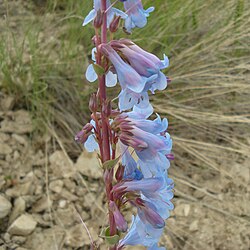
- Namesake: Two Colorado-endemic species, Oenothera harringtonii and Penstemon harringtonii, are named after him.
- Institutional Affiliation: Longtime professor and herbarium curator at Colorado State University.
Early Life and Academic Foundation
Born on March 14, 1903, in De Motte, Indiana, Harold Harrington’s path to science was shaped by resilience. After moving through South Dakota and Iowa, he grew up on a farm in Graettinger, Iowa, alongside seven siblings. The economic hardships of the Great Depression required him and his brother, Elbert, to alternate years in college so that one could work while the other studied.
Harrington eventually earned his B.A. in biology from Iowa State Teachers College in 1927. He continued his advanced studies at the University of Northern Iowa, where he earned both his M.S. (1931) and his Ph.D. (1933) in botany. It was during his doctoral years in Waterloo, Iowa, that he married Edith Jirsa, a fellow botanist who would become his lifelong partner in both life and scientific exploration.
A Distinguished Career in Colorado
Harrington’s professional career took him to Colorado, where he initially served as an assistant to Ernest Charles Smith at the Colorado Agricultural College (now Colorado State University). After a brief period teaching at Chicago Teachers College, he returned to Colorado in 1943 to take on the vital roles of professor of botany and curator of the university's herbarium.
The Curator and Collector
As curator, Harrington managed the university's botanical collections for 25 years. While his mentor had focused heavily on willow specimens, Harrington expanded the scope of the herbarium significantly, contributing approximately 6,200 specimens himself. He was not merely a collector; he was a vital resource for the community. He frequently identified specimens submitted by farmers, ranchers, extension agents, and even elementary school students.
The Manual of the Plants of Colorado
The crowning achievement of his career was the 1954 publication of Manual of the Plants of Colorado. This was the first comprehensive account of the state's flora in nearly 50 years, following the 1906 work by Per Axel Rydberg. The book was a landmark achievement, noting that one in every 30 entries represented a plant being recorded in the state for the first time. To ensure the text was accessible to students, the book was self-published, with Edith Harrington hand-typing the manuscript.
| Category | Details |
|---|---|
| Lifespan | March 14, 1903 – January 22, 1981 |
| Primary Field | Botany (Taxonomy) |
| Key Institution | Colorado State University (CSU) |
| Total Books Published | 17 |
| Specimen Count | Over 10,000 |
Personal Life and Scientific Travels
Beyond the laboratory and the herbarium, Harrington was a man of diverse talents. He was a skilled musician, playing the violin, Spanish guitar, and ukulele—often playing the latter at campfires during field trips with students. He was also a poet, a creative side that surfaced in the introduction of his final book.
Alongside Edith, Harrington traveled extensively throughout the United States, Europe, and the Pacific. These trips were not merely for leisure; they were educational expeditions. They captured botanical photographs to enhance their teaching, ensuring that students in the Front Range could visualize the diverse plant life of the world.
Legacy and Enduring Impact
Harold Harrington retired as professor emeritus in 1968 but remained active in the botanical community, publishing works on edible wild plants and grasses until the late 1970s. His death in 1981 marked the end of a prolific era, but his influence remains visible in several ways:
- Taxonomic Honors: Two species endemic to Colorado bear his name: Oenothera harringtonii and Penstemon harringtonii.
- The Herbarium: His massive collection of roughly 10,000 specimens is preserved in the Charles Maurer Herbarium at CSU.
- Educational Support: The Harold David Harrington Graduate Fellowship at CSU was established by Edith to support future students of plant taxonomy.
Frequently Asked Questions
What is a herbarium?
A herbarium is a collection of preserved plant specimens that are dried, pressed, and mounted on paper. These collections serve as vital scientific records for studying plant biodiversity, distribution, and evolution.
Why is the 1954 Manual of the Plants of Colorado so important?
It was the first comprehensive guide to Colorado's plants in nearly half a century. It provided an authoritative reference for scientists and students, and it recorded many plants in the state for the very first time.
How did Harold Harrington contribute to the naming of new species?
While Harrington did not primarily collect for the purpose of describing new species, he was an expert at identifying unusual specimens. He would submit these unique finds to specialists, which led to the discovery and naming of species like Penstemon harringtonii.
What was the role of Edith Harrington in her husband's work?
Edith was a fellow botanist who actively assisted in collecting specimens and preparing his publications. Notably, she hand-typed the 1954 Manual of the Plants of Colorado to help make the book a reality.
What does "endemic" mean in relation to the plants named after him?
When a plant is described as endemic to a region, it means that it is naturally found only in that specific geographic area—in this case, Colorado.