Harare's 20th Century Evolution: From Salisbury to Capital City
The transformation of Harare during the 20th century is a narrative of rapid urban growth, shifting political identities, and cultural expansion. Originally known as Salisbury, the city evolved from a colonial administrative center into the vibrant capital of an independent republic, mirroring the broader socio-political changes of the region.
Key Facts
- Renaming: The city was officially renamed from Salisbury to Harare on April 18, 1982.
- Independence: It became part of the independent Republic of Zimbabwe on April 18, 1980.
- Population Surge: The urban population grew from 54,090 in 1946 to 1,189,103 by 1992.
- Global Diplomacy: The city hosted major international events, including the 1986 Non-Aligned Movement Summit and the 1991 Commonwealth Heads of Government Meeting.
Early Development and Colonial Growth (1902–1949)
The early 1900s laid the infrastructure for the city's future. In 1902, the Botswana-Salisbury railway began operations, facilitating trade and movement, while the Queen Victoria Memorial Library was founded in the same year to promote literacy and education.
By 1923, the town was designated as the capital of Southern Rhodesia, a self-governing British colony. This status spurred the establishment of key institutions, including the Salisbury Technical School in 1927 and the Town House in 1933. The city's administrative and cultural footprint expanded further with the founding of the Library of the National Archives in 1936 and the opening of the Honorary Consulate of Poland in 1939.
The mid-century period was marked by both growth and social unrest. While the population reached 54,090 by 1946—the same year the Reformed Industrial and Commercial Workers Union was established—the era also saw a railway strike in 1945 and a general strike in 1948.
Mid-Century Expansion and Institutionalization (1950–1979)
The 1950s saw a significant leap in population and infrastructure. By 1951, the population had risen to 90,024, and a stock exchange was established. In 1953, the city became the capital of the Federation of Rhodesia and Nyasaland.
Education and the arts flourished during this time. The Zimbabwe College of Music (1948), Gwebe College of Agriculture (1950), and the University College of Rhodesia and Nyasaland (1955) were all established. The Rhodes National Gallery opened in 1957, and the city's connectivity improved with the commissioning of Salisbury Airport in 1956.
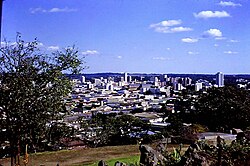
As the city entered the 1960s and 70s, it became a hub for African culture, hosting the first International Congress of African Culture in 1962. However, the late 1970s were characterized by conflict. The urban agglomeration reached 502,000 people by 1973, but the period was marred by a bombing on August 6, 1977, and the burning of oil storage tanks by the Zimbabwe African National Liberation Army in 1978.
Transition to Harare and Independence (1980–1999)
A pivotal shift occurred on April 18, 1980, when the city became part of the independent Republic of Zimbabwe. Two years later, on April 18, 1982, the city was officially renamed Harare. This era saw the construction of the National Heroes' Acre monument and the establishment of the Harare Publishing House in 1984.
Harare emerged as a significant player on the global stage during the 1980s and 90s. It hosted the Summit of the Non-Aligned Movement in September 1986 and the Commonwealth Heads of Government Meeting in October 1991, which resulted in the issuance of the Harare Declaration.
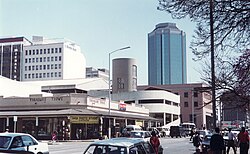
The city's skyline and cultural landscape continued to evolve with the construction of the Karigamombe Centre (1985), the Eastgate building (1996), the New Reserve Bank tower (1997), and the Millennium Towers (2000). The 1990s also brought a surge in media and arts, with the launch of the Daily News in 1999 and the start of the Zimbabwe International Film Festival and the Harare International Festival of the Arts in 1998 and 1999, respectively.
Historical Timeline Summary
| Year | Event/Milestone | Significance |
|---|---|---|
| 1902 | Botswana-Salisbury Railway | Infrastructure connectivity |
| 1923 | Capital of Southern Rhodesia | Administrative center status |
| 1953 | Capital of Federation of Rhodesia and Nyasaland | Regional political hub |
| 1980 | Independence of Zimbabwe | Transition to sovereign republic |
| 1982 | Renamed to Harare | Cultural and national identity shift |
| 1991 | Commonwealth Heads of Government Meeting | International diplomatic recognition |
Frequently Asked Questions
When was the city renamed from Salisbury to Harare?
The city was officially renamed Harare on April 18, 1982.
How much did the population grow between 1946 and 1992?
The population grew from 54,090 in 1946 to 1,189,103 by 1992.
What major international diplomatic events were hosted in Harare?
Harare hosted the Summit of the Non-Aligned Movement in 1986 and the Commonwealth Heads of Government Meeting in 1991.
Which major educational institutions were founded in the city during the mid-20th century?
Key institutions include the Salisbury Technical School (1927), the Zimbabwe College of Music (1948), Gwebe College of Agriculture (1950), and the University College of Rhodesia and Nyasaland (1955).
What was the significance of the 1991 Commonwealth meeting?
The meeting of the Commonwealth Heads of Government in October 1991 led to the issuance of the Harare Declaration.