Hanoi: The Thousand-Year Capital of Vietnam
Hanoi, the capital of Vietnam, is a city where ancient tradition meets rapid modernization. Known by the poetic nicknames City of Soaring Dragon (Thành phố rồng bay) and Thousand-year-long capital of civilisation (Thủ đô nghìn năm văn hiến), it serves as the political, cultural, and educational heart of the nation. Situated in the Red River Delta, Hanoi is a sprawling municipality that blends a rich imperial past with a dynamic urban future.
Key Facts
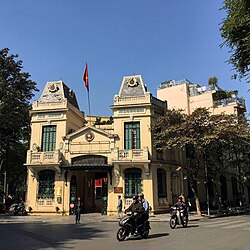
- Established: 1010 AD.
- Population: Approximately 8.85 million (City), 19.79 million (Metro area) as of 2025.
- Economy: Metro GDP of US$97.2 billion (2023) with a per capita GDP of US$4,900.
- Human Development Index: 0.845 (Ranked 1st in Vietnam, 2023).
- Geography: Total area of 3,359.84 km², ranging from sea level to 1,296 m.
- Demographics: Predominantly Viet (98.66%), with minority groups including Mường, Tày, Thái, and Nùng.
Historical Evolution
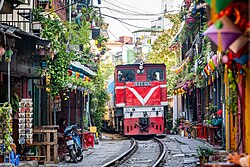
Hanoi's history is a tapestry of resilience and transformation. From the early settlements of Cổ Loa and the period of Nanyue to centuries of Chinese rule, the city has evolved through various names, including Thăng Long, Đông Đô, Đông Quan, and Đông Kinh.
The city underwent a significant shift during the French colonial era, beginning with the occupation on November 20, 1873. This period left a lasting architectural mark on the city, which remained under colonial influence until liberation on October 10, 1954. Following the First Indochina War and the Vietnam War, Hanoi emerged as the central hub of a reunified Vietnam.
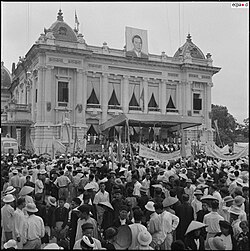
Colonial and Post-Colonial Transition
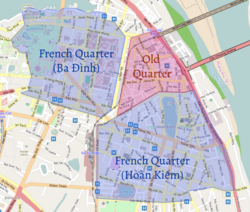
The transition from a colonial administrative center to a sovereign capital was marked by significant political shifts and urban restructuring. The city's layout still reflects this duality, with the distinct contrast between the traditional Vietnamese quarters and the planned French districts.
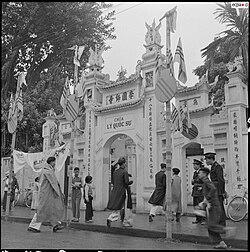
Geography and Climate
Located at 21°00′N 105°51′E, Hanoi experiences a humid subtropical climate characterized by distinct seasons. The city sees significant rainfall, particularly from May to September, with August typically being the wettest month.
| Metric | Winter (Jan) | Summer (Jul) | Annual Average/Total |
|---|---|---|---|
| Mean Max Temp (°C) | 19.8 | 32.6 | 23.9 (Daily Mean) |
| Mean Min Temp (°C) | 14.5 | 26.5 | 21.5 (Daily Mean) |
| Average Rainfall (mm) | 22.5 | 280.1 | 1,670.1 |
| Relative Humidity (%) | 79.9 | 80.7 | 80.7 |
Temperature extremes are notable, with record highs reaching 42.8°C and record lows dipping to 2.7°C. The surrounding districts, such as Ba Vì, often experience higher annual rainfall, totaling up to 1,935.6 mm.
Urban Landscape and Landmarks
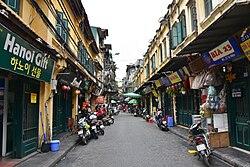
Hanoi is a city of contrasting zones. The Old Quarter is famous for its narrow streets and traditional commerce, while the French Quarter showcases colonial elegance.
Imperial and Cultural Sites
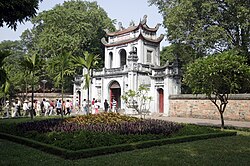
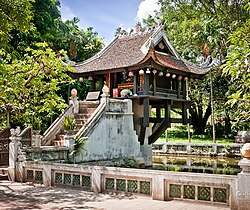
The city is home to several UNESCO-recognized and historically significant sites. The Temple of Literature, established as a center of learning, and the One Pillar Pagoda stand as testaments to the city's spiritual and intellectual heritage.
Colonial Architecture and Modernity
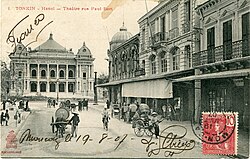
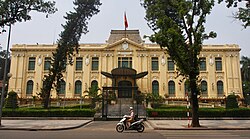
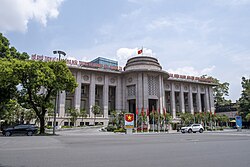
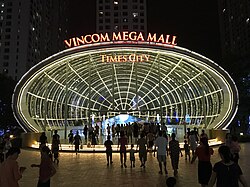
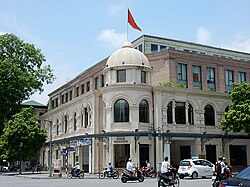
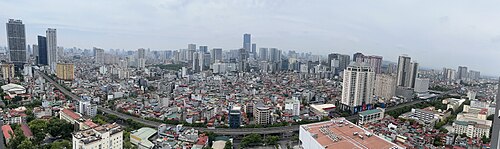
French influence is visible in the Hanoi Opera House and the Tonkin Palace. In contrast, the modern skyline is defined by the State Bank of Vietnam, Vingroup shopping centers, and the Hanoi Stock Exchange.
Infrastructure and Development
Hanoi is currently undergoing a massive infrastructure overhaul to support its growing population. The city is expanding its public transit options to reduce reliance on motorbikes and combat pollution.
Transportation Networks
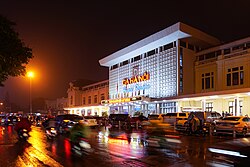
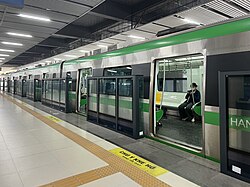
The transportation system is evolving from traditional rail and road networks to modern rapid transit. The Hanoi Railway Station remains a central hub, while the new Hanoi Metro, including Line 3 and the Cát Linh station, represents the future of urban mobility.
Education and Sports
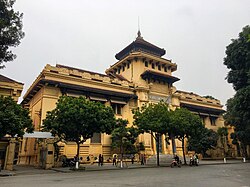
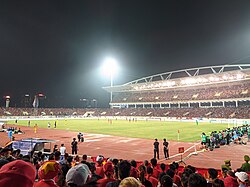
As a center of excellence, Hanoi hosts prestigious institutions like the Hanoi Medical University (est. 1902) and Vietnam National University. For sports and large-scale events, the Mỹ Đình National Stadium serves as the city's premier venue.
International Relations
Hanoi maintains strong global ties through its sister-city program. It is twinned with major global capitals and cities, including Beijing, Seoul, Moscow, Bangkok, Jakarta, and Warsaw, among others, fostering diplomatic and economic cooperation.
Frequently Asked Questions
What is the population of Hanoi?
As of 2025, the total population of the municipality is 8,855,946, while the broader metro area reaches 19,795,805 people.
When was Hanoi established as the capital?
Hanoi was established as the capital in the year 1010.
What are the most famous nicknames for Hanoi?
The city is commonly referred to as the "City of Soaring Dragon" and the "Thousand-year-long capital of civilisation."
What is the climate like in Hanoi?
Hanoi has a humid subtropical climate with a hot, rainy summer (peaking in August) and a cooler, drier winter.
Which ethnic groups live in Hanoi?
The population is predominantly Viet (98.66%), with smaller populations of Mường, Tày, Thái, and Nùng people.