Hand Technique Names in Wing Chun
In the practice of Wing Chun, the hands are not merely tools for striking but sophisticated instruments for redirection, interception, and control. Central to this system is the concept of the bridge—the point of contact between two practitioners' arms—and the centerline, the imaginary vertical axis of the body that must be protected and invaded.
Mastering these techniques requires an understanding of both the physical form and the specific function each hand serves. From the basic defensive structures to advanced tactical maneuvers, these techniques allow a practitioner to collapse an opponent's structure and create openings for counter-attacks.
Key Facts
- Centerline Focus: Most techniques are designed to either protect the practitioner's centerline or breach the opponent's.
- Bridge Control: Techniques are categorized by how they interact with the opponent's "bridge" (arm contact).
- Gate System: Movements are often described by their target area, such as the upper gate (high) or lower gate (low).
- Linguistic Roots: Terminology is primarily derived from Cantonese, though Mandarin equivalents exist.
Basic Hand Techniques
The basic hands form the foundation of Wing Chun's defensive and offensive framework. These movements focus on efficiency and the economy of motion.
Defensive and Redirecting Hands
Tan Sao (Spreading Hand) is a rising vertical arm with the palm up, acting as a roller arm to spread pressure away from the centerline. Similarly, Bong Sao (Winging Hand) uses a falling diagonal arm to deflect force across the centerline, often rolling down on wrist pressure to cover the center.
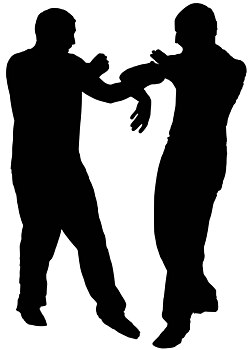
Fook Sao (Taming Hand) involves a rising diagonal arm with the palm down, used to cover the bridge from above and prevent forward or upward movement. Wu Sao (Protecting Hand) is held in the rear behind a lead hand, ready to intercept if the centerline is breached.
Interception and Manipulation
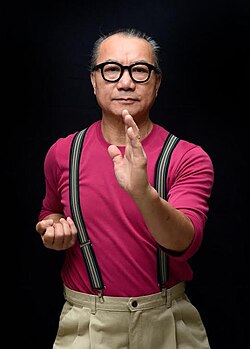
Pak Sao (Slapping Hand) uses a rising diagonal arm to shoot the palm forward, intercepting and collapsing the opponent's bridge. Lap Sao (Pulling Hand) utilizes a vertical arm with a grabbing motion to pull down the opponent's arm, opening their centerline. Finally, Hyun Sao (Circle Hand) employs a wrist circle to transition between the inside and outside gates.
Additional and Advanced Techniques
Beyond the basics, Wing Chun employs a variety of specialized techniques to handle specific combat scenarios, ranging from long-range thrusts to close-quarter pinning.
Linear and Thrusting Movements
- Biu Sao (Darting Hand): A long bridge arm with fingers pointed forward, used to insert into the opponent's gate or peel hands off arms.
- Man Sao (Asking Hand): A lead hand that preemptively shoots forward to invade space or slashes upward to cover the side gate.
- Jong Sao (Post Hand): An extended version of the Wu Sao that wedges forward along the centerline.
Pressing and Cutting Actions
To control an opponent's movement, practitioners use Gam Sao (Pressing Hand), which pins the opponent's bridge or body down using a falling diagonal forearm. Jit Sao (Cutting Hand) is a rising diagonal arm that cuts forward and down to create an opening, while Jam Sao (Sinking Hand) snaps the wrist forward and down to sink the opponent's bridge.
Circular and Framing Techniques
For more complex redirections, Kau Sao (Scooping Hand) circles out to cup the outside arm and jerks horizontally to turn the opponent. Kwan Sao (Rolling Hand) cycles the arms in a vertical circle—blocking high and low gates—while the body turns to switch sides. Lan Sao (Barring Hand) provides a horizontal frame to keep the opponent at a distance.
Technique Summary Table
| English Name | Cantonese (Yale) | Primary Function | Form/Gate |
|---|---|---|---|
| Slapping Hand | Pak Sao | Intercept and collapse bridge | Upper Gate / Rising Diagonal |
| Spreading Hand | Taan Sau | Spread pressure from centerline | Upper Gate / Rising Vertical |
| Winging Hand | Bong Sau | Deflect force across centerline | Lower Gate / Falling Diagonal |
| Protecting Hand | Wu Sau | Intercept centerline breaches | Upper Gate / Rising Diagonal |
| Darting Hand | Biu Sau | Insert into gate / peel arms | Long Bridge |
| Pressing Hand | Gam Sau | Pin opponent down | Lower Gate / Falling Diagonal |
Frequently Asked Questions
What is the difference between Tan Sao and Bong Sao?
Tan Sao is a rising vertical arm with the palm up used to spread pressure away from the center, whereas Bong Sao is a falling diagonal arm used to deflect force across the centerline.
What does "bridge" mean in Wing Chun?
The "bridge" refers to the point of contact between the practitioner's arm and the opponent's arm. Controlling the bridge is essential for manipulating the opponent's balance and position.
How does Wu Sao differ from Jong Sao?
Wu Sao is a protecting hand held in the rear to intercept breaches, while Jong Sao is essentially a Wu Sao that has been extended forward to wedge along the centerline.
What is the purpose of the Circle Hand (Hyun Sao)?
Hyun Sao is used to perform a small circle around the opponent's arm, allowing the practitioner to change their position from the inside gate to the outside gate or vice versa.
What is the function of the Rolling Hand (Kwan Sao)?
Kwan Sao involves cycling the arms in a vertical circle to block both high and low gates simultaneously while the practitioner turns their body to switch sides.