Haitians in the Dominican Republic: History, Demographics, and Social Dynamics
The relationship between the Dominican Republic and Haiti is one of the most complex social and political dynamics in the Caribbean. Sharing the island of Hispaniola, the two nations have a long history of migration, economic interdependence, and periodic tension. Today, hundreds of thousands of people of Haitian ancestry live in the Dominican Republic, contributing significantly to the labor force while navigating challenging legal and social landscapes.
Key Facts
- Population: Approximately 800,000 people of Haitian ancestry resided in the Dominican Republic as of 2008.
- Primary Language: Haitian Creole is the first language for 96.3% of this population, though 73.8% also speak Spanish.
- Economic Role: A significant portion of the population works in low-paid, unskilled sectors such as building construction, household cleaning, and sugar plantations.
- Legal Status: A 2013 court ruling retroactively stripped citizenship from approximately 210,000 people of Haitian descent born in the Dominican Republic.
- Regional Concentration: Significant populations are found in the borderlands, the North-Western Cibao valley, and the Southeastern region, including Santo Domingo.
Historical Context of Migration
Following the Dominican War of Independence, Haitian migration was primarily concentrated in border areas. This movement was driven by land scarcity in Haiti and encouraged by the Haitian government. By the late 19th century, territorial disputes arose, with the Haitian government claiming parts of the center-west and south-west of the Dominican Republic where they believed Haitians formed the majority.
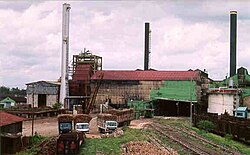
A pivotal shift occurred around 1916 during the United States occupation of both nations. US-owned sugar companies began importing thousands of Haitian workers annually to reduce labor costs, spreading the Haitian population beyond the border regions into the interior of the country.
The Era of Trujillo and the Parsley Massacre
Between 1920 and 1935, the Haitian population in the Dominican Republic doubled. However, the rise of dictator Rafael L. Trujillo brought a violent shift. Between 1935 and 1937, Trujillo imposed strict labor restrictions and ordered the deportation of Haitians in border areas.
This culminated in a genocide known as the Parsley Massacre, where thousands of Haitians were killed along the borderland, the Northwest Line, and the Cibao. Death toll estimates vary widely, with interim Foreign Minister Joaquín Balaguer citing 17,000 deaths, while historian Bernardo Vega suggests numbers as high as 35,000. The Dominican Republic later paid Haiti an indemnity of US$ 525,000 (approximately $11.76 million in 2025 value).
Post-Dictatorship and Modern Labor Agreements
Migration resumed in 1952 through agreements between Trujillo and Haitian President Paul Eugène Magloire to supply laborers for sugar plantations. After Trujillo's fall in the 1960s, immigration boomed. Between 1960 and 1965 alone, an estimated 30,000 Haitians crossed the border. For decades, continuous contracts were signed between the two governments for temporary workers, though many of these laborers rarely returned to Haiti.
Economic and Social Challenges
Migration is largely driven by extreme poverty in Haiti. As of 2023, 58.6% of Haitians lived in poverty (24% in extreme poverty), and 47.1% were illiterate. With a GDP per capita in 2008 of $1,300—less than one-sixth of the Dominican Republic's—the economic incentive to migrate is profound.
The 2010 earthquake in Haiti triggered a massive surge in migration, with some estimates suggesting the number of Haitians in the Dominican Republic doubled to 2 million. Human Rights Watch estimated that while 70,000 immigrants were documented, roughly 1.93 million remained undocumented.
Citizenship and Statelessness
A major legal crisis emerged with the 2010 amendment to the Dominican Constitution, which defined undocumented residents as being "in transit." In September 2013, the Constitutional Court applied this definition retroactively to 1929. This ruling stripped citizenship from roughly 210,000 people born in the Dominican Republic to undocumented Haitian parents, rendering many of them stateless.
Demographics and Distribution
The distribution of the Haitian population is uneven across the country. While some provinces have very low proportions, others are significant hubs of Haitian community and labor.
![The percentage of the people of Haitian origin among the population for each province in the Dominican Republic; Pedernales has the highest proportion, 30%, and San Cristóbal the lowest, 2%. Nationwide, they are 7% of the population.[40]](/images/00/e8/00e8075299b984a618e2bd2ce67c3f4d648b95c0e8daa9dbb64066b03722d81f.png)
Data from 2012 indicates that 75% of Haitians in the Dominican Republic had arrived within the previous 10 years. There is also a notable trend of Haitian women crossing the border in the final weeks of pregnancy to access medical care in Dominican public hospitals. In 2018, 24% of neonates in the Dominican Republic were born to Haitian mothers, a figure that rose to 31.9% by 2022.
![The Place of birth of the Haitian immigrants in the Dominican Republic in 2012. The majority are originally from Ouest (24%) and Nord (19%). Just 0.2% of the Haitian immigrants in the D.R. are from Nippes.[40]](/images/87/0f/870f019331957cb2d8b9326905d33f0520d0de08f27dd14b9f95778904093078.webp)
Income and Remittances
Economic disparities remain stark. In 2012, the median monthly income for Haitians was 10,262 DOP, compared to 12,441 DOP for average Dominicans and 39,318 DOP for other non-Haitian immigrants. Interestingly, only 10% of Haitians in the Dominican Republic send remittances home; the vast majority of funds sent to Haiti come from the Haitian-American diaspora in the US.
| Census Year | Population Count | % of Total Population |
|---|---|---|
| 1920 | 28,258 | 3.1% |
| 1935 | 52,657 | 3.6% |
| 1950 | 18,772 | 0.9% |
| 1970 | 97,142 | 2.4% |
| 1991 | 245,000 | 3.4% |
| 2012 | 668,145 | 7.1% |
| 2017 | 751,080 | 7.4% |
| 2024 | 554,000 | N/A |
Frequently Asked Questions
What was the Parsley Massacre?
The Parsley Massacre was a genocide carried out between 1935 and 1937 under the orders of dictator Rafael L. Trujillo. Thousands of Haitians were killed along the border; the name derives from the use of the word "perejil" (parsley) as a shibboleth to identify Haitian speakers.
Why did many people of Haitian descent lose their Dominican citizenship?
A 2013 Constitutional Court ruling retroactively defined children of undocumented immigrants as being "in transit" starting from 1929. This stripped citizenship from approximately 210,000 people born in the Dominican Republic to undocumented Haitian parents.
What are the primary industries employing Haitian migrants?
Haitian migrants are predominantly employed in low-paid, unskilled labor, specifically in the construction industry, household cleaning, and on sugar plantations.
How does the income of Haitians in the DR compare to other residents?
Haitians generally earn the lowest median income. In 2012, the median was 10,262 DOP per month, significantly lower than the average Dominican (12,441 DOP) and far below other non-Haitian immigrants (39,318 DOP).
Who is Sonia Pierre?
Sonia Pierre was a prominent human rights advocate of Haitian descent in the Dominican Republic. She worked to combat antihaitianismo (discrimination against people of Haitian origin) and received the Robert F. Kennedy Human Rights Award in 2006.