Hagwon: The Private Education Phenomenon Shaping South Korean Society
In South Korea, the pursuit of academic excellence often extends far beyond the walls of the public school system. This supplemental learning is driven by hagwons—for-profit private educational institutions that function similarly to the "cram schools" found in other parts of the world. Operating as independent businesses, these academies provide specialized instruction to a vast range of age groups and subjects, becoming a central pillar of the nation's educational landscape.
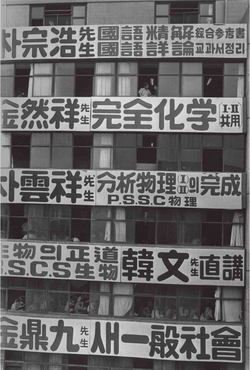
Key Facts
- Prevalence: As of 2022, 78.3% of grade school students in South Korea attend at least one hagwon.
- Time Commitment: Students spend an average of 7.2 hours per week in these institutions.
- Economic Impact: In 2022, Koreans spent approximately ₩26 trillion (US$22.73 billion) on private education.
- Scale: As of 2020, there were 73,865 registered hagwons in South Korea.
- Early Start: Approximately 83% of five-year-olds in South Korea attend hagwons.
The Drivers of Private Education
The intense reliance on hagwons is fueled by extreme competition for higher education and professional employment. In South Korea, nearly 70% of students participate in higher education, a significantly higher rate than in the United States (51%) or the United Kingdom (57%).
This competitive environment makes the College Scholastic Ability Test (CSAT)—the high-stakes entrance examination for universities—a critical turning point. The pressure is so significant that in 2023, reports indicated that over half of test-takers in the Gangnam and Seocho Districts chose to retake the exam a year later to improve their scores.
Economic and Social Implications
The financial burden of private education has become a major concern for the South Korean economy. Despite a decreasing national population and record-low fertility rates, spending on education continues to rise. In 2022, the average monthly expenditure per household was ₩410,000 (US$358.41). This high cost has contributed to South Korea becoming one of the most expensive countries in the world to raise a child.
Academic Elitism and Inequality
Hagwons are closely linked to academic elitism and educational inequity. Because these institutions provide supplementary advantages, students from wealthier backgrounds often have better access to high-quality tutoring. For example, the Daechi-dong neighborhood in the Gangnam District is considered the "mecca of private education" due to its concentration of wealth and high-standard academies.
Data shows a correlation between household income and university matriculation. Students from lower-income households matriculate at lower rates in prestigious "SKY" universities compared to those from high-income districts like Gangnam-gu and Seocho. This disparity is a frequent theme in South Korean media, notably in the series SKY Castle, which depicts the extreme lengths families go to for academic success.
| Country | Higher Education Participation (%) |
|---|---|
| South Korea | Nearly 70% |
| United Kingdom | 57% |
| United States | 51% |
Health and Regulatory History
The culture surrounding hagwons has raised significant mental and physical health concerns. Experts point to the psychological pressure on both students and parents, noting that South Korea has had one of the highest suicide rates among OECD countries. Some institutions even utilize "anxiety marketing" to encourage enrollment.
Physical health is also at risk due to extreme study hours. Reports have indicated that some students work up to 13 hours a day, leaving as little as 5.5 hours for sleep. Such sleep deprivation is linked to chronic fatigue and long-term health issues.
Government Intervention
The relationship between the state and private education has fluctuated over decades. In 1980, President Chun Doo-hwan banned private tutoring (gwaoe) to promote equality, but this ban was eventually ruled unconstitutional in the 1990s. More recently, the government has implemented a 22:00 curfew for hagwons in certain areas to reduce the academic burden, though attempts to bypass these rules persist.
To combat rising costs, the Ministry of Education has launched a 60-billion won project to refurbish after-school programs in 400 selected schools, aiming to halve private education costs for middle and lower-income families.
Hagwons in the Global Diaspora
The hagwon model exists outside of South Korea, particularly within ethnic Korean communities in North America. In the United States, many Korean-language supplemental schools are affiliated with churches. As of 2006, over 75% of hagwons registered with the Korean School Association of America (KSAA) had church affiliations.
While these schools originally focused on preserving Korean identity and language, they have evolved to include academic preparation programs. While some parents initially viewed American hagwons as less rigorous, by 2010, those in the New York–New Jersey area were seen as being of similar quality to their South Korean counterparts.
Frequently Asked Questions
What is a hagwon?
A hagwon is a for-profit private educational institution in South Korea that provides supplemental instruction in various subjects, often functioning as a cram school.
Why are hagwons so popular in South Korea?
They are driven by intense competition for university admissions and high-level jobs, specifically to perform well on the College Scholastic Ability Test (CSAT).
How much does private education cost in South Korea?
In 2022, total spending on private education reached ₩26 trillion, with an average monthly cost of ₩410,000 per student.
Are there regulations on hagwon operating hours?
Yes, the South Korean government has implemented regulations, such as a 22:00 curfew in certain areas, to attempt to reduce the academic burden on students.
Do hagwons only teach academic subjects?
While many focus on exam preparation, hagwons teach a wide variety of subjects to many different age groups for various purposes.