Haaretz: A Century of Liberal Journalism in Israel
Founded in 1919, Haaretz is one of Israel's most established and influential daily newspapers. Known for its commitment to liberalism and progressivism, the publication has served as a critical voice in Israeli society for over 107 years. Operating in both Hebrew and English, it provides a platform for deep intellectual analysis and reporting on military, political, and cultural affairs.
The newspaper is printed in the Berliner format—a size between a tabloid and a broadsheet—and maintains a global presence with headquarters in Tel Aviv and a North American hub in New York City.
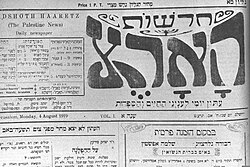
Key Facts
- Founded: 1919
- Political Alignment: Centre-left to left-wing Liberalism and Progressivism
- Ownership: Schocken family (75%) and Leonid Nevzlin (25%)
- Languages: Hebrew and English
- Circulation: Approximately 72,000 daily, increasing to 100,000 on weekends
- Editor-in-Chief: Aluf Benn
History and Ownership
The ownership of Haaretz has remained largely within the Schocken family, though it has seen strategic investments over the last decade. In June 2011, Russian-Israeli businessman Leonid Nevzlin acquired a 20% stake in the Haaretz Group, purchasing shares from both the family and M. DuMont Schauberg. By December 2019, the Schocken family consolidated their control by buying out the remaining stock held by M. DuMont Schauberg.
This transaction resulted in the current ownership structure: the Schocken family holds 75% of the company, while Leonid Nevzlin holds the remaining 25%.
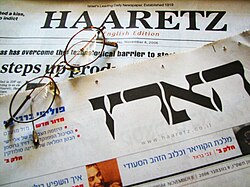
Editorial Reach and Reputation
Haaretz is widely regarded as a prestigious institution, often compared to the New York Times for its intellectual depth and influence. While it maintains a dedicated readership, it occupies a specific niche in the Israeli media landscape. A 2022 TGI survey indicated that Haaretz had the third-largest readership in Israel with an exposure rate of 4.7%, trailing behind Israel Hayom (31%) and Yedioth Ahronoth (23.9%).
The publication is noted for its progressive stance and its reporting on Palestinian statehood and military affairs. This editorial direction has occasionally made it a target of political controversy and government scrutiny.
Infrastructure and Presence
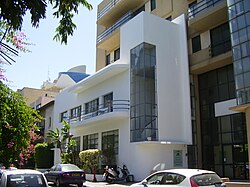
The newspaper's physical history is tied to the architecture of Tel Aviv. The former Haaretz building, which served the company from 1932 to 1973, was designed by architect Joseph Berlin. Although the building was demolished in the early 1990s, a portion of its original facade was preserved and integrated into the current structure located at 56 Maza Street.
Prominent Contributors
Throughout its history, Haaretz has employed a vast array of distinguished journalists, historians, and critics. Current key contributors include military correspondents Amos Harel and Avi Issacharoff, as well as political commentators like Anshel Pfeffer and Gadi Taub. The publication also features specialized columns on economy (via The Marker), food, and the arts.
Past contributors have included influential figures such as the poet Nathan Alterman, historian Tom Segev, and various political analysts who have shaped the discourse on Israeli democracy and diplomacy.
Summary of Publication Details
| Feature | Details |
|---|---|
| Format | Berliner |
| Publisher | Amos Schocken |
| Global HQ | Tel Aviv, Israel |
| North American HQ | New York City, USA |
| Digital Presence | haaretz.co.il (Hebrew), haaretz.com (English) |
Frequently Asked Questions
Who owns Haaretz?
The newspaper is owned by the Schocken family, who hold a 75% stake, and Russian-Israeli businessman Leonid Nevzlin, who owns 25%.
What is the political leaning of Haaretz?
Haaretz is aligned with centre-left to left-wing liberalism and progressivism.
In which languages is the newspaper published?
Haaretz publishes content in both Hebrew and English.
How does its readership compare to other Israeli papers?
According to a 2022 TGI survey, it is the third most-read newspaper in Israel, with an exposure rate of 4.7%, behind Israel Hayom and Yedioth Ahronoth.
Where are the headquarters located?
The global headquarters are in Tel Aviv, Israel, and the North American headquarters are in New York City.