H-Blocks and the Struggle for Political Status in the Maze Prison
The construction of the H-Blocks marked a pivotal shift in the incarceration of prisoners convicted of scheduled offences after March 1, 1976. These facilities became the epicenter of a prolonged and intense conflict between republican prisoners and the British government over the recognition of Special Category Status—a designation that would distinguish political prisoners from ordinary criminals.
The Evolution of Protest: From Blankets to the Dirty Protest
The resistance began with an act of defiance led by Kieran Nugent, who refused to wear the standard prison uniform. The prisoners argued that uniforms were for convicted criminals, not political prisoners. Denied the right to wear their own clothing, they wrapped themselves in bedsheets, a movement that became known as being "on the blanket." By 1978, more than 300 men had joined this protest.
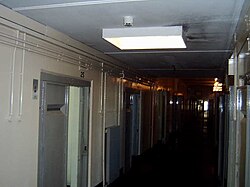
Conditions within the H-Blocks were fraught with tension. In March 1978, some prisoners refused to leave their cells for showers or lavatories to avoid being beaten by guards. Reports from those "on the blanket" described the psychological stress of waiting for cell doors to open, fearing they would be dragged out and beaten into semi-consciousness.
The situation escalated in April 1978 following a fight between a prisoner and an officer in H-Block 6. After rumors spread that a prisoner had been severely beaten in solitary confinement, inmates smashed their cell furniture. In response, authorities removed all furniture except for mattresses and blankets. This led to the dirty protest: prisoners refused to leave their cells to "slop out" (empty their chamber pots) and began smearing excrement on the walls to mitigate the spread of maggots.
Human Rights and Allegations of Torture
The treatment of republican prisoners drew significant academic and legal scrutiny. Professor Phil Scraton of Queen's University Belfast noted that prisoners endured physical and psychological violence that constituted cruel, inhumane, and degrading treatment, fitting the UN General Assembly's 1975 definition of torture.
These claims were supported by legal findings in 1978, when the European Court of Human Rights found the British government guilty and censured them for using cruel, inhuman, and degrading treatment during interrogation procedures.
The Hunger Strikes and Political Fallout
As the battle for public support intensified in the media, prisoners turned to the most extreme form of protest: the hunger strike. On October 27, 1980, seven republican prisoners refused food to demand political status. While the Conservative government under Margaret Thatcher initially resisted, a brief concession in December led the prisoners to call off the strike, only for the government to revert to its original stance.
On March 1, 1981, Bobby Sands, leader of the Provisional IRA prisoners, began a second hunger strike. In a significant political event, Sands was nominated for Parliament and won the Fermanagh and South Tyrone by-election while still striking. Despite this, the government remained firm. Bobby Sands died on May 5 after 66 days without food, with over 100,000 people attending his funeral in Belfast. By the end of August, nine more hunger strikers from the IRA and INLA had died before the strike ended in October.
Prison Breakouts and Internal Organization
The Maze Prison was the site of several high-profile escape attempts. The most significant occurred on September 25, 1983, the largest prison escape in British peacetime history. Thirty-eight prisoners hijacked a meals lorry to break out. The event was violent; four officers were stabbed, including James Ferris, who died of a heart attack, and another officer was shot in the head by Gerry Kelly. Nineteen prisoners were eventually recaptured.
Other notable attempts include a foiled March 1997 plot involving a 40-foot tunnel from H-Block 7 that fell 80 feet short of the perimeter wall. In December 1997, Liam Averill successfully escaped by dressing as a woman during a Christmas party for prisoners' children; he was later granted amnesty in 2001.
By the 1980s, the British government gradually introduced changes that granted a form of political status in practice, if not in name. Prisoners were housed by group and organized themselves along military lines, exercising significant control over their respective H-Blocks. This internal volatility persisted, as seen in December 1997 when Loyalist Volunteer Force leader Billy Wright was shot dead by two INLA prisoners.
Key Facts
- Start of H-Block housing: March 1, 1976.
- The Blanket Protest: Initiated by Kieran Nugent; involved refusing prison uniforms.
- The Dirty Protest: Escalated from the blanket protest; involved refusing to "slop out" and smearing excrement on walls.
- Bobby Sands: Died May 5, 1981, after 66 days on hunger strike; won a seat in Parliament during the strike.
- 1983 Breakout: 38 prisoners escaped via a meals lorry; 19 were recaptured.
- Legal Censure: The European Court of Human Rights found the UK guilty of "cruel, inhuman, and degrading treatment" in 1978.
| Event | Approx. Date | Primary Cause/Action | Outcome |
|---|---|---|---|
| Blanket Protest | 1976–1978 | Refusal of prison uniforms | Over 300 men joined |
| Dirty Protest | 1978 | Refusal to leave cells/slop out | Removal of cell furniture |
| Hunger Strikes | 1980–1981 | Demand for political status | 10 deaths, including Bobby Sands |
| Great Escape | Sept 1983 | Hijacking of meals lorry | 19 prisoners escaped permanently |
Frequently Asked Questions
What was the purpose of the H-Blocks?
The H-Blocks were newly constructed prison wings used to house prisoners convicted of scheduled offences after March 1, 1976, specifically those who did not have Special Category Status.
What triggered the transition from the blanket protest to the dirty protest?
The transition occurred after a fight in H-Block 6 led to the removal of cell furniture. Prisoners then refused to leave their cells to empty their chamber pots (slop out) and began smearing excrement on the walls to prevent maggot infestations.
Who was Bobby Sands and why is he significant?
Bobby Sands was the leader of the Provisional IRA prisoners who led a second hunger strike in 1981. He gained international attention by winning a by-election for the Fermanagh and South Tyrone parliamentary seat while on strike, before dying after 66 days.
How did the European Court of Human Rights rule on the Maze Prison?
In 1978, the court found the British government guilty and censured them for using interrogation procedures that constituted cruel, inhuman, and degrading treatment.
How did IRA prisoners organize themselves within the H-Blocks?
By the 1980s, prisoners were housed according to their group and organized themselves along military lines, allowing them to exercise wide control over their specific blocks.