Gyeongin Expressway: South Korea's Historic Link Between Seoul and Incheon
The Gyeongin Expressway, officially designated as Expressway No. 120, serves as a vital artery in South Korea's national transportation network. Connecting the Yangcheon District of Seoul to the Nam District of Incheon, this highway holds a prestigious place in the nation's history as its oldest expressway, predating the famous Gyeongbu Expressway by three years.
When the expressway first opened, it revolutionized regional connectivity. By reducing the travel time between Incheon and Seoul from one hour to just 18 minutes, it effectively integrated the two major cities into a single, cohesive living zone.
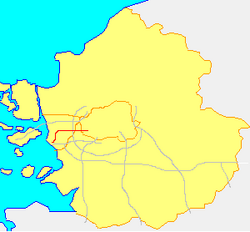
Key Facts
- Official Designation: Expressway No. 120
- Total Length: 24 km (15 mi)
- Historical Significance: South Korea's first expressway
- Eastern Terminus: Sinwol Interchange, Yangcheon-gu, Seoul
- Western Terminus: Nam-gu, Incheon
- Operational Since: 1968
Historical Development and Evolution
The journey of the Gyeongin Expressway began with construction on March 24, 1967. The first major segment, stretching from Gajwa in the Seo District of Incheon to Yangpyeong-dong in the Yeongdeungpo District of Seoul, was completed and opened on December 21, 1968. Following this initial success, additional sections were opened to connect the route to Incheon Port.
Over the decades, the highway has undergone several administrative and structural changes:
- 1983: The route was originally assigned the number 2.
- 1985: The easternmost segment between Yangpyeong and the Shinwol Interchange was transferred to the jurisdiction of Seoul, establishing the Shinwol Interchange as the new terminus.
- 2001: As part of a nationwide re-rationalization of the expressway numbering system, the road was redesignated as Route 120.
Capacity and Expansion
To manage the surging traffic volumes characteristic of the Seoul-Incheon corridor, the expressway has been expanded multiple times. Originally designed as a four-lane highway, various sections have been widened to accommodate six to eight lanes of traffic.
The regional infrastructure has also been bolstered by the introduction of secondary routes. The Second Gyeongin Expressway opened in December 1996, connecting Incheon to Seongnam, while the Third Gyeongin Expressway followed in May 2010, linking Incheon to Siheung.
Route Summary
| Feature | Details |
|---|---|
| Official Name | Gyeongin Expressway (경인 고속도로) |
| Route Number | 120 |
| Total Distance | 24 km |
| Primary Connection | Seoul (Yangcheon-gu) to Incheon (Nam-gu) |
| Major Junction (East) | Sinwol Interchange |
| Major Junction (West) | Nam-gu, Incheon |
Frequently Asked Questions
Is the Gyeongin Expressway the oldest highway in South Korea?
Yes, it is the oldest expressway in South Korea, having opened in 1968, which was three years before the Gyeongbu Expressway.
What is the current route number for the Gyeongin Expressway?
While it was previously known as Route 2, it was redesignated as Route 120 in 2001 during a national numbering system update.
How long is the Gyeongin Expressway?
The expressway spans a total length of 24 kilometers (approximately 15 miles).
Where does the expressway begin and end?
The eastern end is located at the Sinwol Interchange in the Yangcheon District of Seoul, and the western end is located in the Nam District of Incheon.
How has the capacity of the road changed over time?
The highway was originally a four-lane road but has been expanded to six or eight lanes in various sections to handle increased traffic.