Gyeongbu Line: The Historical Backbone of South Korean Rail
The Gyeongbu Line serves as the vital artery of South Korea's transportation network, connecting the nation's capital, Seoul, with its largest port city, Busan. Spanning 441.7 km, this railway has evolved from a colonial-era track into a sophisticated corridor that supports high-speed travel, heavy freight, and essential commuter services.
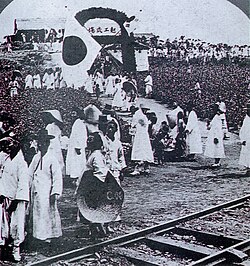
Key Facts
- Termini: Seoul and Busan
- Total Length: 441.7 km (274.5 mi)
- Opening Date: January 1, 1905
- Operator: Korail
- Track Gauge: 1,435 mm (Standard Gauge)
- Electrification: 25 kV/60 Hz Catenary
A Century of Evolution
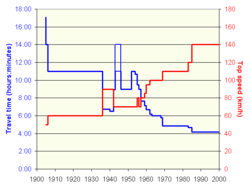
The history of the Gyeongbu Line is deeply intertwined with the modern history of the Korean Peninsula. Originally opened as the Keibu Railway on January 1, 1905, the line's initial service was a modest affair, with the first trains taking 17 hours and 4 minutes to complete the journey. By 1906, improvements had already reduced travel time to 11 hours.
Throughout the mid-20th century, the line witnessed significant shifts in technology and purpose. During the Korean War, the railway played a critical role in transporting troops and refugees. In the post-war era, the line became a symbol of national reconstruction. The introduction of the Jaegeon-ho (Reconstruction train) in 1962 marked a turning point, as it was the first to break pre-war travel records, connecting Seoul and Busan in just 6 hours and 10 minutes.
The Rise of Modern Express Services
As road transportation expanded in the 1960s and 70s, the railway responded with increased speed and comfort. The introduction of the Saemaul-ho class of elevated-comfort express trains in 1974 helped the rail network remain competitive. By 1985, through the use of streamlined diesel locomotives and diesel multiple units, top speeds reached 140 km/h, bringing the Seoul–Busan travel time down to 4 hours and 10 minutes.
Modernization and the KTX Revolution
The most significant transformation in recent decades was the development of the KTX (Korea Train Express). Recognizing that the Seoul–Busan axis handled a massive portion of the nation's passenger and freight traffic, the government moved to separate long-distance passenger traffic from freight operations.
With the launch of the first phase of the Gyeongbu High-Speed Rail (HSR) on April 1, 2004, the travel landscape changed forever. The KTX reduced the shortest travel time between Seoul and Busan to just 2 hours and 40 minutes. While the high-speed line handles the bulk of rapid transit, the conventional Gyeongbu Line continues to provide essential services, including Saemaul-ho and Mugunghwa-ho trains, as well as vital freight transport.
Technical Specifications and Infrastructure
The Gyeongbu Line is a complex piece of engineering, featuring varying numbers of tracks to manage different traffic densities. The section between Seoul and Guro utilizes 6 tracks, while the stretch from Cheonan to Busan operates on 2 tracks. The entire line is electrified using a 25 kV/60 Hz catenary system to support modern locomotive requirements.
| Feature | Specification |
|---|---|
| Total Stations | 90 |
| Operating Speed | 150 km/h (93 mph) |
| Track Gauge | 1,435 mm |
| Electrification | 25 kV/60 Hz |
| Primary Operator | Korail |
Frequently Asked Questions
What are the main types of trains running on the Gyeongbu Line?
The line is served by high-speed KTX services, intercity Saemaul-ho trains, and cross-country Mugunghwa-ho trains.
How long does it take to travel from Seoul to Busan?
Travel times vary by service: KTX high-speed trains can complete the journey in as little as 2 hours and 40 minutes, while Saemaul-ho trains take approximately 4 hours and 50 minutes, and Mugunghwa-ho trains take at least 5 hours and 28 minutes.
Is the Gyeongbu Line electrified?
Yes, the line uses 25 kV/60 Hz catenary electrification, which was implemented in various stages between 1974 and 2006.
Does the Gyeongbu Line carry freight?
Yes, the line remains a primary corridor for freight transport in South Korea, a role that is supported by the separation of long-distance passenger traffic onto the parallel high-speed HSR line.
Which stations serve as major hubs on the line?
Major hubs include Seoul, Suwon, Cheonan, Daejeon, Daegu, and Busan, all of which facilitate connections to various subway lines and other regional rail services.