Gustavo Cerati: The Legacy of a Latin Rock Icon
Gustavo Adrián Cerati Clark was more than just a musician; he was a transformative force in the landscape of Latin American music. As the leader, vocalist, and primary composer of the legendary band Soda Stereo, Cerati bridged the gap between traditional rock and the evolving sounds of electronic music, earning him a reputation as one of the most influential artists in the history of Latin rock.
Throughout a career spanning nearly three decades, Cerati demonstrated a restless creativity, moving seamlessly from the stadium-filling anthems of the 1980s to the intricate textures of trip hop (a fusion of hip hop and electronica) and dream pop (a subgenre of indie rock characterized by ethereal atmospheres). His ability to evolve ensured that his music remained relevant across generations.
Key Facts
- Role: Leader, vocalist, and guitarist of Soda Stereo; prolific solo artist and producer.
- Major Achievements: Sold over 10 million solo records and won multiple Latin Grammy, MTV, Konex, and Gardel Awards.
- Musical Range: Spanned rock, electronic rock, pop rock, electronica, and deep house.
- Critical Standing: Ranked 33rd best rock singer of all time by Billboard (2023) and 7th best Argentine rock guitarist by Rolling Stone (2012).
- Final Work: His last studio album, Fuerza Natural, topped charts in Argentina, Mexico, and Chile.
The Soda Stereo Era
Influenced by the Beatles and the Police, Cerati founded Soda Stereo in 1982. The band signed with Discos CBS in 1984, releasing their self-titled debut that same year. They quickly rose to prominence with the 1985 hit "Cuando pase el temblor" from the album Nada Personal.
As the 1980s progressed, Cerati's songwriting matured significantly. Albums such as Signos (1986), Canción Animal (1990), and Dynamo (1992) received near universal acclaim, cementing the band's status as a continental powerhouse. Soda Stereo eventually released their final studio album, Comfort y Música Para Volar, in 1996.
Solo Career and Electronic Exploration
Even while leading Soda Stereo, Cerati explored avant-garde sounds. In 1992, he collaborated with Daniel Melero on Colores Santos, an album credited with popularizing electronic music in South America. This spirit of experimentation continued into his solo career, beginning with Amor Amarillo (1993).
In the late 1990s and early 2000s, Cerati leaned further into electronic textures. His albums Bocanada (1999) and Siempre es hoy (2002) drew heavily from downtempo (slow-tempo electronic music) and trip hop. He also formed the electronic duo Ocio and the project Plan V, the latter of which collaborated with the British group the Black Dog.
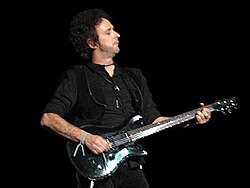
The Return to Rock and Final Years
In 2006, Cerati returned to his guitar-driven roots with the album Ahí vamos. The record was a massive critical and commercial success, featuring hits like "Crimen" and "Adiós." It earned him three Latin Grammys and swept nearly all eight Gardel nominations in Argentina. This era was highlighted by a massive free concert in Buenos Aires attended by 200,000 people.
After a successful 2007 reunion tour with Soda Stereo that sold over a million tickets, Cerati released his final studio effort, Fuerza Natural, in 2009. The album debuted at No. 1 in several countries and sold 500,000 copies worldwide.
Collaborations and Production
Cerati was a highly sought-after session player and producer. He contributed guitar work to artists like Caifanes and Babasónicos, and collaborated with global stars including Roger Waters, Shakira, and Mercedes Sosa. His production skills were particularly evident in his work on Shakira's Fijación Oral, Vol. 1, for which he won a Latin Grammy for Best Producer.
| Era | Album Title | Year | Primary Style |
|---|---|---|---|
| Soda Stereo | Soda Stereo | 1984 | Rock / New Wave |
| Soda Stereo | Canción Animal | 1990 | Rock |
| Solo | Amor Amarillo | 1993 | Alternative Rock |
| Solo | Bocanada | 1999 | Electronic / Trip Hop |
| Solo | Ahí vamos | 2006 | Guitar Rock |
| Solo | Fuerza Natural | 2009 | Art Rock / Pop |
Health Struggles and Passing
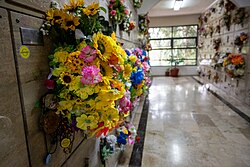
Tragedy struck in May 2010. Immediately following a concert in Caracas, Venezuela, as part of the Fuerza Natural tour, Cerati suffered a stroke. He remained in a comatose state for four years. On 4 September 2014, Gustavo Cerati died of cardiac arrest in Buenos Aires at the age of 55.
Frequently Asked Questions
What was Gustavo Cerati's most influential band?
Cerati was the leader, vocalist, and guitarist of Soda Stereo, one of the most important and influential Latin rock bands in history.
Which solo albums are considered his most acclaimed?
Critics frequently highlight Bocanada for its electronic innovation and Ahí vamos for its triumphant return to guitar rock.
Did Cerati work with international artists?
Yes, he collaborated with several world-renowned musicians, including Roger Waters, Andy Summers, and Shakira, the latter of whom he also produced for.
How did Gustavo Cerati die?
Cerati died of cardiac arrest on 4 September 2014, following a four-year coma caused by a stroke he suffered in 2010.
What awards did he win during his career?
He won numerous accolades, including Latin Grammy Awards, MTV Awards, Konex Awards, and Gardel Awards.