Guitar Amplifiers: The Evolution of Tone and Technology
A guitar amplifier is a specialized instrument amplifier designed to take the weak electrical signal generated by a guitar's pickups and transform it into a powerful sound projected through loudspeakers. This process involves two primary stages: a preamplifier, which shapes the tone, and a power amplifier, which increases the signal's strength for projection.
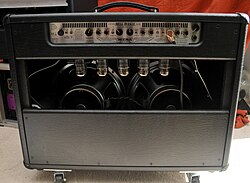
Depending on the design, these components are housed in different ways. A combo integrates the preamp, power amp, and speakers into a single enclosure. In contrast, a head contains only the electronics and must be connected to an external speaker cabinet. From small practice units to massive stage rigs, the choice of amplifier is fundamental to a musician's sonic identity.
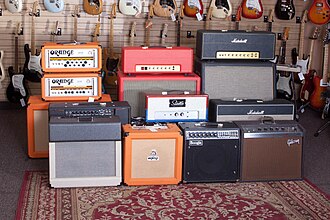
Key Facts
- Core Function: Receives pickup signals, shapes tone via a preamp, and amplifies it via a power amp.
- Primary Formats: Combos (all-in-one) and Heads (electronics only, requiring external cabinets).
- Technology Types: Vacuum tube, solid-state (transistors), and digital modeling.
- Tonal Shaping: Achieved through equalizers, distortion (overdrive), and built-in effects like reverb.
- Historical Milestone: First commercially available amps were released in 1928.
The History of Amplification
Early Models (1920s–1940s)
High-powered audio amplifiers originally served public address systems and movie theaters. By the 1920s, portable models became popular for lap steel guitars. The first commercial guitar amps arrived in 1928 from Stromberg-Voisinet and Vega, though they closely resembled PA systems of the time.
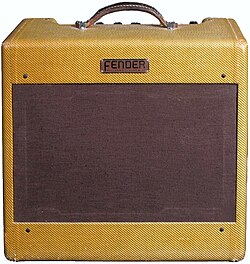
By the 1930s, companies like Electro String Instruments established the template for the modern amp: a rectangular wooden box with a speaker cutout and handle. In the mid-1940s, Leo Fender founded Fender, producing amps with wide control panels. Interestingly, early Fender models like the 1948 Deluxe were not loud enough for stages; when pushed to their limit, the signal would clip, creating a musical distortion that guitarists eventually embraced as a desired effect.
The Rock and Roll Era (1950s–1960s)
The 1950s saw the rise of solid-body electric guitars, which eliminated the feedback common in acoustic-electric models. Fender released the Twin for clean tones and the Bassman, whose distortion became a favorite for both bassists and guitarists. The Bassman later inspired Marshall's first model, the JTM45.
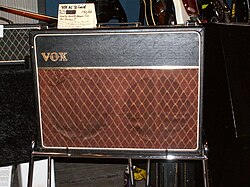
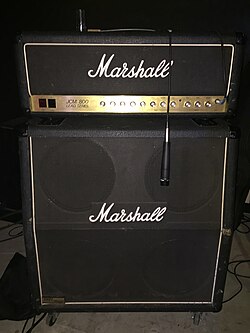
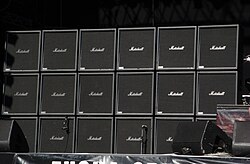
In 1959, Vox released the AC30, famous for its "jangly" tone during the British Invasion. As musicians demanded more volume, Marshall introduced the 100-watt Super Lead in 1965. When paired with 4x12 speaker cabinets, this setup became the iconic "Marshall stack," defining the sound of rock and roll.
The Rise of High-Gain and Master Volume (1970s–1980s)
As heavy metal emerged, players sought more aggressive tones. Marshall responded with the JCM800 in 1981, featuring a master volume control that allowed for high distortion at manageable levels. Simultaneously, Mesa/Boogie pioneered channel-switching and effects loops with its Mark series, with the Mark IIC+ becoming a staple for bands like Metallica.
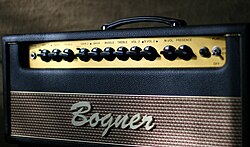
The 1980s also saw the birth of high-end "boutique" high-gain amps from brands like Soldano, Bogner, and Rivera. Toward the end of the decade, professional musicians shifted toward complex rackmount setups consisting of separate preamps and power amps operated by pedal controllers.
Modern Era: Boutique and Digital Modeling (1990s–Present)
The 1990s saw a return to standalone amplifiers and vintage-style pedals, driven by the grunge movement. This era birthed new boutique builders like Matchless and high-gain staples like the Mesa/Boogie Dual Rectifier and the Peavey 5150.
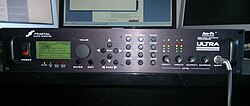
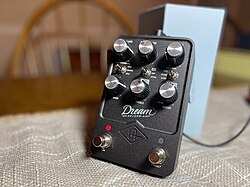
Parallel to analog growth, digital modeling evolved. While early modelers were for home practice, the 2006 Fractal Audio Axe-FX brought professional-grade modeling to the stage. The 2011 Kemper Profiler introduced "profiling," allowing users to digitally capture the exact sound of physical gear. Today, hybrid amplifiers—like the Boss Katana—combine analog and digital technologies, while "lunchbox" amps provide high-quality tone in small, portable metal cases.
Technical Structure and Components
Preamp and Power Amp
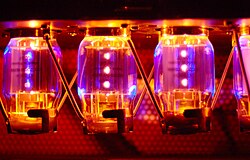
Historically, amplifiers relied on vacuum tubes. The 12AX7 is the most common preamp tube, while power sections use tubes like the EL34, EL84, 6L6, or 6V6. Some amps use tubes for rectification (converting AC to DC power). Solid-state amplifiers replace these with transistors and diodes, while hybrids use a mix of both.
Power Output and Headroom
Wattage does not have a linear relationship with perceived volume. A 15-watt tube amp can sound as loud as a 50-watt solid-state amp. The primary difference in higher wattage tube amps is headroom—the ability to increase volume without the signal distorting. A 100-watt amp can stay "clean" at much higher volumes than a 15-watt amp.
Cabinet Design
The speaker cabinet is the final stage of the signal chain. Whether integrated into a combo or used as a separate stack, the size and number of speakers significantly impact the final sound.
Amplifier Comparison Summary
| Type | Primary Component | Key Characteristic | Common Use Case |
|---|---|---|---|
| Vacuum Tube | Vacuum Tubes | Warm, organic distortion; high headroom | Professional recording and stage |
| Solid-State | Transistors/Diodes | Reliable, consistent, often cleaner | Practice and clean-tone needs |
| Digital Modeling | DSP / Software | Versatile; emulates many amps/cabs | Home recording and touring |
| Hybrid | Tubes & Transistors | Balance of tube warmth and digital utility | Versatile all-around use |
Frequently Asked Questions
What is the difference between a combo and a head?
A combo amplifier houses the preamplifier, power amplifier, and speakers in one single cabinet. A head contains only the preamplifier and power amplifier and must be connected to a separate external speaker cabinet via a cable.
What does "headroom" mean in an amplifier?
Headroom refers to the amount of volume an amplifier can produce before the signal begins to clip or distort. Higher-wattage amplifiers generally have more headroom, meaning they can play louder while maintaining a clean, undistorted sound.
Are tube amps better than digital modelers?
This is a subject of ongoing debate. Tube amp enthusiasts value the "soul," nostalgia, and organic response of analog circuitry. Modeler users prefer the portability, consistency, and ability to switch between dozens of different amp sounds instantly.
What is a "Marshall stack"?
A Marshall stack is a specific configuration consisting of a Marshall amplifier head placed on top of one or more 4x12 speaker cabinets (cabinets containing four 12-inch speakers). It became a symbol of rock and roll due to its immense volume and presence.
What is the purpose of a preamplifier?
The preamplifier is the first stage of the amp; it takes the low-voltage signal from the guitar pickups and boosts it to a usable level while allowing the player to shape the tone using EQ controls and gain settings.