Guinness Stout: The History and Science of the World's Most Iconic Dark Beer
Few beverages are as instantly recognizable as Guinness. Known globally for its deep color and creamy head, this Irish stout has evolved from a local Dublin brew into a worldwide symbol of Irish culture. Produced by Diageo, Guinness is more than just a drink; it is a masterclass in branding, chemistry, and brewing tradition.
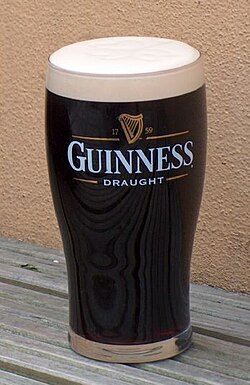
While often described as black, the official color of Guinness is actually a very dark ruby-red. This visual distinction is paired with a signature dry flavor and a unique mouthfeel that sets it apart from other stouts.
Key Facts
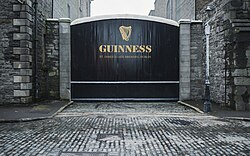
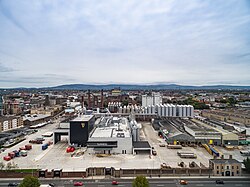
- Origin: Ireland, primarily associated with the St. James's Gate Brewery in Dublin.
- Manufacturer: Diageo.
- Official Color: Very dark ruby-red.
- Standard ABV: 4.2% alcohol by volume.
- Flavor Profile: Dry.
- Classification: Stout (beer).
The Legacy of St. James's Gate
![House flag of the Guinness shipping fleet, which ceased operating in 1993[28]](/images/4c/26/4c26093af61e132b72978d806300c91b21a3a4f9ba05feb219bd3a9a9c5610da.webp)
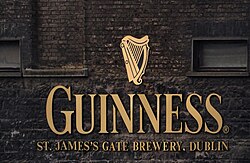
The heart of Guinness lies in Dublin at the St. James's Gate Brewery. Over centuries, this site has grown from a modest operation into a global powerhouse. The brewery's influence extended beyond beer; it served as a safe haven for troops during World War I and played a significant role in the Irish economy during World War II.
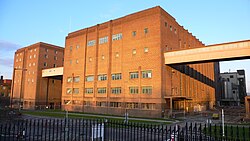
The company's reach once included its own shipping fleet to distribute the "black stuff" across the globe, though these operations ceased in 1993. While the Dublin site remains iconic, the company has managed a vast international network, including the once-massive Park Royal brewery in London, which was at its peak the largest and most productive brewery in the world.
Varieties and Modern Innovations
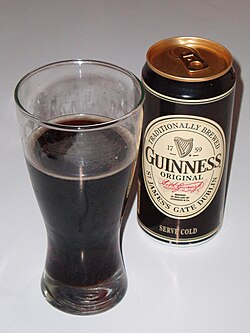
While the classic Draught is the most famous, Guinness has diversified its portfolio to meet changing consumer tastes. This includes the introduction of non-alcoholic options and regional specialties.
Core and Specialty Variants
- Guinness Original/Extra Stout: The traditional, bolder version of the brew.
- Guinness 0.0: A non-alcoholic version designed to mimic the taste of the original.
- Guinness Cold Brew Coffee Beer: A fusion of coffee and stout.
- Guinness West Indies Porter: A regional variation tailored for specific markets.
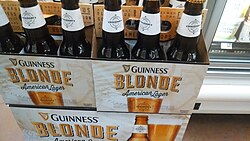
- Guinness Blonde American Lager: A departure from the stout style, targeting the US market.
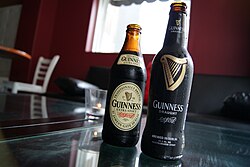
The company has also experimented with strength, such as the Guinness Mid-Strength (2.8% ABV), which was test-marketed in Limerick and Dublin between 2006 and 2007.
The Art and Science of the Pour
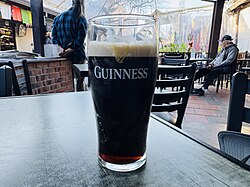
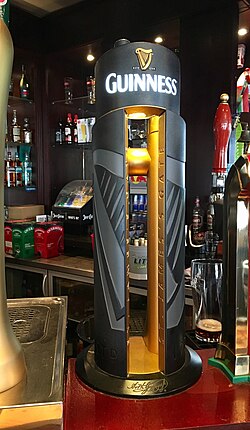
The "perfect pint" of Guinness is a ritualized process. The beer is nitrogenated, meaning it uses nitrogen instead of (or in addition to) carbon dioxide to create its signature creamy head. This process results in smaller bubbles that create a smoother texture.
The Mystery of Sinking Bubbles
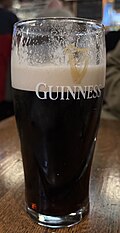
One of the most debated aspects of Guinness is the movement of its bubbles. Unlike most carbonated drinks where bubbles rise, Guinness bubbles appear to sink. Scientific analysis has confirmed that these bubbles do indeed move downward, a phenomenon caused by the specific interaction of nitrogen and the beer's composition.
Marketing and Global Presence
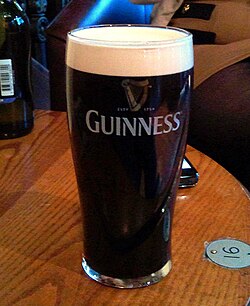
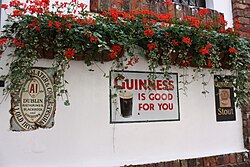
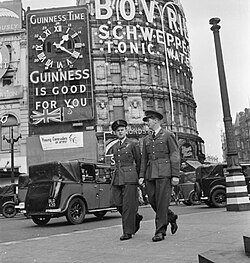
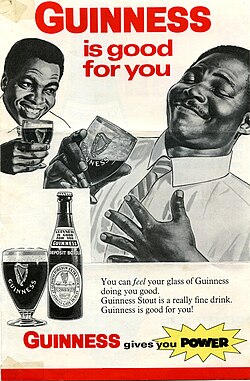
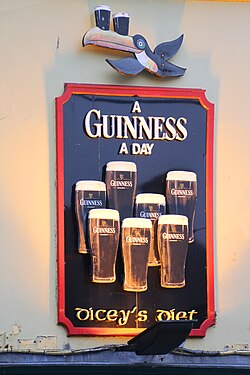
Guinness is renowned for its advertising, moving from the bold "Guinness is good for you" claims of the past to sophisticated, cinematic campaigns. From neon signs in London's Piccadilly Circus in the 1930s to modern digital ads, the brand has maintained a consistent image of quality and patience, often emphasizing that "good things come to those who wait."
The brand's global footprint is immense, with significant presence in West Africa (including Nigeria and Sierra Leone) and South Africa, where Guinness has become a staple in local pub culture.
Product Summary
![Guinness slogan from the 1920s to the 1960s[116]](/images/9f/13/9f13570000d139590bb27e9c69a578239e91c460e5b1e94aa14195b51b3c6c2f.jpg)
| Feature | Details |
|---|---|
| Primary Style | Stout |
| Alcohol Content | 4.2% (Standard) / 2.8% (Mid-Strength) / 0.0% (Alcohol-Free) |
| Key Ingredients | Water, Barley, Hops, Yeast (Vegan since 2015) |
| Visual Characteristic | Dark ruby-red with a creamy white head |
| Manufacturer | Diageo |
Frequently Asked Questions
Is Guinness actually black?
No. While it appears black in the glass, the official color of Guinness is described as a very dark ruby-red.
Why do the bubbles in Guinness sink?
This is due to the nitrogenation process. The smaller nitrogen bubbles interact with the liquid in a way that causes them to descend, creating the characteristic "surge and settle" effect.
Is Guinness vegan?
Yes. After over 250 years of production, Guinness transitioned to a vegan recipe in 2015.
What is the difference between Guinness Draught and Extra Stout?
Guinness Draught is nitrogenated for a smoother, creamier finish, while Extra Stout is typically more robust, with a stronger flavor profile and different carbonation.
Where is Guinness produced?
While its spiritual home is the St. James's Gate Brewery in Dublin, Ireland, it is produced and distributed globally by Diageo through various breweries and partnerships.