The Academic Legacy of Guenter Lewy: A Life in Political Science
Guenter Lewy (1923–2026) was a prominent German-born American political scientist and author whose extensive body of work explored the complexities of war, religion, and the legal definitions of historical atrocities. As a professor at the University of Massachusetts Amherst, Lewy established himself as a rigorous, though often controversial, scholar who challenged prevailing historical narratives and media interpretations of global conflicts.
From his early life navigating the rise of Nazi Germany to his academic career in the United States, Lewy's life was marked by a commitment to academic inquiry. His research spanned a wide range of topics, including the Vietnam War, the role of the Catholic Church, and the specific legal applicability of the term genocide—a term referring to the deliberate killing of a large group of people, especially those of a particular ethnic group or nation. While his work was highly influential, his conclusions regarding certain historical events frequently sparked intense debate within the academic community.
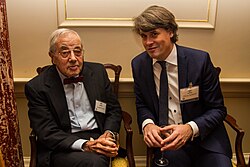
Key Facts
- Academic Roles: Professor of political science at the University of Massachusetts Amherst; also held faculty positions at Columbia University and Smith College.
- Education: BA from City College in New York City; MA and PhD from Columbia University.
- Major Works: America in Vietnam (1978) and The Armenian Massacres in Ottoman Turkey: A Disputed Genocide (2006).
- Military Service: Served in the Jewish Brigade during World War II.
- Controversial Research: Questioned the classification of the Romani and Armenian massacres as "genocide" under specific legal definitions.
Early Life and Formative Years
Born on August 22, 1923, in Breslau, Germany (now Wrocław, Poland), Lewy's early years were shaped by the growing instability of the Weimar Republic and the subsequent rise of the Nazi regime. As a youth, he was a member of Die Greifen ("the griffins"), a German-Jewish scouting organization. He later noted that this group, which emphasized music and literature, helped foster his desire for an academic career.
The escalating persecution of Jews in Germany prompted Lewy to lobby his family to emigrate. Following Kristallnacht in November 1938—an event that resulted in his father's four-month internment in Buchenwald—his parents sent him to Mandatory Palestine in 1939. During World War II, Lewy voluntarily took up arms against Germany, serving in the Jewish Brigade.
After the war, Lewy migrated to the United States to reunite with his parents, eventually pursuing higher education at City College in New York and Columbia University. He would go on to become a frequent contributor to Commentary and a respected figure in American political science.
Major Research Areas
The Vietnam War and Media Criticism
In his 1978 book, America in Vietnam, Lewy offered a critical analysis of the conflict and the domestic response to it. He challenged what he termed the "war crime industry," arguing that Western media displayed a double standard by failing to report equally on the crimes committed by Vietnamese communists. He cited a figure of 36,725 political assassinations perpetrated by the VC/NVA between 1957 and 1972.
Regarding American military conduct, Lewy provided specific data to contextualize the scale of offenses:
- Between January 1965 and March 1973, 201 Army personnel were convicted by court-martial of serious offenses against Vietnamese citizens.
- Between March 1965 and August 1971, 77 Marines were convicted of serious crimes against Vietnamese citizens.
Lewy was also critical of the anti-war movement, suggesting that some veterans' testimonies sounded like "North Vietnamese propaganda." He investigated potential links between anti-war activism and military sabotage, noting that while cases of arson and sabotage occurred in the Navy between 1965 and 1970, no hard evidence directly linked organized anti-war militants to these attempts.
Debates on the Definition of Genocide
A significant portion of Lewy's later career involved examining whether specific historical tragedies met the strict legal criteria of the genocide convention. This research often placed him at the center of intense academic and legal disputes.
The Nazi Persecution of the GypsiesIn his 2000 book, The Nazi Persecution of the Gypsies, Lewy argued that while the suffering of the Romani people was immense, it did not constitute genocide under the specific meaning of the convention. He suggested that applying the term "genocide" in this context might "dilute" the concept. He argued that his position was not intended to minimize the suffering of non-Jewish victims of Nazism, but rather to maintain legal and historical precision.
The Armenian MassacresLewy's work on the Armenian massacres in Ottoman Turkey was perhaps his most contested. In The Armenian Massacres in Ottoman Turkey: A Disputed Genocide (2006), he argued there was insufficient evidence to prove the Young Turk regime had centrally organized the massacres. He estimated the total losses for World War I to be approximately 642,000, based on a pre-war population of 1,750,000 and an estimated 1,108,000 survivors.
This work led to a significant legal victory for Lewy. In 2010, the Southern Poverty Law Center (SPLC) settled a defamation suit filed by Lewy, agreeing to retract a suggestion that he was a "Turkish agent" and issuing an apology. The settlement included an undisclosed monetary payment.
American Indian History
In a 2004 essay, Lewy addressed the question of whether American Indians were victims of genocide. While acknowledging that certain episodes might be considered "genocidal" in nature, he argued against condemning an entire society based on those episodes. He specifically dismissed claims that the U.S. Army intentionally spread smallpox via infected blankets in 1837 as "bogus."
Summary of Key Academic Contributions
| Title | Year | Primary Subject Matter |
|---|---|---|
| America in Vietnam | 1978 | Analysis of the Vietnam War and media reporting. |
| The Nazi Persecution of the Gypsies | 2000 | Legal definitions of genocide regarding the Romani. |
| The Armenian Massacres in Ottoman Turkey | 2006 | Investigation into the organization of Armenian massacres. |
| Perpetrators | 2017 | The world of Holocaust killers. |
Frequently Asked Questions
What was Guenter Lewy's primary academic focus?
Lewy was a political scientist whose work focused on the complexities of political conflict, the role of religion in society, and the legal and historical definitions of genocide and war crimes.
Why was Lewy's work on genocide considered controversial?
His work was controversial because he challenged the application of the term "genocide" to several historical events, including the persecution of the Romani and the Armenian massacres, arguing that the legal criteria for the term were not strictly met in those instances.
What was the outcome of Lewy's lawsuit against the SPLC?
The Southern Poverty Law Center settled the defamation suit in 2010, issuing a retraction and an apology for suggesting Lewy was a "Turkish agent." The settlement also included an undisclosed monetary payment.
How did Lewy view the media's role in the Vietnam War?
Lewy criticized the media for what he perceived as a "war crime industry" and a double standard, alleging that Western media failed to report on the crimes committed by Vietnamese communists with the same frequency as crimes committed by American forces.
What was Lewy's stance on the Armenian massacres?
Lewy argued that there was insufficient evidence to prove that the massacres of Armenians in the Ottoman Empire were governmentally organized by the Young Turk regime, leading him to dispute the classification of the event as a genocide.