Guardia Civil: The History and Evolution of Spain's National Gendarmerie
The Guardia Civil is Spain's largest police force by area of jurisdiction. Operating as a gendarmerie—a military force charged with police duties—it serves as a cornerstone of Spanish internal security, blending military discipline with civil law enforcement. From its origins in the mid-19th century to its modern role in counter-terrorism and environmental protection, the force has evolved to meet the changing needs of the Spanish state.
Key Facts
- Founded: May 13, 1844, during the reign of Queen Isabel II.
- Personnel: 91,034 total employees as of 2024, with 81,034 in active service.
- Budget: €3.67 billion (projected for 2026).
- Motto: El honor es mi divisa (Honour is my badge).
- Jurisdiction: All Spanish territory, primarily focusing on rural areas and specialized national security tasks.
Origins and Early History

The Guardia Civil was established in 1844 by the 2nd Duke of Ahumada to replace the "Holy Brotherhood," a system of municipal leagues plagued by corruption and local political influence. Because the previous system was ineffective outside major cities, criminals often escaped justice by simply crossing district lines. To solve this, the Spanish government created a centralized, mobile force based on the light infantry models used by Napoleon.
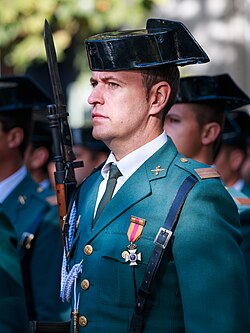
The first police academy opened in Valdemoro, south of Madrid, in 1855. It was here that graduates were first issued the tricornio (tricorne hat), which remains a global symbol of the force today.
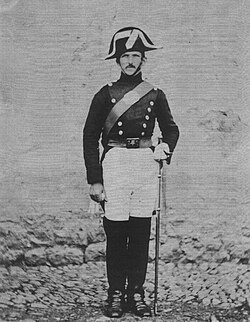
Beyond simple law enforcement, the force was tasked with maintaining land ownership and suppressing anti-monarchist movements. To ensure efficiency in the rugged Spanish countryside, the Guardia Civil adopted a patrol system known as the pareja (pair), where two agents work together—one to initiate intervention and the second to provide backup.
The 20th Century: Conflict and Transition
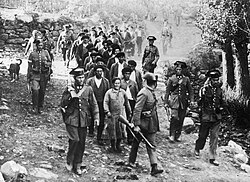
Throughout the late 19th and early 20th centuries, the Guardia Civil extended its reach to Spain's overseas territories, including the Philippines, Puerto Rico, Cuba, Ifni, and Spanish Guinea.
Following the Spanish Civil War (1936–1939), the force was reinforced during the dictatorship of General Francisco Franco by absorbing the members of the Carabineros (the Royal Corps of Coast and Frontier Carabiniers). The force remained entwined with political volatility into the late 20th century; notably, in 1981, Lt. Col. Antonio Tejero Molina led a failed coup d'état (23-F), briefly seizing the lower house of the Cortes before being stopped by King Juan Carlos.
Modern Operations and Specializations
Today, the Guardia Civil is overseen by the Directorate-General of the Police and reports to the Ministers of the Interior and Defence. While they do not typically handle policing in cities with more than 20,000 inhabitants, their remit is vast and highly specialized.
Specialized Units
- UEI (Unidad Especial de Intervención): The high-risk and special operations unit.
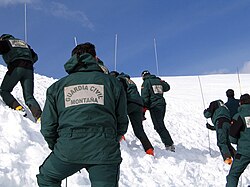
- GREIM (Grupos de Rescate e Intervención en Montaña): Specialized mountain and speleology rescue.
- SEPRONA (Servicio de Protección de la Naturaleza): Dedicated to environmental and nature protection.
- GEAS (Grupo Especial de Actividades Subacuáticas): The elite diving unit.
- SIGC (Servicio de Informacion de la Guardia Civil): Intelligence, counter-terrorism, and counter-espionage.
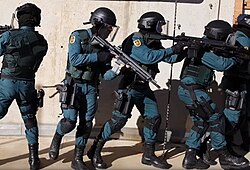
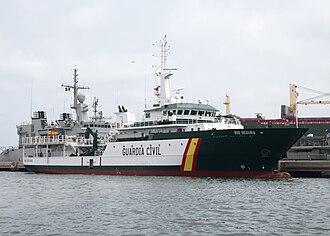
The force also manages critical infrastructure and national security, including airport security, customs and ports of entry, prison safety, and the protection of the Spanish Royal Family.
International Peacekeeping
The Guardia Civil frequently deploys abroad. Between 2002 and 2008, the Grupo de Acción Rápida (GAR) served in Kabul, Afghanistan, as the protective team for the High Representative of the European Union. Other units, including the Judicial Police and Traffic Group, also deployed to aid peacekeeping efforts in the region.
Equipment and Traditions
The force maintains a strong military tradition, including its own Music Unit, which evolved from 19th-century bugle and cavalry bands into a unified military band reporting to the General Subdirectorate of Personnel.
In terms of hardware, the force utilizes a variety of modern assets to cover Spain's diverse geography:
| Category | Key Assets / Models |
|---|---|
| Firearms | EMTAN Ramon, H&K USP Compact, H&K MP5, SIG Sauer MCX Rattler |
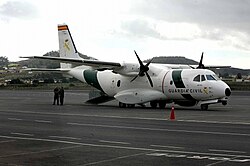
| Aircraft | CASA CN 235, INDRA P2006T |
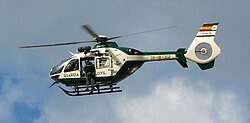
| Helicopters | Airbus H-135, Airbus H-365 Dauphin II, MBB BÖ-105 |
Frequently Asked Questions
What is the difference between the Guardia Civil and the National Police?
The Guardia Civil is a gendarmerie with a military nature, primarily responsible for rural areas, highways, and specialized national security. The National Police generally handle urban areas, specifically cities with more than 20,000 inhabitants.
What are the requirements to join the Guardia Civil?
Applicants must be Spanish citizens, fluent in Spanish, and have completed compulsory secondary education (ESO). There are also physical requirements: a minimum height of 1.65m for men and 1.55m for women, and the ability to swim.
What is the significance of the tricorne hat?
The tricornio is the traditional duty dress headgear issued to graduates of the Valdemoro academy since 1855 and serves as a primary symbol of the force's identity and history.
Does the Guardia Civil operate outside of Spain?
Yes. They provide security at Spanish embassies, participate in international peacekeeping missions (such as in Afghanistan), and conduct joint exercises with other nations for counter-narcotics and proliferation.
What is SEPRONA?
SEPRONA is the Nature Protection Service, a specialized branch of the Guardia Civil dedicated to environmental law enforcement and the protection of Spain's natural resources.