Guarani: The Resilient Indigenous Language of Paraguay
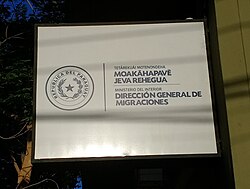
Guarani (known natively as avañeʼẽ) is one of the most widely spoken Native American languages in the world. While many indigenous languages in the Western Hemisphere have succumbed to a language shift toward European colonial tongues, Guarani has remained a vibrant part of daily life. In Paraguay, it exists alongside Spanish as an official language, creating a unique linguistic landscape where the traditional tongue is maintained by both indigenous and non-indigenous populations.
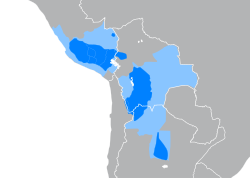
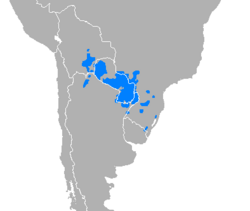
The language belongs to the Tupian family, specifically the Tupi–Guarani branch. Beyond Paraguay, it is spoken in neighboring regions of Bolivia, Argentina (Corrientes Province), and Brazil (Tacuru). With over 6.5 million speakers as of 2020, it stands as the most widely spoken indigenous language among non-indigenous communities in South America.
Key Facts
- Native Speakers: Approximately 6.5 million (2020).
- Official Status: Official language of Paraguay; also recognized in parts of Bolivia, Argentina, and Brazil.
- Language Family: Tupian > Tupi–Guarani.
- Regulating Body: Academia de la Lengua Guaraní (Guarani Ñeʼẽ Rerekuapavẽ).
- Writing System: Latin-based Guarani alphabet.
- Unique Feature: High usage among non-indigenous populations, resisting total colonial language shift.
Geographical and Social Distribution
The Guaraní people, numbering over 280,000, are distributed across Brazil, Paraguay, Bolivia, and Argentina. Of these, roughly 51,000 reside in Brazil. The language's reach extends far beyond ethnic boundaries, with millions of speakers across these borders using the language for communication, culture, and administration.
Linguistic Structure and Phonology
Guarani possesses a complex phonetic system characterized by a distinction between oral and nasal sounds. A defining feature is nasal harmony, where nasalization spreads across syllables. For example, in the phrase /ⁿdo+ɾoi+ⁿduˈpã+i/, the sounds shift to [nõɾ̃õĩnũˈpãĩ]. However, this harmony is typically blocked by a second stressed syllable containing an oral vowel.
Consonants and Vowels
The language utilizes a variety of stops, fricatives, and approximants, including the glottal stop (ʔ). Its vowel system includes front, central, and back vowels, each with a corresponding nasal version (e.g., /a/ and /ã/).
Orthography
The writing system uses the Latin script with specific modifications to account for its unique sounds. This includes characters like Ã, Ẽ, Ĩ, Õ, and Ỹ for nasal vowels, as well as the letter Y for the high central vowel /ɨ/.
Grammar and Morphology
Guarani grammar is highly structured, utilizing a system of prefixes and suffixes to denote person, number, and tense.
Pronouns and Person
The language distinguishes between inclusive and exclusive first-person plural pronouns. Ñande is used when including the listener, while ore excludes them. This precision allows for clear social context in conversation.
Verbal System
Verbs are categorized as either Active or Stative. Active verbs describe actions (e.g., guata 'to walk'), while stative verbs describe states or qualities (e.g., porã 'to be beautiful'). The language also employs various "voices" to change valency, such as the causative voice to indicate making someone do something, and the reciprocal voice (e.g., jajohayhu 'we love each other').
Tense and Aspect
Tense is often indicated through temporal suffixes. For instance, the suffix -kue can denote the past (e.g., mburuvicha-kue 'ex-leader'), while -rã is used for the future.
Vocabulary and External Influence
Due to the long history of coexistence with Spanish, Guarani has integrated many Spanish loanwords, particularly in categories like religion, animals, and food. These words are often adapted to fit Guarani phonology.
| Category | Spanish | Guarani | English |
|---|---|---|---|
| Animals | vaca | vaka | cow |
| Religion | cruz | kurusu | cross |
| Foods | queso | kesu | cheese |
| Herbs | canela | kanéla | cinnamon |
Literature and Institutions
Guarani is not only a spoken tongue but a literary one. Several novels have been published in the language, including Kalaito Pombero (1981) and Tatukua (2017). The language is supported by institutions such as the Guarani Language and Culture Athenaeum and the Yvy Marãeʼỹ Foundation, ensuring its preservation in the digital age.
Frequently Asked Questions
Is Guarani only spoken by indigenous people?
No. Guarani is unique because it is widely spoken by non-indigenous communities in Paraguay, making it one of the most successful indigenous languages in terms of social integration.
What is the difference between inclusive and exclusive "we"?
In Guarani, ñande (inclusive) includes the person being spoken to, whereas ore (exclusive) refers to a group that does not include the listener.
How does nasal harmony work in Guarani?
Nasal harmony is a phonological process where nasal sounds spread to neighboring syllables, though this is typically stopped by a stressed syllable with an oral vowel.
What is Jopará?
Jopará is a variety of the language that blends Guarani and Spanish, reflecting the bilingual nature of Paraguayan society.
Who regulates the Guarani language?
The language is regulated by the Academia de la Lengua Guaraní (Guarani Ñeʼẽ Rerekuapavẽ).