Gründerzeit: The Era of Industrial Boom and Architectural Grandeur
The Gründerzeit (literally the "founders' period") represents a pivotal chapter in European economic and cultural history. Centered primarily in mid-to-late 19th-century Germany and Austria-Hungary, this era was defined by a feverish surge of entrepreneurship, rapid industrialization, and a dramatic transformation of the urban landscape. It was a time of immense optimism and speculation that bridged the gap between early industrialization and the devastating stock market crash of 1873.
While the term is often used to describe a specific economic spike, it also encompasses a broader cultural and architectural movement that lasted until 1914, leaving an indelible mark on the cities of Central Europe.
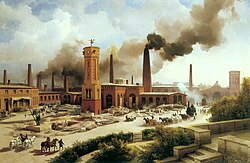
Key Facts
- Economic Peak: Characterized by a massive increase in joint-stock companies, particularly between 1870 and 1873.
- Architectural Style: Defined by Historicism, which revived Gothic, Renaissance, and Baroque styles.
- Catalysts: Driven by the expansion of railways, the Bessemer steel process, and French war reparations.
- Social Impact: Led to mass urbanization, the rise of the industrial proletariat, and the birth of modern social security.
- The Crash: The economic phase of the Gründerzeit is generally considered to have ended with the panic of 1873.
The Economic Engine of the Founder's Years
The periodization of the Gründerzeit is a subject of debate among historians. In its narrowest sense, it refers to the Gründerjahre (founder's years)—the two years following the 1871 founding of the German Empire. During this window, French war reparations from the Franco-Prussian War fueled unprecedented growth and speculation. However, some economists trace the roots back to 1869, when corporate laws and the Handelsgesetzbuch (Commercial Code) were liberalized, while others see it as part of the second Kondratiev cycle (a long-term economic growth phase).
The growth was staggering. In Prussia alone, the number of joint-stock companies founded jumped from 88 (between 1867–1870) to 928 (between 1870–1873). This boom was propelled by several key factors:
- Railway Expansion: Entrepreneurs like Bethel Henry Strousberg built vast rail networks, which in turn spiked demand for coal and steel, enabling the rise of industrial giants like Friedrich Krupp.
- Financial Influx: Five billion gold Francs in reparations from France were converted into gold Marks, strengthening the German currency.
- Technological Innovation: The Bessemer process revolutionized steel production, allowing for stronger materials and new construction possibilities.
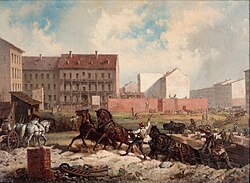
Architecture and Urban Transformation
As industrialization drew rural populations into the cities, the demand for housing exploded. This led to the creation of Gründerzeitviertel (founder's period districts)—entire neighborhoods of four-to-six-story apartment buildings. These structures were often developed by private speculators and featured ornate facades based on Historicism, an eclectic style that borrowed from the Gothic, Renaissance, and Baroque eras.
The era saw a stark contrast in living conditions. While the nouveau-riche built magnificent palaces, the expanding urban lower class lived in cramped, dark rental housing. These dwellings were often criticized by physicians for lacking light and air, contributing to the spread of tuberculosis.
Beyond housing, the period integrated revolutionary materials. The use of steel and glass, exemplified by the 1851 Crystal Palace, inspired a new generation of public buildings and industrial facades.
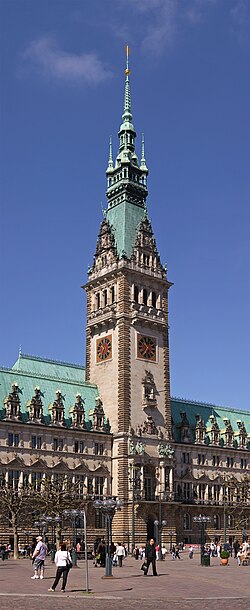
Regional Developments: Germany and Austria
The German Experience
In Germany, the era is closely linked to the leadership of Kaiser Wilhelm I and Chancellor Otto von Bismarck. It was a "Golden Age" of scientific and technical achievement. Interestingly, the lack of strict copyright laws in the mid-19th century fostered a massive surge in academic and technical publications, as low-cost reprints made knowledge accessible to the broader public.
To address the "social question" arising from urban poverty, Bismarck introduced pioneering social security laws between 1883 and 1884, including health and accident insurance. The Reichsversicherungsordnung of 1873 remains a foundational element of the German health insurance system today.
The Austrian Experience
In Austria, the boom began earlier, around 1840, focusing on Vienna, Bohemia, and Moravia. Following the 1848 uprising, Vienna underwent a massive transformation. The old city walls were replaced by a grand ring road, flanked by ambitious civic structures such as the Parliament, the Town Hall, and the Opera House.
| Feature | Economic Aspect | Cultural/Architectural Aspect |
|---|---|---|
| Primary Driver | Railways, Steel, and Reparations | Urbanization and Historicism |
| Key Style | Joint-stock company speculation | Eclectic Revivals (Gothic, Baroque) |
| Social Result | Rise of the Proletariat | Gründerzeitviertel (Urban Districts) |
| End Point | 1873 Stock Market Crash | Transition to Jugendstil (c. 1914) |
Frequently Asked Questions
What exactly was the Gründerzeit?
The Gründerzeit was a period of rapid economic expansion and industrialization in 19th-century Germany and Austria-Hungary, characterized by the founding of many new companies and a distinct architectural style known as Historicism.
Why did the economic boom end in 1873?
The period of intense speculation and rapid corporate founding culminated in a great stock market crash in 1873, which brought the primary economic phase of the Gründerzeit to an abrupt end.
What are the characteristics of Gründerzeit architecture?
It is characterized by Historicism, featuring richly decorated facades that revive previous styles like the Renaissance and Baroque. These buildings are typically four to six stories tall and are common in Central European city centers.
How did the Gründerzeit affect the working class?
While it created a new urban proletariat living in often unhealthy, cramped conditions, it also led to the first major social welfare reforms, such as Bismarck's health and accident insurance laws in the 1880s.
What role did railways play in this era?
Railways were a primary catalyst for growth, stimulating the coal and steel industries and enabling the mass production and distribution of non-industrial goods, such as foodstuffs.