Greenhouse Technology: From Ancient Heating Systems to Modern Agriculture
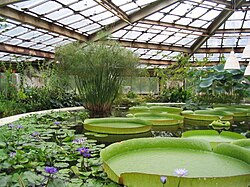
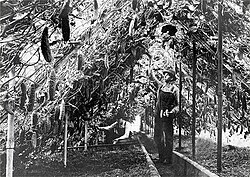
In the world of horticulture, a greenhouse is a specialized structure designed to regulate temperature and humidity to create an ideal environment for plant growth. By using transparent materials to allow sunlight to enter while inhibiting the loss of heat, these structures enable gardeners and farmers to cultivate sensitive species even in harsh or cold climates.
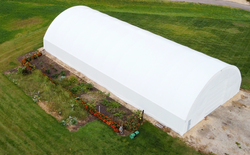
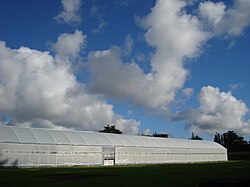
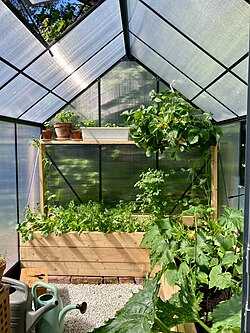
While the terms glasshouse, greenhouse, and hothouse are often used interchangeably, they can carry specific meanings. A glasshouse traditionally refers to a structure using glass panes, while a hothouse specifically denotes a building that utilizes artificial heating systems. Today, modern greenhouses utilize a diverse array of materials, including wood, polycarbonate rigid plastics, and polyethylene plastic film.
Key Facts
- Core Function: Regulates temperature and humidity to facilitate plant growth.
- Common Materials: Glass, polycarbonate, and polyethylene plastic film.
- Historical Milestone: 15th-century Korea developed the first artificially heated greenhouses using the ondol system.
- Agricultural Hub: The Westland region of the Netherlands holds one of the highest concentrations of greenhouse agriculture globally.
- Modern Innovation: New spectrally selective solar modules can generate power while optimizing light for photosynthesis.
The Evolution of Greenhouse Design
Ancient and Medieval Foundations
The history of controlled environments dates back centuries. In the 15th century, during Korea's Joseon dynasty, a significant breakthrough occurred. The physician Soon ui Jeon described an artificially heated greenhouse in his manuscript, Sangayorok. This design incorporated the ondol—a traditional Korean heating system that runs flue pipes from a heat source beneath the floor—alongside a heated cauldron to produce steam, increasing both temperature and humidity.
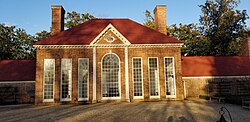
These early Korean structures were active environments, meaning they controlled temperature through external heat sources rather than relying solely on passive solar energy. They utilized semi-transparent oiled hanji (paper) windows to capture light and cob walls to retain heat.
European Expansion and the Era of Glass and Iron
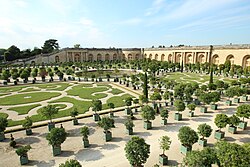
By the 17th century, improvements in glass production and construction techniques led to more elaborate structures in Europe. A notable example was the greenhouse at the Palace of Versailles, which reached massive proportions: 150 meters long, 13 meters wide, and 14 meters high.
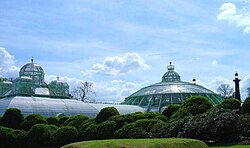
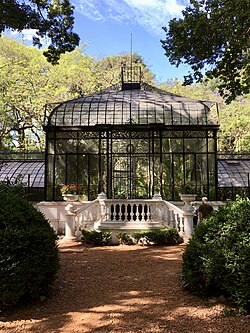
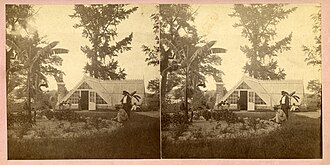
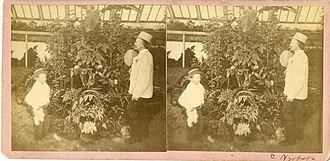
The 19th century saw the rise of the palm house—large glasshouses designed with enough height to accommodate sizeable trees. This era was defined by the marriage of glass and iron architecture. Notable structures included the Belfast Botanic Gardens (completed in 1840), the Chatsworth Great Conservatory, and the famous Crystal Palace. This period also saw the construction of the Royal Greenhouses of Laeken in Belgium for King Leopold II.
Modern Greenhouse Specializations
The Dutch Model of Agriculture
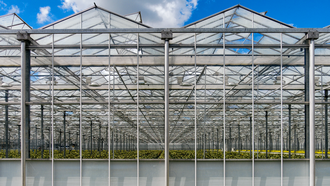
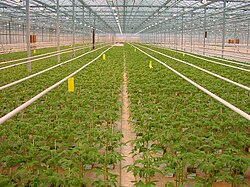
The Netherlands has become a global leader in greenhouse farming. Starting in the mid-19th century in the Westland region, growers initially used simple glass constructions to grow grapes. By the 20th century, these evolved into fully heated, glass-walled structures capable of producing a vast array of fruits and vegetables.
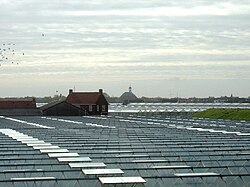
Today, the Netherlands manages approximately 4,000 greenhouse enterprises covering 9,000 hectares. This industry employs roughly 150,000 workers and produces €7.2 billion worth of produce, with 80% of that output being exported. While the Westland focuses heavily on vegetables, the Aalsmeer region is a primary hub for flowers and potted plants.
Technological Innovations
Modern greenhouse technology continues to advance through several specialized methods:
- Dutch Light: Historically, a standard pane size (28 ¾ in × 56 in) was used to provide a larger glazed area with less supporting framework.
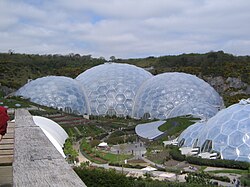
- Spectrally Selective Modules: Proposed in 2015, these use dichroic polymer films to transmit specific wavelengths (blue and red) for photosynthesis while reflecting other wavelengths to solar cells for power generation.
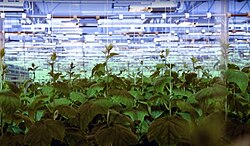
- Climate Control: Advanced systems manage ventilation, heating, cooling, lighting, and even carbon dioxide enrichment to maximize crop yields.
Summary of Greenhouse Types and Uses
| Type/Term | Primary Characteristic | Common Use |
|---|---|---|
| Glasshouse | Uses glass panes for glazing | Traditional horticulture and public displays |
| Hothouse | Utilizes artificial heating | Cultivating tropical or temperature-sensitive plants |
| Palm House | High-ceiling iron and glass structure | Growing large trees and exotic palms |
| Solar Greenhouse | Uses sunlight and/or solar modules for energy and light optimization |
Frequently Asked Questions
What is the difference between a greenhouse and a hothouse?
While the terms are often used interchangeably, a hothouse specifically refers to a greenhouse that uses artificial heating systems to maintain high temperatures.
How did ancient Korean greenhouses work?
They utilized an ondol system, which involved running heated flue pipes under the floor, and used heated cauldrons to create steam, providing both heat and humidity.
Why is the Netherlands so important for greenhouse farming?
The Netherlands has a highly concentrated and efficient network of greenhouses, particularly in the Westland and Aalsmeer regions, producing billions of euros in agricultural exports annually.
What materials are used to build modern greenhouses?
Modern structures commonly use glass panes, rigid polycarbonate plastics, or polyethylene plastic film for their walls and roofs.
What is "Dutch Light" in horticulture?
"Dutch Light" refers to a specific historical standard dimension for horticultural glass panes, designed to maximize the glazed area relative to the supporting framework.