Greek Rock: A Comprehensive History of its Evolution and Influence
Greek rock (Ελληνικό ροκ) is a vibrant musical tradition that emerged in the mid-1960s, blending global influences with local sensibilities. From its early days as an anglophone pop-rock movement to its role as a tool for political resistance and its eventual explosion into diverse subgenres like heavy metal and stoner rock, the genre has mirrored the social and political shifts of Greece over several decades.
Key Facts
- Origins: Emerged in the early 1960s with anglophone pop-rock bands.
- Global Success: Aphrodite's Child achieved international fame in the late 1960s.
- Political Role: In the 1970s, rock served as an act of resistance against the military dictatorship.
- Peak Era: The 1990s saw the genre's commercial peak with sold-out large venue concerts.
- Diverse Subgenres: Evolution includes progressive rock, punk, New Wave, and a world-renowned black metal scene.
The 1960s: The Seeds of a Movement
Rock and roll first entered Greece in the middle of the 1960s. The initial wave consisted primarily of anglophone pop-rock groups such as The Forminx (featuring composer Vangelis), The Charms, The Idols, The Olympians, Juniors, and M.G.C.
A pivotal moment occurred in 1968 in Paris with the formation of Aphrodite's Child, consisting of Vangelis, Demis Roussos, and Loukas Sideras. The band gained international acclaim with their landmark albums It's Five O'Clock (1969) and 666 (1972). Simultaneously, artists like Dionysis Savvopoulos began experimenting by blending rock elements with traditional Greek folk music.
The 1970s: Resistance and Progression
During the early 1970s, while Greece was under a military dictatorship, rock music became a vehicle for expression and resistance. This era saw the rise of progressive rock and political satire. Notable bands included Socrates Drank The Conium, Nostradamos, and Exadahtylos, the latter known for its satirical lyrics.
Kostas Tournas emerged as a pioneer during this time. His 1972 rock opera, Aperanta Horafia (Infinite Fields), is regarded as a landmark of the era and a direct act of resistance against the junta. Tournas, along with Robert Williams and Stavros Logarides of the group Poll, helped create a musical wave that resonated deeply with the youth of Athens.
Despite its popularity, rock was often viewed as "imported" (xenoferto) by both right-wing conservatives and the communist left (KKE), who preferred traditional folk music or compositions by Theodorakis. However, the decade ended with a revival led by Pavlos Sidiropoulos, who merged rock sounds with Greek lyrics in the album Flou (1978), and the emergence of early punk and New Wave influences.
The 1980s: Diversification and the New Wave
The 1980s brought a surge of musical enrichment. Mousikes Taxiarhies, led by Tzimis Panousis, combined rock with reggae and funk to deliver sharp political criticism. Meanwhile, the band Fatme, fronted by Nikos Portokaloglou, creatively blended rock with Greek popular music roots.
Vasilis Papakonstantinou rose to massive popularity during this period, becoming one of the most successful and enduring figures in Greek rock.
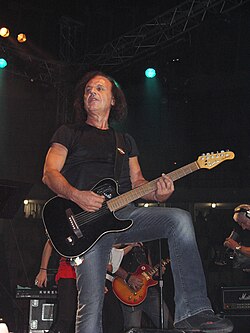
The decade also saw the rise of specialized scenes. In Zografou, bands like Syndromo (influenced by Talking Heads) and the progressive rock group PUMSVC became local staples. The New Wave scene was represented by the anglophone band Sharp Ties, while the mid-80s saw the birth of modern Greek rock through Thessaloniki-based bands Trypes and Mora Sti Fotia.
Other significant contributions included En Plo, whose debut album combined traditional folk with distorted guitars, and Lefki Symphonia, who achieved the milestone of having the first Greek music video broadcast on MTV for their song "Looking Back." The late 80s also marked the birth of the Greek metal scene, with pioneers like Spitfire, Varathron, and the black metal innovators Rotting Christ.
The 1990s: The Golden Era
The 1990s represented the commercial and cultural peak of Greek rock. For the first time, domestic bands like Xylina Spathia, Trypes, and Stereo Nova sold out large venues. The scene expanded to include a wide array of influential groups such as Diafana Krina, Pyx Lax, and Ypogeia Revmata.
In the heavier spectrum, the symphonic death metal band Septic Flesh emerged as a dominant force, further cementing Greece's reputation in the global metal community.
2000 to Present: Revival and the Underground
While mainstream interest dipped in the 2000s, the era saw an anglophone revival with bands like Raining Pleasure. Giannis Aggelakas (formerly of Trypes) continued to innovate with his band Oi Episkeptes, blending rock with jazz and reggae.
Heavy metal remained strong, with Firewind achieving international success and guitarist Gus G performing with Ozzy Osbourne. Septic Flesh also returned with the critically acclaimed Communion (2008).
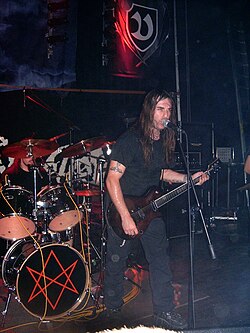
The 2010s witnessed an explosion in the underground scene, specifically in heavy, stoner, and grunge rock. Bands like Planet of Zeus and 1000mods became prominent European touring acts. Additionally, the grunge/punk band Barb Wire Dolls made history as the first Greek band to relocate to Los Angeles after gaining significant airplay on KROQ-FM.
Summary of Greek Rock Evolution
| Decade | Primary Styles | Key Artists/Bands | Cultural Context |
|---|---|---|---|
| 1960s | Pop-Rock, Folk-Rock | Aphrodite's Child, The Forminx | Introduction of rock and roll to Greece |
| 1970s | Progressive, Psychedelic | Kostas Tournas, Poll, Socrates Drank The Conium | Resistance against military dictatorship |
| 1980s | New Wave, Punk, Heavy Metal | Trypes, Lefki Symphonia, Rotting Christ | Diversification and emergence of subgenres |
| 1990s | Alternative Rock, Death Metal | Xylina Spathia, Septic Flesh | Commercial peak and large-scale concerts |
| 2000s+ | Stoner Rock, Metalcore, Jazz-Rock | Planet of Zeus, Firewind, 1000mods | Underground explosion and global touring |
Frequently Asked Questions
Who are some of the most globally recognized Greek rock bands?
Aphrodite's Child is one of the most successful internationally, particularly from the 1960s. In more recent decades, bands like Rotting Christ, Septic Flesh, and Firewind have gained significant global recognition in the metal scene.
How did the political climate of the 1970s affect Greek rock?
During the military dictatorship, rock music often served as a form of political resistance. Artists like Kostas Tournas used progressive and psychedelic rock to create works that challenged the status quo.
What was the significance of the band Lefki Symphonia?
Lefki Symphonia was a prominent 1980s band that achieved a major milestone by having the first Greek music video, "Looking Back," broadcast on MTV.
When did Greek rock reach its commercial peak?
The 1990s are considered the peak of Greek rock culture, characterized by bands like Trypes and Xylina Spathia selling out large venues and dominating the musical landscape.
Which Greek bands have successfully moved to the US market?
The grunge/punk rock band Barb Wire Dolls relocated to Los Angeles in the 2010s after receiving significant airplay on the Los Angeles radio station KROQ-FM.