Greek Alphabet: History, Evolution, and Linguistic Structure
The Greek alphabet is one of the most influential writing systems in human history. Emerging around 800 BC, it has served as the official script for Greece and Cyprus and has acted as a foundational model for numerous other writing systems, including Cyrillic, Latin, and Armenian. From its ancient roots to its modern application in science and mathematics, the Greek script has undergone significant phonetic and visual transformations.
Historical Origins and Development
The Greek alphabet did not emerge in isolation. It is a descendant of the Phoenician alphabet, which itself evolved from earlier systems like the Proto-Sinaitic alphabet and Egyptian hieroglyphs. As the Greeks adapted the Phoenician characters, they modified them to better suit the specific sounds of the Greek language.
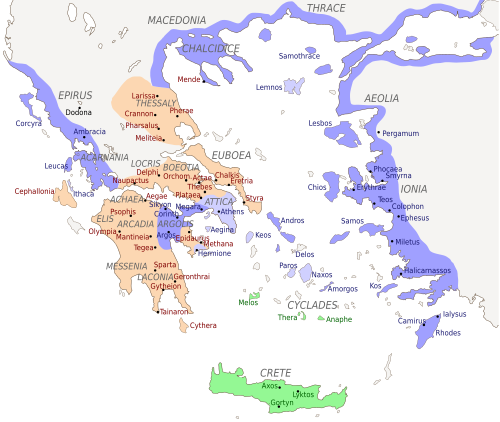
In antiquity, the alphabet was not uniform. Various regional styles existed, often categorized by scholars into "green," "red," and "blue" types based on their distribution and characteristics. These early variants eventually coalesced into the more standardized forms used in classical periods.
From Archaic Scripts to Modernity
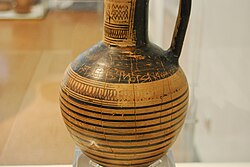
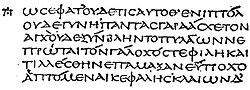
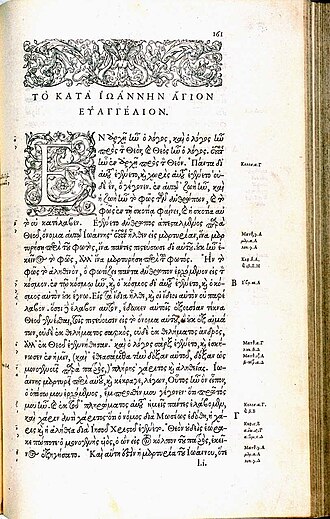
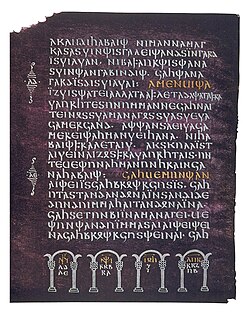
The transition from archaic inscriptions to the modern script involved significant changes in letter shapes and pronunciations. Early inscriptions, such as those found on pottery or stone, show a variety of letterforms that differ greatly from the standardized print we recognize today. Over centuries, the script moved through several stages, including the uncial (a style of majuscule or capital letters used in manuscripts) and eventually into the minuscule (lowercase) forms used in modern writing.
![Early Greek alphabet on pottery in the National Archaeological Museum of Athens, c. 420 BC[49]](/images/cf/13/cf13c6f7e5b970aca0f8ebae9d1893ff3dc1efcc8d362ad071eb97bfc8ade420.jpg)

Linguistic Structure and Phonetic Evolution
One of the most striking aspects of the Greek alphabet is the divergence between Ancient Greek and Modern Greek pronunciation. Many letters that once represented specific consonant sounds have shifted. For example, the letter Beta (Β, β) was originally a voiced bilabial plosive [b], but in Modern Greek, it is pronounced as a voiced bilabial fricative [v].

Vowel Mergers and Consonant Shifts
The evolution of the Greek language involved several vowel mergers. In Ancient Greek, letters like Eta (Η, η) and Iota (Ι, ι) represented distinct long and short vowel sounds. In the modern language, these have largely merged into a single sound. Similarly, the pronunciation of Gamma (Γ, γ) has shifted from a hard [g] to a softer [ɣ] or [ʝ] sound depending on the following vowel.


The Role of Diacritics
Diacritics—marks added to letters to indicate pronunciation or emphasis—play a crucial role in Greek. The acute accent (tonos), for instance, can distinguish between homographs (words that are spelled the same but have different meanings). A classic example is the distinction between aulós (flute) and áulos.

Key Facts
- Origin: Derived from the Phoenician alphabet around 800 BC.
- Structure: Consists of 24 letters, including both uppercase and lowercase forms.
- Direction: Written from left to right.
- Legacy: Served as the parent system for the Cyrillic, Latin, and Armenian alphabets.
- Modern Use: Official script of Greece and Cyprus.
- Mathematical Utility: Widely used as symbols in mathematics, science, and astronomy.
Summary of Alphabet Characteristics
| Feature | Description |
|---|---|
| Script Type | Alphabet |
| Number of Letters | 24 |
| Writing Direction | Left-to-right |
| ISO 15924 Code | Grek (200) |
| Unicode Range | U+0370–U+03FF (Greek and Coptic); U+1F00–U+1FFF (Greek Extended) |
Frequently Asked Questions
What are the main differences between Ancient and Modern Greek pronunciation?
The primary differences lie in consonant shifts (such as Beta moving from [b] to [v]) and vowel mergers, where several ancient long and short vowels have combined into single sounds in the modern language.
Which alphabets were derived from the Greek script?
The Greek alphabet was a model for several major systems, most notably the Cyrillic alphabet, as well as the Armenian, Coptic, Georgian, and various Old Italic scripts like Etruscan, which eventually influenced the Latin alphabet.
How is the Greek alphabet used in mathematics and science?
Greek letters are used extensively as variables and constants in mathematics, physics, and astronomy. For example, alpha (α), beta (β), and pi (π) are common symbols in these fields.
What is the purpose of diacritics in Greek?
Diacritics are used to indicate vowel length, stress, or to distinguish between words that are spelled identically but pronounced differently, such as through the use of the acute accent.