Greece National Football Team: From Underdogs to European Champions
The Greece national football team, known affectionately as Ethniki (The National) or Galanolefki (The Azure & White), represents one of the most storied journeys in international sports. Governed by the Hellenic Football Federation (HFF), the team has evolved from a regional competitor in the early 20th century to a global giant that shocked the world by claiming the European crown.
While the team has faced periods of inconsistency, its legacy is defined by a relentless spirit and a tactical discipline that peaked in the early 2000s. From the early days of the Balkan Cup to the modern era of the UEFA Nations League, Greece continues to be a formidable presence in European football.
Key Facts
- Major Achievement: Champions of the UEFA European Championship in 2004.
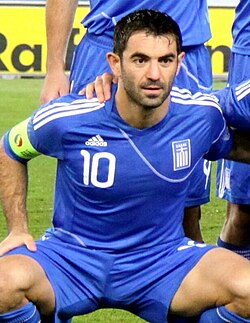
- Most Capped Player: Giorgos Karagounis with 139 appearances.
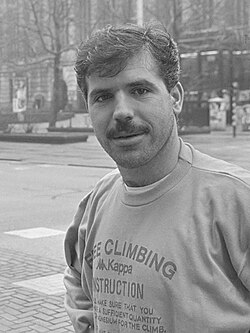
- All-Time Top Scorer: Nikos Anastopoulos with 29 goals.
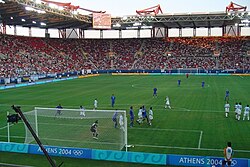
- Home Ground: Karaiskakis Stadium in Piraeus.
- Highest FIFA Ranking: 8th (achieved in April 2008 and October 2011).
- World Cup Best: Round of 16 in 2014.
Early History and Regional Success
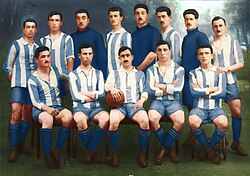
Greece's international journey began in the early 20th century, with the national team participating in the Inter-Allied Games in 1919 and the 1920 Olympics. Their first official international match took place on April 7, 1929, in Piraeus, where they faced Italy in a 1–4 defeat.
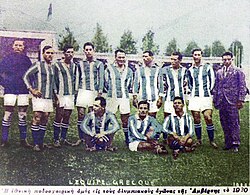
During the 1930s and 1950s, Greece focused on regional dominance. They found significant success in the Balkan Cup, winning multiple editions between 1929 and 1936, and performed strongly in the Mediterranean Cup and Mediterranean Games. However, the road to the world's biggest stages was long; the team experienced several "near misses" during World Cup qualifying campaigns throughout the 1970s.
The Road to Glory: Euro 2004
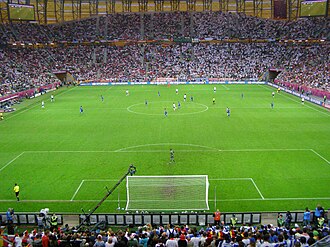
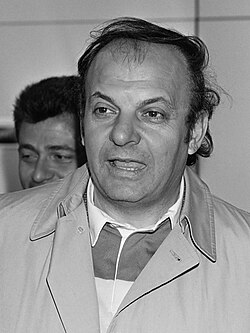
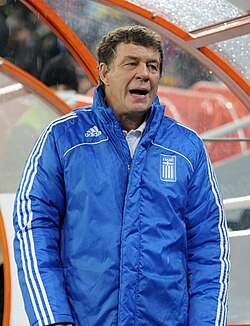
The defining moment in Greek football history arrived in 2004. Under the tactical guidance of manager Otto Rehhagel, Greece entered the UEFA European Championship in Portugal as massive underdogs. Through a combination of rigid defensive organization and clinical efficiency, they navigated the group stage and knocked out established powerhouses in the quarter-finals and semi-finals.
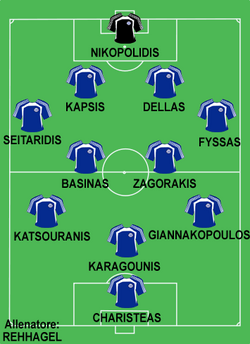
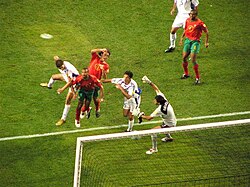
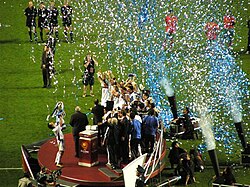
The tournament culminated in a historic final where Angelos Charisteas scored the winning goal, securing a 1–0 victory and crowning Greece as the Champions of Europe. This victory remains one of the greatest upsets in sporting history, earning the team accolades such as the World Soccer Team of the Year.
Following their European triumph, Greece participated in the 2005 FIFA Confederations Cup, where they reached the group stage, and continued to compete at a high level in the 2006 World Cup qualifiers.
Modern Era and Recent Performance
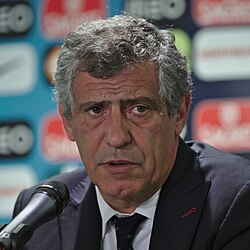
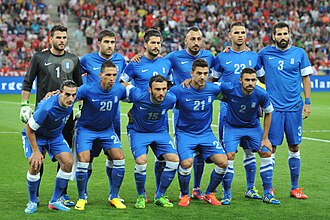
Post-2004, Greece remained a competitive force, reaching the quarter-finals of Euro 2012 and achieving their best-ever FIFA World Cup result—the Round of 16—in 2014. The team has seen various leadership changes, including the tenure of Fernando Santos, who led the squad during their 2012 and 2014 campaigns.
The last decade has been a period of reorganization. After a decline during the Euro 2016 qualifying cycle, the team experienced a resurgence in the 2018 World Cup qualifiers. More recently, Greece has navigated the UEFA Nations League, fighting through promotions and inconsistencies to maintain its standing in European football.
Stadium and Symbols
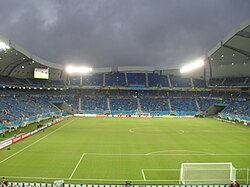
The heart of the national team's home support is the Karaiskakis Stadium in Piraeus. Serving as the primary home ground from 2004 to 2017, and returning as the home base in 2024, it has witnessed the team's most emotional triumphs and challenging battles.
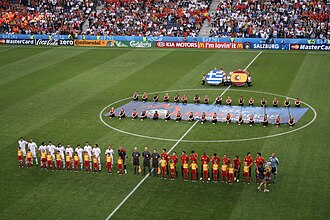
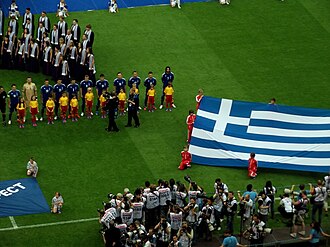
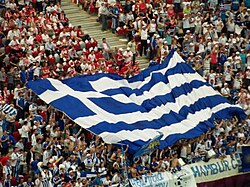
The team is symbolized by the blue and white of the Greek flag, colors that inspire passionate support from fans across the globe.
Team Statistics Summary
| Category | Detail |
|---|---|
| Association | Hellenic Football Federation (HFF) |
| Best European Result | Champions (2004) |
| Best World Cup Result | Round of 16 (2014) |
| Biggest Win | 8–0 vs Syria (1949) |
| Biggest Defeat | 1–11 vs Hungary (1938) |
| Most Capped Player | Giorgos Karagounis (139) |
| Top Goalscorer | Nikos Anastopoulos (29) |
Frequently Asked Questions
When did Greece win the European Championship?
Greece won the UEFA European Championship in 2004, defeating Portugal in the final with a 1–0 victory.
Who is the most capped player in Greece's history?
Giorgos Karagounis holds the record for the most appearances, having played 139 matches for the national team.
What is the best result Greece has achieved in the FIFA World Cup?
Greece's best World Cup performance was reaching the Round of 16 during the 2014 tournament.
Who is the all-time leading goalscorer for the national team?
Nikos Anastopoulos is the top scorer for Greece, with a total of 29 goals scored between 1977 and 1988.
Where does the Greece national team usually play its home matches?
The team primarily plays its home matches at the Karaiskakis Stadium in Piraeus.