Great Yarmouth History: From Roman Fort to Coastal Hub
Situated at the mouth of the River Yare, Great Yarmouth is a town defined by its relationship with the sea. From its earliest roots as a Roman outpost to its era as a powerhouse of the herring trade and a strategic naval bastion, the town has evolved through centuries of maritime commerce and military significance.
The town's origins trace back to the Roman fort camp of Gariannonum. Its strategic location naturally attracted fishermen from the Cinque Ports, leading to a permanent settlement that boasted 70 burgesses before the Norman Conquest. Under the reign of Henry I, the town was placed under the administration of a reeve.
Medieval Foundations and Early Charters
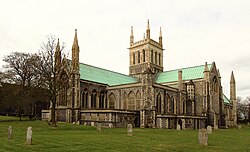
The 12th century marked a period of spiritual and civic growth. In 1101, Herbert de Losinga, the first Bishop of Norwich, founded the Church of St Nicholas, which was consecrated in 1119. This establishment paved the way for several priories in what was becoming a wealthy and influential trading center.
Civic autonomy grew in 1208 when King John granted a charter to Great Yarmouth. This document provided burgesses with general liberties based on the customs of Oxford, established a gild merchant, and introduced weekly hustings. Subsequent charters further asserted the borough's rights against Gorleston and Little Yarmouth.
A curious historical obligation persisted for years: the town was required to send "one hundred herrings, baked in twenty-four pasties" annually to the sheriffs of Norwich, who delivered them to the lord of the manor of East Carlton for the King.
Growth of Education and Administration
Social infrastructure expanded during the reign of Edward I with the founding of a hospital by Thomas Fastolfe. By 1551, a grammar school was established, utilizing the great hall of the old hospital. Although the school closed between 1757 and 1860, it was revived by charity trustees and moved into new buildings in 1872.
Administrative power continued to shift through royal decrees. Edward VI granted a charter of admiralty jurisdiction in 1552, later extended by James I. The town also hosted royalty, receiving Elizabeth I in July 1578. By 1668, Charles II extended the borough boundaries to include Little Yarmouth (Southtown) in Suffolk, and in 1703, Queen Anne replaced the two bailiffs with a mayor.
A Thriving Maritime Powerhouse
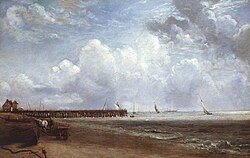
By the early 18th century, Great Yarmouth had become a premier herring port. The writer Daniel Defoe described the town as "infinitely superior to Norwich" in terms of wealth, trade, and situation. He noted that the town sat on a peninsula between the River Yare and the sea, creating what he considered the finest key (wharf) in England, or perhaps even Europe.
Defoe's journals vividly describe ships anchored so closely that their bowsprits extended over the land, allowing people to walk from ship to ship as if on a floating bridge. The town's wealth was reflected in its architecture, with custom-houses, town halls, and merchant homes that resembled small palaces.
Strategic Naval Importance and the Napoleonic Era
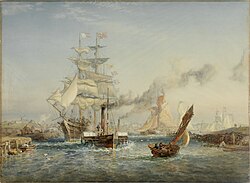
During the French Revolutionary and Napoleonic Wars, Great Yarmouth served as a critical supply base for the Royal Navy's North Sea Fleet. The Yarmouth Roads became a gathering point for fleets sailing to the Battle of Camperdown and the Battle of Copenhagen.
Technological and military advancements flourished here. Captain George Manby, appointed barrack-master in 1803, invented the Manby mortar. Between 1808 and 1814, the Admiralty used a shutter telegraph chain to communicate with ships in the harbor.
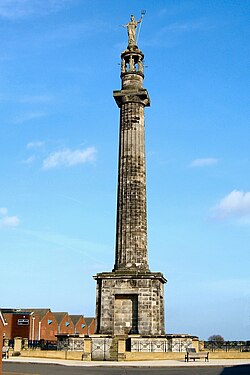
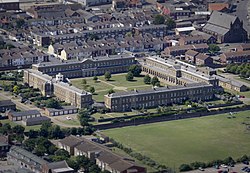
Several architectural remnants of this era survive, including an 1806 armoury and roadside lodges on Southtown Road. A more prominent landmark is the former Royal Naval Hospital, designed by William Pilkington and opened in 1811. This facility served as a naval hospital, army barracks, and later a naval psychiatric hospital until 1958, before being converted into private residences in 1993.
Tragedies and 20th Century Conflict
The town's history is also marked by tragedy. On May 2, 1845, the Yarmouth suspension bridge collapsed while crowded with children watching a clown in a barrel; the disaster resulted in 79 deaths.
The 20th century brought the challenges of global war. During World War I, the town faced German bombardments in 1914 and 1916, and suffered England's first air raid by Zeppelin L 3 on January 19, 1915. A notable naval feat occurred on August 15, 1915, when Ernest Martin Jehan sank a steel submarine while commanding a sail-rigged Q-ship (a decoy vessel designed to look like a merchant ship).
World War II brought Luftwaffe bombing raids, as the town was a final target for aircraft returning to Germany. Despite this, much of the old town survived, including two-thirds of the 2,000-metre medieval protective wall and eleven of its original eighteen towers.
Modern Era and Environmental Challenges
In the post-war era, Great Yarmouth faced significant environmental struggles. The North Sea flood of 1953 caused severe damage, and more recent flash flooding in 2006 saw 90 properties flooded up to 5 feet due to torrential rain and pumping station failure.
Infrastructure changes continued with the opening of the A47 Great Yarmouth Western Bypass between 1985 and 1986. Most recently, in February 2023, an accidental detonation occurred on the River Yare during the disposal of unexploded World War II ordnance.
Key Facts
- Roman Origins: Located near the Gariannonum fort camp.
- Medieval Defense: Two-thirds of the original 2,000-metre medieval wall still exists.
- Naval Legacy: Served as a primary supply base for the North Sea Fleet during the Napoleonic Wars.
- First Air Raid: England's first air raid occurred here on January 19, 1915.
- Unique Feat: Site of the only instance of a sail-rigged Q-ship sinking a steel submarine.
| Period/Date | Event/Development | Significance |
|---|---|---|
| 1101 | Foundation of St Nicholas Church | Established early religious presence |
| 1208 | King John's Charter | Granted general liberties and merchant rights |
| 1806-1811 | Royal Naval Hospital construction | Key medical and military infrastructure |
| 1845 | Suspension Bridge Collapse | Tragedy resulting in 79 deaths |
| 1915 | Zeppelin L 3 Raid | First air raid on English soil |
| 1953 | North Sea Flood | Major environmental disaster |
Frequently Asked Questions
What is the significance of the medieval wall in Great Yarmouth?
The town possesses a 2,000-metre protective medieval wall, of which two-thirds and eleven of the eighteen original towers have survived, providing a rare glimpse into the town's early defenses.
How did Great Yarmouth contribute to the Napoleonic Wars?
The town served as a vital supply base for the Royal Navy's North Sea Fleet and was the departure point for fleets sailing to the Battles of Camperdown and Copenhagen.
What was a Q-ship, and why is it mentioned in the town's history?
A Q-ship was a decoy vessel designed to look like a merchant ship to lure submarines. In 1915, Ernest Martin Jehan used one to sink a steel submarine off the coast of Great Yarmouth.
What caused the bridge disaster of 1845?
The suspension bridge collapsed under the weight of a crowd of children who had gathered to watch a clown in a barrel being pulled by geese. The shift in weight caused the south-side chains to snap.
What are "The Rows" in Great Yarmouth?
"The Rows" are a maze of alleys and lanes located behind South Quay. Originally numbering 145, several of these historic passages remain today despite war damage.