Governor of California
The Governor of California serves as the head of government for the state of California and the chief executive of its executive branch. Established by the Constitution of California, this role is central to the state's administration, overseeing the enforcement of laws and the management of state agencies. The office was created in 1849, just one year before California officially became a U.S. state.
The current incumbent is Democrat Gavin Newsom, who assumed office on January 7, 2019. Historically, Jerry Brown holds the record as the longest-serving governor, with two separate tenures spanning from 1975 to 1983 and again from 2011 to 2019.
Key Facts
- Incumbent: Gavin Newsom (since January 7, 2019).
- Term Length: 4 years, limited to two terms (since November 6, 1990).
- Salary: US$ 224,020 (as of 2022).
- Primary Workplace: California State Capitol, Sacramento.
- Military Role: Commander-in-Chief of the California National Guard and California State Guard.
- Inaugural Holder: Peter Hardeman Burnett.
Powers and Responsibilities
Under Article 5 of the State Constitution, the governor wields significant authority to ensure the state functions efficiently. As the Chief Executive, the governor is responsible for the faithful execution of state laws and maintains supreme authority over state agencies and departments.
Legislative and Budgetary Authority
The governor plays a critical role in the legislative process. They can sign bills into law or exercise a veto. While the Legislature can override a total veto with a two-thirds majority, the governor also possesses a line-item veto, which allows them to reject specific parts of budget bills without vetoing the entire piece of legislation.
Additionally, the governor is tasked with preparing and submitting the annual state budget, approving or rejecting funding levels for government programs, and delivering the annual State of the State address to the California State Legislature.
Appointments and Legal Powers
The governor appoints officials to state boards, commissions, and agencies, as well as filling vacant judicial seats. In the event of a vacancy in a U.S. Senate seat due to death or resignation, the governor has the authority to appoint a replacement. Legal powers also include granting pardons, issuing reprieves, or commuting sentences, though clemency involving impeachment requires approval from the California Supreme Court.
Beyond formal duties, the governor often utilizes the "Bully Pulpit"—a term referring to the use of the office's prestige to influence public opinion and legislative priorities.
Elections and Qualifications
To run for governor, a candidate must be a U.S. citizen and a registered voter in California. They must not have been convicted of a felony involving extortion, embezzlement, or bribery, and they must not have already served two terms since November 6, 1990.
Governors are elected via a popular vote following a nonpartisan primary. Once elected, they take office on the first Monday after January 1 and swear an oath to defend and support both the U.S. Constitution and the Constitution of the State of California.
Removal from Office
There are two primary mechanisms for removing a sitting governor from office:
- Impeachment: The State Assembly can impeach a governor for "misconduct in office" via a majority vote, followed by a two-thirds supermajority vote in the State Senate for removal.
- Recall: Voters can initiate a recall election by gathering signatures equal to 12% of the last vote for the office (with 1% from each of five counties). If a majority votes to recall, the candidate with the plurality of votes in the replacement race takes office.
Notably, Gray Davis became the first governor voted out via recall in 2003, replaced by Arnold Schwarzenegger. Governor Gavin Newsom also faced a recall election in 2021, which he successfully defeated.
The Role of the Lieutenant Governor
Unlike the U.S. Vice President, the Lieutenant Governor of California is elected separately, not as a running mate. This has led to instances where the governor and lieutenant governor belong to different political parties.
The California Constitution stipulates that all gubernatorial powers transfer to the lieutenant governor whenever the governor is physically outside the state. While a "gentlemen's agreement" usually limits the lieutenant governor to perfunctory duties during these absences, court rulings have confirmed their legal right to exercise full gubernatorial prerogatives, including making appointments and signing legislation.
Official Residences and Workplaces
The governor operates from several key locations in Sacramento:
- California Governor's Mansion: The official residence and one of the official workplaces. While 14 governors have lived here, some have chosen private residences.
- California State Capitol: The principal official workplace.
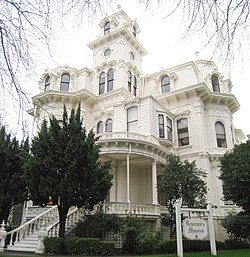
- Stanford Mansion: An official workplace and the official reception center for the California government.

Summary of the Gubernatorial Office
| Feature | Detail |
|---|---|
| Established | December 20, 1849 |
| Term Limit | Two terms (since 1990) |
| Election Method | Popular vote / Nonpartisan primary |
| Key Powers | Budget submission, Veto power, Commander-in-Chief |
| Succession | Lieutenant Governor of California |
Frequently Asked Questions
How long can a person serve as Governor of California?
Governors serve four-year terms and are limited to a maximum of two terms, regardless of whether those terms were served consecutively, provided they served after November 6, 1990.
What happens when the Governor leaves the state?
According to the California Constitution, all powers of the governor fall to the lieutenant governor whenever the governor is not physically present in the state.
Can a California governor be removed before their term ends?
Yes, a governor can be removed through either impeachment by the state legislature for misconduct in office or through a voter-led recall election.
What is a line-item veto?
A line-item veto is a specific power that allows the governor to reject individual line items or sections of a budget bill without vetoing the entire piece of legislation.
Who is the commander-in-chief of the state's military forces?
The Governor of California serves as the commander-in-chief of both the California National Guard (when not federalized) and the California State Guard.