Gorizia History: From Medieval Stronghold to Border City
Gorizia is a city defined by its strategic location and its role as a cultural crossroads. Situated near the fords of the Isonzo River, it evolved from a prehistoric watchtower into a powerful medieval county, a refined Habsburg residence, and eventually a poignant symbol of the Cold War's territorial divisions. Its story is one of multi-ethnic coexistence, shifting borders, and resilience through two world wars.
The city's earliest recorded mention dates back to April 28, 1001, when Holy Roman Emperor Otto III donated the village and castle to the Patriarch of Aquileia and Count Verihen Eppenstein. Interestingly, the document noted that the name "Goriza" was derived from the Slavic language.
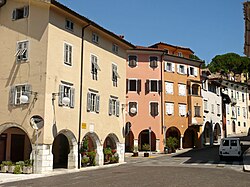
The Rise of the County of Gorizia
By 1127, Count Meinhard of the Bavarian Meinhardiner lineage began calling himself the Graf von Görz (Count of Gorizia). Over the next few centuries, the House of Gorizia rose to become one of the most influential noble families in the Holy Roman Empire. At its peak, the independent County of Gorizia controlled a vast territory encompassing parts of present-day Slovenia (Goriška), Italy (southeast Friuli, the Karst Plateau, and central Istria), and Austria (western Carinthia and East Tyrol).
During the Middle Ages, the town developed in two distinct layers: an upper castle district for political administration and a lower village for commerce. The central square, known as Travnik or Traunig (meaning "meadow" in Slovene), remains a testament to this early rural-commercial layout.
Habsburg Rule and the "Austrian Nice"
The dynasty of the Counts of Gorizia ended in 1500, leading to the city's transition to Habsburg rule. Under Austrian dominion, Gorizia flourished as a multi-ethnic hub where German, Slovene, and Friulian were spoken. The 16th century saw the town become a center for the Protestant Reformation, visited by the Slovene preacher Primož Trubar, before the Catholic Counter-Reformation—led by Johann Tautscher—re-established Catholic dominance and introduced the Jesuit order.
By 1754, Gorizia became the capital of the Princely County of Gorizia and Gradisca and a major Roman Catholic religious center following the establishment of the Archdiocese of Gorizia. The city's landscape was transformed by late Baroque villas and the addition of a synagogue, reflecting a climate of relative religious and ethnic tolerance.
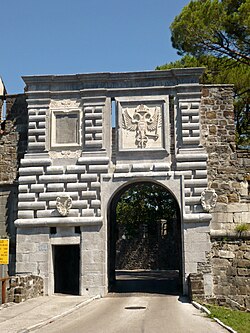
In the 19th century, Gorizia gained fame as a summer retreat for the Austrian nobility, earning the nickname the "Austrian Nice." It even served as a sanctuary for the exiled French Bourbon family, including King Charles X.
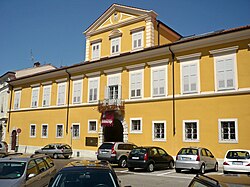
Demographics on the Eve of World War I
By the early 20th century, Gorizia was the third-largest city in the Austrian Littoral. It was a densely populated urban center where approximately 48% of city residents spoke Italian or Friulian, and 35% spoke Slovene, with Slovene speakers forming the majority (77%) in the surrounding suburbs.
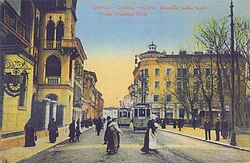
The Turmoil of the World Wars
World War I brought devastation to the region. After Italy entered the war in 1915, the hills west of Gorizia became a bloody battlefield. The town was occupied by the Italian Army in August 1916 during the Sixth Battle of the Isonzo, only to return to Austro-Hungarian control after the Battle of Caporetto in 1917.
Following the war's end in 1918, the city became a flashpoint for three competing visions: Slovene nationalists seeking a Yugoslav state, Friulian conservatives wanting an autonomous region under the Habsburgs, and Italian irredentists striving for unification with Italy. Ultimately, Italian troops occupied the city in November 1918.
The Fascist Era and World War II
Officially annexed by Italy in 1920, Gorizia underwent significant changes under the fascist regime. The public use of the Slovene language was prohibited, leading to the rise of underground resistance groups like TIGR and the emigration of many Slovenes to Yugoslavia and South America.
The end of World War II was marked by extreme violence. After a brief Nazi German administration, Yugoslav partisans occupied the town in May 1945. This period saw a fierce repression of Italian civilians and military personnel, with at least 1,048 people disappearing in what some historians describe as ethnic cleansing.
Postwar Partition and the Modern Era
The 1947 peace treaty assigned Gorizia to Italy but partitioned the municipality. Several peripheral districts and landmarks—including the Kostanjevica Monastery and the northern railway station—were handed over to Yugoslavia. This created a border that ran directly through the town center.
In response, Yugoslavia built a new city, Nova Gorica ("New Gorizia"), on the opposite side of the border. Despite the division, Italy and Yugoslavia maintained a spirit of harmonious coexistence through cultural and sporting events, avoiding the stark hostility seen in other Cold War divided cities.
The physical barrier remained until December 21, 2007, when Slovenia's implementation of the Schengen Agreement finally opened the border, reuniting the two cities.
Key Facts
- First Mention: Recorded as "Goriza" in a document dated April 28, 1001.
- Peak Power: The independent County of Gorizia once spanned parts of modern Italy, Slovenia, and Austria.
- Nickname: Known as the "Austrian Nice" due to its popularity as a noble summer residence.
- WWI Impact: Heavily damaged and changed hands multiple times between Italy and Austria-Hungary.
- Post-War Split: Partitioned in 1947 between Italy and Yugoslavia, leading to the creation of Nova Gorica.
- Reunification: The border became open following the Schengen Agreement in 2007.
| Period | Ruling Authority | Key Characteristic |
|---|---|---|
| 11th C. - 1500 | Counts of Gorizia | Independent County and regional power |
| 1500 - 1918 | Austrian Habsburgs | Multi-ethnic center and noble summer resort |
| 1918 - 1943 | Kingdom of Italy | Annexation and Fascist-era restrictions |
| 1943 - 1945 | Nazi Germany / Yugoslavia | WWII occupation and postwar repression |
| 1947 - 2007 | Italy (with Yugoslav border) | Partitioned city and Cold War frontier |
Frequently Asked Questions
Why was Gorizia called the "Austrian Nice"?
During the 19th century, the town became a highly popular summer residence for the Austrian nobility due to its pleasant climate and Baroque architecture, drawing comparisons to the French resort city of Nice.
What happened to the Slovene population during the Fascist regime?
Under Mussolini, all Slovene organizations were dissolved and the public use of the Slovene language was banned. This led to the formation of underground resistance groups like TIGR and forced many Slovenes to emigrate to South America or Yugoslavia.
How did the 1947 partition affect the city?
The border was drawn just west of the Bohinj Railway line, leaving the town center in Italy but placing several key landmarks, such as the Kostanjevica Monastery and the northern railway station, in Yugoslavia.
What is Nova Gorica?
Nova Gorica ("New Gorizia") is a city built by the Socialist Republic of Slovenia starting in 1948 on the Yugoslav side of the border to serve as a new urban center after the original town of Gorizia was assigned to Italy.
When did the border between Gorizia and Nova Gorica effectively disappear?
The border became open and the division ceased to be a barrier on December 21, 2007, when Slovenia implemented the Schengen Agreement.