Godmanchester Chinese Bridge: A Historic Landmark in Cambridgeshire
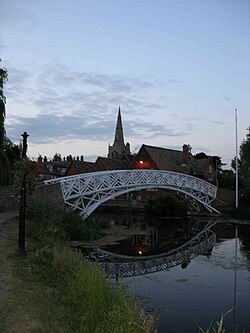
In the heart of Godmanchester, Huntingdonshire—now part of Cambridgeshire, England—stands a unique architectural curiosity known as the Godmanchester Chinese Bridge. This pedestrian crossing spans a mill stream on the River Great Ouse, blending local utility with an exotic aesthetic that has made it a recognized landmark of the town.
The bridge is a Grade II listed building, a designation given to structures of special interest that warrant every effort to preserve them. While it serves as a functional walkway, its primary appeal lies in its distinctive design, which draws inspiration from East Asian architecture.
Architectural Origins and Style
The bridge was originally constructed in 1827 based on designs by the architect James Gallier. Its visual identity is rooted in the "Chinese Chippendale" style, a mid-18th-century European fashion that incorporated fretwork and geometric patterns inspired by Chinese design.
The inspiration for this public structure likely came from a nearby private estate. At the time the style was popular, a mansion was being built for the Receiver General of Huntingdonshire. This estate, known as Island Hall, featured a smaller Chinese bridge that connected the main grounds to an ornamental island. The white timbers and ornate detailing of the public bridge mirror the aesthetic of the Island Hall structure.
A History of Restoration
Because the bridge is constructed primarily of wood, it has required significant maintenance over the centuries to combat decay and structural wear. The original 1827 span eventually deteriorated, leading the local council to install a replica in 1960.
More recently, the bridge underwent another major replacement to ensure public safety and preserve its historic appearance. On February 9, 2010, the existing wooden span was removed by crane. A new replica, meticulously crafted in Yorkshire by CTS Bridges, was transported to the site and put into position on February 15 and 16, 2010.
Summary of Bridge Specifications
| Feature | Details |
|---|---|
| Location | Godmanchester, Cambridgeshire, England |
| Waterway | Mill stream on the River Great Ouse |
| Original Architect | James Gallier |
| Original Construction Year | 1827 |
| Architectural Style | Chinese Chippendale |
| Listing Status | Grade II listed building |
| Latest Replacement | February 2010 (by CTS Bridges) |
Key Facts
- The bridge is a Grade II listed pedestrian crossing in Godmanchester.
- It was originally designed by architect James Gallier in 1827.
- The design is based on the Chinese Chippendale style, likely inspired by a bridge at the nearby Island Hall.
- The structure has been replaced twice: once in 1960 and again in February 2010.
- The current replica was manufactured in Yorkshire by CTS Bridges.
Frequently Asked Questions
What is the architectural style of the Godmanchester Chinese Bridge?
The bridge is built in the Chinese Chippendale style, which was a popular mid-18th-century fashion characterized by white timbers and ornate, East Asian-inspired fretwork.
Who designed the original bridge?
The original bridge, constructed in 1827, was designed by the architect James Gallier.
Is the current bridge the original 1827 structure?
No. Due to the deterioration of the wooden spans, the bridge was replaced with a replica in 1960, and again in February 2010.
Where is the bridge located?
It is located in the town of Godmanchester, Huntingdonshire (now administered as part of Cambridgeshire), where it spans a mill stream on the River Great Ouse.
What is the significance of Island Hall to the bridge?
Island Hall was a mansion built for the Receiver General of Huntingdonshire and featured its own small Chinese bridge. This private structure is believed to have served as the inspiration for the public bridge's design.