Goal Celebrations: The Art and Controversy of Scoring in Sports
In the world of sports, scoring a goal is the ultimate objective, but the moment the ball hits the net is only the beginning. A goal celebration is the ritualistic expression of joy, relief, or defiance performed by the scorer. While these acts are common across various disciplines, they carry the most weight in lower-scoring sports like association football (soccer) and ice hockey, where a single score can dictate the entire outcome of a match.
These celebrations often involve teammates, coaching staff, and the roaring crowd, evolving from simple cheers into complex choreographed routines. Some have become so iconic that they have been immortalized in statues of legends like Thierry Henry and Bobby Orr, featured on postage stamps for Pelé, or integrated into global video game franchises such as the EA Sports FC series.
Key Facts
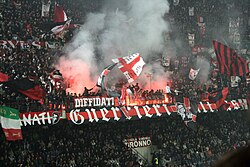
- Significance: Celebrations are most prominent in low-scoring sports where goals are rare and high-value.
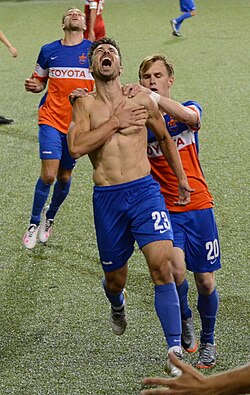
- Regulation: FIFA's Laws of the Game (Law 12) penalize "excessive celebrations," such as removing one's shirt.
- Cultural Impact: Many celebrations serve as tributes to family, religious beliefs, or ethnic identity.
- Disciplinary Action: Players can face yellow cards, heavy fines, or lifetime bans for offensive or political gestures.
Common Types of Goal Celebrations
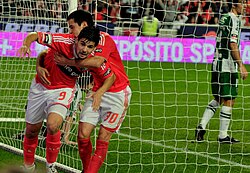
The Silent Treatment and Gestures
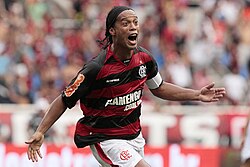
Some players use their celebrations to send a message to critics or opposing fans. A classic example is placing an index finger to the lips to signal silence, a move memorably used by Real Madrid's Raúl against Barcelona in 1999. Cristiano Ronaldo evolved this by wagging his finger at the crowd to dismiss his critics.
Other players use gestures for personal dedication. Lionel Messi frequently points both index fingers toward the sky as a tribute to his late grandmother, a common practice among athletes to thank God or remember deceased loved ones.
![After blessing himself, Lionel Messi often celebrates a goal by pointing a finger on each hand towards the sky in dedication to his late grandmother.[10] Players often point towards the skies to thank God, or recognise someone who has died.[11]](/images/a5/28/a528cf6770a8caa22b7e12c76e4d115bd08c2e032265f2e1b0d1b4e51bc9e1b1.jpg)
Dance and Acrobatics
Dancing has become a staple of sports entertainment. Roger Milla gained worldwide fame during the 1990 FIFA World Cup by dancing around the corner flag. Other notable examples include Peter Crouch's "robot" dance and the South African national team's Macarena-style celebration during the 2010 World Cup.
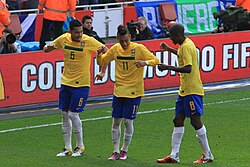
Physical Displays and Rituals
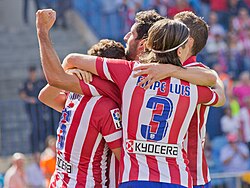
From the high-energy "Siuuu" of Cristiano Ronaldo to the simple act of jumping and punching the air—as seen on Pelé's 1,000th goal postage stamp—physicality is key. Some players prefer group dynamics, such as the group hugs common among Atlético Madrid players.
![Cristiano Ronaldo performing his famous Siuuu celebration, often regarded as one of the most iconic and recognizable goal celebrations in sports.[1]](/images/49/2c/492c5890f964c2471c3d503ffa31cb81f2fe644e93cfd691837e3a2930b79d41.jpg)
The Shirt Removal
Removing the jersey is a visceral expression of passion, famously performed by Rivaldo. However, since 2004, FIFA has classified this as an Excessive Celebration, resulting in an automatic yellow card. This rule has affected high-profile players like Andrés Iniesta in the 2010 World Cup Final and Chloe Kelly in the UEFA Women's Euro 2022 Final.
Punishments and Controversies
While most celebrations are harmless, some cross the line into political provocation or offensive behavior, leading to severe sanctions under Law 12.
Political and Offensive Gestures
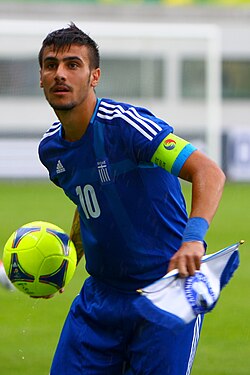
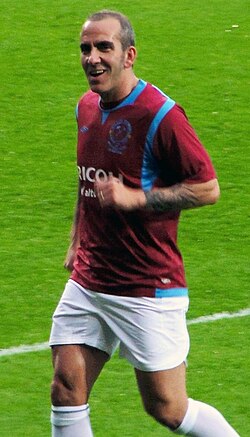
- Hate Speech: Georgios Katidis received a lifetime ban from the Greek national team and a €50,000 fine for performing a Nazi salute. Similarly, Paolo Di Canio was fined and suspended for a fascist salute while playing for S.S. Lazio.
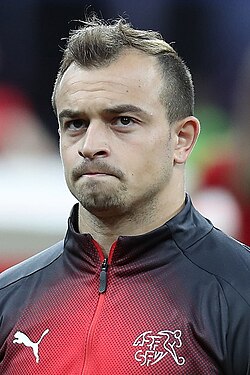
- Ethnic Identity: At the 2018 World Cup, Xherdan Shaqiri and Granit Xhaka were fined 10,000 Swiss francs for making an eagle gesture—a symbol of ethnic Albanians—toward Serbian fans.
- Cultural Mockery: In 2023, Iraq's Aymen Hussein was sent off for mimicking the eating of Mansaf (a traditional Jordanian dish) in front of Jordan's fans.
Messages and Mimicry
Revealing undershirts with messages can also lead to fines. Robbie Fowler was penalized for a shirt supporting the Liverpool dockers' strike, and Thierry Henry was fined for a message dedicated to a friend's newborn child. In a more controversial instance, Robbie Fowler was fined £60,000 for miming the snorting of cocaine off a touchline, though his manager claimed he was imitating a cow eating grass.
The Role of Managers and Coaches
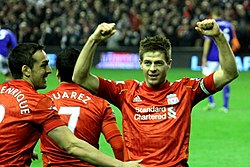
Celebrations are not limited to the players. Managers often exhibit exuberant reactions that become part of football lore. Sir Alex Ferguson's "Fergie Time" celebrations at Manchester United and José Mourinho's iconic sideline sprint for Porto in 2004 are legendary examples of managerial passion.
However, this passion can lead to trouble. Jürgen Klopp was fined £8,000 by The Football Association after running onto the pitch to hug goalkeeper Alisson during a Merseyside derby in the 2018–19 season.
Summary of Celebration Impacts
| Celebration Type | Common Intent | Typical Consequence |
|---|---|---|
| Dancing/Jumping | Joy / Entertainment | None (Positive Fan Engagement) |
| Shirt Removal | Pure Passion | Yellow Card (FIFA Law 12) |
| Political Gestures | Identity / Provocation | Fines, Suspensions, or Bans |
| Undershirt Messages | Social/Personal Statement | Financial Fines |
| Managerial Pitch Entry | Extreme Celebration | FA Fines / Warnings |
Frequently Asked Questions
Why do football players get yellow cards for taking off their shirts?
Under FIFA's Laws of the Game (Law 12), removing the jersey is considered an excessive celebration. This rule was implemented in 2004 to maintain game flow and ensure sponsors' logos remain visible.
What is the meaning behind Lionel Messi's celebration?
Lionel Messi often points both index fingers toward the sky as a dedication to his late grandmother, who he credits as a primary influence in his life.
Can a player be banned for life for a celebration?
Yes. In extreme cases involving hate speech or prohibited political symbols, such as the Nazi salute performed by Georgios Katidis, players can receive lifetime bans from representing their national teams.
What is "Fergie Time" in the context of celebrations?
"Fergie Time" refers to the perception that Manchester United, under Sir Alex Ferguson, were granted more injury time than other teams, often leading to dramatic late goals and exuberant celebrations from Ferguson on the touchline.
Are goal celebrations regulated in other sports?
While this article focuses heavily on football, most professional sports have rules against "excessive celebration" or "taunting" to prevent unsportsmanlike conduct and delays in play.