Global Suicide Rates: Trends, Gender Disparities, and Socioeconomic Factors
Suicide remains a critical global health challenge, affecting diverse populations across every region of the world. While the total number of global suicide deaths decreased from an estimated 762,000 in 2000 to 717,000 in 2021, the complexity of the issue persists. Understanding these patterns requires looking beyond raw numbers to examine gender differences, economic status, and the impact of social stigma.
It is important to note that reported figures may not always reflect reality. In many nations, social stigma, cultural taboos, or legal concerns lead to significant underreporting. Consequently, official statistics often serve as estimates rather than absolute truths.
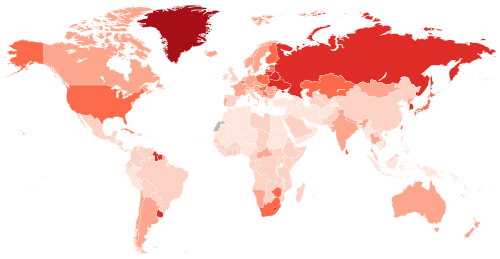
Key Facts
- The global suicide rate in 2021 was approximately 9.1 deaths per 100,000 population.
- Men experience significantly higher suicide rates than women, a phenomenon often called a "silent epidemic."
- In 2021, the male suicide rate was 12.3 per 100,000, more than double the female rate of 5.9 per 100,000.
- Approximately 73% of reported suicides occur in low and middle-income countries.
- Vulnerable groups, including refugees, indigenous populations, and LGBTQ people, face disproportionately high rates.
Gender Disparities and the "Silent Epidemic"
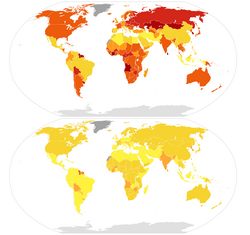
One of the most consistent findings in global mortality data is the disparity between sexes. While research suggests women may be more prone to suicidal thoughts, men have much higher rates of completed suicide. In 2021, the male-to-female ratio was more than 2:1 globally.
This disparity is not uniform across the globe. The male-to-female ratio varies significantly by region, ranging from as low as 1.4 in the Southeast Asia Region to nearly 4.0 in the Region of the Americas.
Historical Trends
Long-term data shows fluctuations in global suicide rates over the decades. Monitoring these trends is essential for evaluating the effectiveness of public health interventions and prevention strategies.
![Global suicide rates per 100,000 people, 1978–2009.[20]](/images/c9/9b/c99b68bcea6d60eaf34e1f71a00490b4bc370b0b708ef958e3ae66c8f01c74ba.png)
Socioeconomic Analysis and Income Groups
Economic status plays a significant role in the distribution of suicide deaths. While high-income countries may have different behavioral patterns, a vast majority of the global burden falls on developing economies. Data from 2012 highlights how suicide rates and total deaths are distributed across different income brackets.
| Income Group (% of Global Pop) | Suicides (in thousands) | Global % | Rate (2012) | Male:Female Ratio |
|---|---|---|---|---|
| High-income countries (18.3%) | 197 | 24.5% | 12.7 | 3.5 : 1 |
| Upper-middle-income countries (34.3%) | 192 | 23.8% | 7.5 | 1.3 : 1 |
| Lower-middle-income countries (35.4%) | 333 | 41.4% | 14.1 | 1.7 : 1 |
| Low-income countries (12.0%) | 82 | 10.2% | 13.4 | 1.7 : 1 |
| Global Total | 804 | 100.0% | 11.4 | 1.9 : 1 |
Risk Factors and Prevention
Suicide is a multifaceted issue. While mental illness is a known link, many instances are impulsive and triggered by immediate crises. Discrimination against specific groups—such as refugees or indigenous populations—is a major contributing factor. For example, in Canada, while the national rate is 10.3 per 100,000, the rate among Indigenous peoples was 24.3 per 100,000 in 2016, an occurrence described as an epidemic.
Effective suicide prevention involves several key pillars:
- Restricting access to lethal methods.
- Promoting responsible media reporting to avoid contagion effects.
- Improving access to mental health treatment and professional assessment.
Frequently Asked Questions
Why are suicide rates often underreported?
Underreporting is frequently caused by social stigma, cultural taboos, or legal concerns in various countries, meaning official statistics may be lower than actual numbers.
What is the difference between age-standardized and crude rates?
Age-standardized rates are adjusted to account for different age distributions in populations, allowing for fairer comparisons between countries. Crude rates are the direct, unadjusted number of deaths per population.
Why do men have higher suicide rates than women?
While women often report higher rates of suicidal ideation (thoughts), men have higher mortality rates. This gap is often referred to as a "silent epidemic" and varies by region.
Which income groups are most affected by suicide?
According to 2024 WHO reports, 73% of reported suicides occur in low and middle-income countries.
How does discrimination impact suicide rates?
Groups subject to systemic discrimination, including LGBTQ individuals, refugees, and indigenous populations, experience significantly higher suicide rates due to various societal pressures.