Gland: A Dynamic Municipality in the Heart of Vaud
Nestled between the shores of Lake Geneva and the scenic Côte region, Gland is a municipality that seamlessly blends historical roots with modern international significance. Located in the district of Nyon within the Canton of Vaud, this Swiss town has evolved from a quiet farming village into a bustling hub for global organizations and commuters alike.
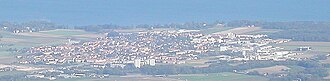
Key Facts
- Location: District of Nyon, Canton of Vaud, Switzerland.
- Geography: Situated between Lake Geneva and the Côte region, covering 8.30 km².
- International Hub: Home to the headquarters of the IUCN and WWF.
- Population: Approximately 13,258 residents (as of 2020).
- Economy: A significant tertiary sector with many international companies.
Historical Evolution
The history of Gland stretches back to prehistoric times. During the Roman era, the area was home to a farm known as Villa Glanis.
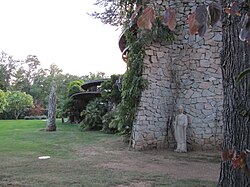
First mentioned in written records between 994 and 1049 CE as de Glans, the settlement remained a small agricultural community for centuries, primarily focused on vineyards and cattle. This character persisted until the 1960s. Significant historical milestones include:
- 1923: Gland hosted the European Division meeting of the Seventh-day Adventists.
- 1930s: The construction of the Toblerone line, a defensive line designed to prevent tank invasions from the west.
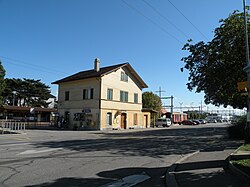
- Mid-1980s: The opening of the highway connecting Geneva and Lausanne transformed Gland from a quiet village into a growing town with diverse business and shopping centers.
Geography and Land Use
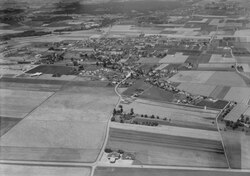
Gland covers a total area of 8.3 square kilometers. The landscape is a diverse mix of natural and developed spaces. Approximately 45.8% of the land is dedicated to agriculture, including crops, pastures, and orchards or vineyards. Another 14.7% is covered by heavy forests.
The remaining area is largely settled, with 40% used for buildings and roads. The built-up environment is categorized as follows:
- Housing and buildings: 18.4%
- Transportation infrastructure: 8.9%
- Parks, green belts, and sports fields: 6.1%
- Industrial buildings: 3.1%
- Power and water infrastructure: 3.5%
| Land Category | Percentage of Total Area | Description |
|---|---|---|
| Agriculture | 45.8% | Crops, pastures, and vineyards |
| Settled Area | 40.0% | Buildings, roads, and infrastructure |
| Forestry | 14.7% | Heavy forest coverage |
| Water | 0.1% | Rivers and lakes |
Economy and International Presence
Due to its strategic location halfway between Geneva and Lausanne, Gland has become a center for international commerce and environmental diplomacy. It hosts the headquarters of the International Union for Conservation of Nature (IUCN) and the World Wide Fund for Nature (WWF), as well as the Secretariat of the Ramsar Convention (Convention on Wetlands).
The local economy is heavily driven by the tertiary sector (services), which includes financial services, information industries, and healthcare. Notable companies in the area include the online brokerage and bank Swissquote and the technology firm Sun Microsystems.
Demographics and Culture
As of December 2020, the population of Gland stood at 13,258. The community is multicultural, with foreign nationals making up 32.1% of the population as of 2008. French is the primary language, spoken by nearly 80% of residents, followed by German and English.
The town's identity is even reflected in its coat of arms. The name "Gland" is the French word for "acorn," which is why the municipal emblem features an oak tree with golden acorns on a green hill.
Frequently Asked Questions
What is the significance of the name Gland?
In French, the word "Gland" means "acorn." This is why the town's coat of arms prominently features an oak tree with acorns.
Which international organizations are based in Gland?
Gland is home to the headquarters of the IUCN and the WWF, and it also hosts the Secretariat of the Ramsar Convention.
Is Gland a good location for commuters?
Yes. The opening of the highway linking Geneva and Lausanne has made Gland a popular location for commuters working in those major cities.
What are some notable heritage sites in the area?
The private house "La Villa la Rajada," designed in 1961, is recognized as a Swiss heritage site of national significance.
Does Gland have any famous residents?
Notable individuals associated with Gland include seven-time Formula One World Champion Michael Schumacher and racing driver Mick Schumacher.