Understanding Given Names: Origins, Trends, and Cultural Significance
A given name—also known as a forename or first name—is the specific part of a personal name used to identify an individual. While a surname (or family name) is typically inherited and shared among members of a family or clan, a given name is usually bestowed at or near birth, often by parents. In religious contexts, such as Christianity, the name provided during baptism is frequently referred to as a Christian name.
The way we use these names often dictates the social tone of an interaction. In informal settings, using a given name signals familiarity and friendliness. In contrast, formal situations often require the use of a surname. In Western cultures, the phrase "being on first-name terms" specifically describes this level of social intimacy.

Key Facts

- Given names are used to differentiate individuals within a family group that shares a common surname.
- Andronyms is the technical term for male given names, while gynonyms refers to female given names.
- Naming order varies globally; for example, Portuguese-speaking countries often use the order: given name – mother's family name – father's family name.
- Popularity trends show that most common names are gradually losing their dominance, leading to increased diversity in naming.
- Pop culture, including celebrities, movies, and songs, significantly influences modern naming trends.
The Origins and Meanings of Names
Parents often select names based on specific meanings or intentions. This can range from honoring a family member to a concept known as nominative determinism, where parents choose a name they believe will bring luck or favorable outcomes to the child.
Common Categories of Given Names
Most given names fall into several distinct categories based on their linguistic or historical roots:
- Aspirational Traits: Names that reflect desired internal or external qualities, such as Clement ("merciful") or Augustus ("consecrated, holy").
- Circumstances of Birth: Names that describe the situation of birth, such as Thomas, which means "twin."
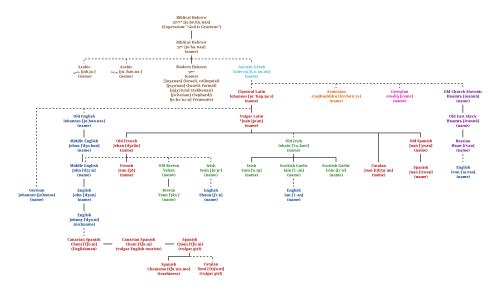
- Adaptations and Variations: Names modified to change gender (e.g., Pauline or Georgia) or adapted from other languages (e.g., Francisco, derived from the Latin Franciscus, meaning "Frank or Frenchman").
- Ancestral and Noble Influence: Historically, many names were adopted to show respect to notable families. In England, names like Howard, Percy, or Russell were often given to relatives of great families.
- Shortened Forms: Some names are used as full given names even if they are traditionally nicknames, such as Jim, Beth, or Kat.
Cultural and Religious Variations
Religious significance has historically dictated name usage. For instance, the name Mary was considered too holy for secular use among many Christians until approximately the 12th century. In Poland, the secular use of Marie did not become common until the arrival of French queens in the 17th century.
In East Asia, naming conventions in Korea and Vietnam are often derived from Classical Chinese names. Additionally, certain individuals receive regnal names upon ascending a throne or monastic names when entering a religious order, which then become their primary identifiers.

Naming Trends and Popularity
The popularity of given names typically follows a power law distribution. However, since approximately 1800 in the U.S. and England/Wales, the "top" names have been losing their dominance. In 1800, Mary and John accounted for a massive percentage of births in England and Wales; by 1994, the most popular names like Emily and James represented a much smaller fraction of the total, leading to a significant increase in name diversity, particularly among females.

The Influence of Popular Culture
Modern naming trends are heavily influenced by external "exogenous" factors, such as media and celebrity culture:
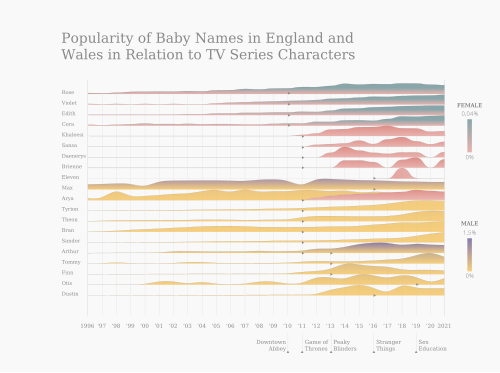
- Celebrities: The rise of actress Keira Knightley influenced the popularity of "Keira" and "Kiera" in the UK. Similarly, the singer Miley Cyrus impacted the popularity of the name "Miley."
- Fiction: Characters in literature and film often spark naming trends. Names like Pamela (from Sir Philip Sidney), Jessica (from Shakespeare), and Wendy (from J.M. Barrie) were popularized through creative works.
- Music: Songs can cause immediate spikes in name usage. The Beatles' "Hey Jude" saw the name Jude rise in popularity, while the song "Kayleigh" by Marillion led to a massive surge in that name in the UK.
| Factor | Description | Example |
|---|---|---|
| Endogenous | Internal factors within a population | Long-term shifts in name frequency |
| Exogenous | External influences | Celebrity fame or musical releases |
| Sociopolitical | Reflecting community movements | African-American neologistic naming practices |
| Historical | Events changing name usage | The decline of the name Adolf after WWII |
Frequently Asked Questions
What is the difference between a given name and a surname?
A given name is the personal identifier bestowed at birth (e.g., "John"), while a surname is the inherited family name (e.g., "Smith") shared by members of a household or clan.
What are andronyms and gynonyms?
These are technical terms used in anthroponymic classification (the study of names). An andronym is a name for a human male, and a gynonym is a name for a human female.
How does pop culture affect baby names?
Pop culture influences names through "exogenous" effects. This includes characters in TV shows, movies, or books (like "Madison" from the movie Splash) and famous musicians or actors (like "Miley" following Miley Cyrus).
Why do some names change in popularity over time?
Naming trends shift due to various factors, including cultural movements, the influence of famous figures, and a general trend toward greater diversity, where the most common names of previous centuries gradually lose their dominance.
What is nominative determinism?
Nominative determinism is the concept where parents choose a name because they believe it will be lucky or favorable for the child's future.