Geronimo: The Life and Legacy of the Bedonkohe Apache Leader
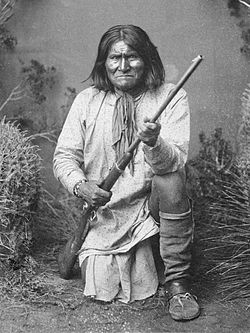
Geronimo, born as Goyaałé, remains one of the most iconic figures in the history of the American West. A leader of the Bedonkohe band of the Apache, he became a symbol of resistance against the expansion of the United States and Mexico. His life was defined by a fierce commitment to his people, a deep-seated hatred for those who harmed his family, and a legendary ability to evade capture in the most rugged terrains of North America.
Born near Turkey Creek in modern-day New Mexico, Geronimo was raised in the traditions of the Apache. His early life was shaped by the leadership of his grandfather, Mahko, the chief of the Bedonkohe. However, the trajectory of his life changed forever due to a brutal act of violence that would fuel his lifelong warfare.
The Catalyst: The Massacre at Janos
On March 5, 1851, while the men of Geronimo's camp were trading in town, 400 Mexican soldiers led by Colonel José María Carrasco attacked the encampment outside Janos, Chihuahua. The assault resulted in the deaths of Geronimo's mother, wife, and children. This tragedy instilled in Geronimo a profound and lasting animosity toward Mexicans, which often exceeded his dislike for American forces.
A Lifetime of Conflict and Resistance
The conflict between the Apache and the Mexican government was characterized by cycles of raids and treacherous peace treaties. In 1873, after months of fighting, a peace treaty was established at Casas Grandes. However, the agreement ended in betrayal when Mexican troops intoxicated the Apache with mezcal and subsequently attacked, killing 20 people. Such events reinforced Geronimo's belief that the Mexican authorities were malicious and treacherous.
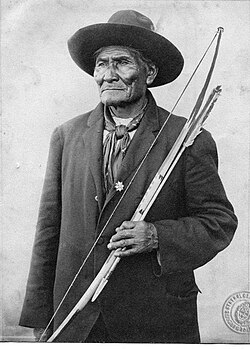
Geronimo became famous for his daring exploits and his ability to escape incarceration between 1858 and 1886. Local legends often attributed his escapes to supernatural means, such as "Geronimo's Cave" in the Robledo Mountains, though historians suggest these stories are likely apocryphal.
The Geronimo Campaign and the Sierra Madre
The struggle against the United States was an extension of the long-standing Apache-Mexican conflict. On three separate occasions—1878, 1881, and 1885—Geronimo led breakouts from reservations to reclaim a nomadic lifestyle of raiding and warfare.
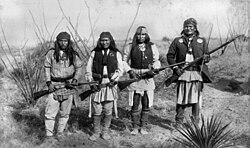
His band utilized the Sierra Madre Occidental Mountains as a strategic stronghold. The rugged terrain of the border region between Sonora and Chihuahua provided a natural fortress, allowing the Apache to launch surprise raids into both Mexico and the United States to secure guns, ammunition, and livestock before retreating into the mountains where U.S. forces struggled to follow.
![Photo by C. S. Fly of Geronimo and his warriors, taken before the surrender to Gen. Crook, March 27, 1886, in the Sierra Madre mountains of Mexico. Fly's photographs are the only known images of Indian combatants still in the field who had not yet surrendered to the United States.[45]](/images/f9/86/f9869b4375d54e3d48b093a91d4ca2091b85eb30030be591c5a999a4bcf5d17d.jpg)
The Role of Apache Scouts
To combat Geronimo's knowledge of the land, General George Crook employed Apache Scouts—tribesmen recruited to track their own people. This strategy proved devastatingly effective, as the scouts could locate hidden strongholds that were invisible to traditional cavalry. The psychological toll of being hunted by their own kin, combined with constant attrition, eventually eroded the will of Geronimo's band to resist.
The Final Surrender
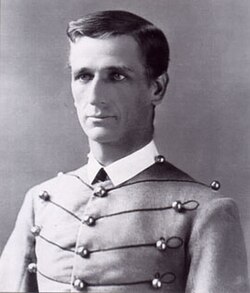
After a series of negotiations and a relentless pursuit led by Captain Henry Lawton and Lieutenant Charles B. Gatewood, Geronimo officially surrendered on September 4, 1886, at Skeleton Canyon, Arizona. Geronimo credited Gatewood's respect for Apache traditions as a key factor in his decision to stop fighting.
At the time of his surrender, Geronimo possessed a Winchester Model 1876 rifle, a Colt Single Action Army revolver, and a Sheffield Bowie knife. These items are now preserved in museums at West Point and Fort Sill.
Life as a Prisoner of War
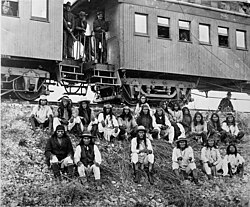
Following his surrender, Geronimo and his followers were treated as prisoners of war. To prevent Arizona authorities from trying him for civilian deaths, the U.S. Army moved the prisoners to Fort Sam Houston in Texas, then to Fort Pickens in Florida, and later to Mt. Vernon Barracks in Alabama. The harsh conditions in Florida and Alabama led to many deaths from tuberculosis.
In 1894, the group was relocated to Fort Sill, Oklahoma. During this period, Geronimo transitioned from a feared warrior to a public curiosity. He appeared at the Trans-Mississippi International Exposition in Omaha (1898), the Pan-American Exposition in Buffalo (1901), and the St. Louis World's Fair (1904), where he sold crafts and posed for photographs.
Meeting President Theodore Roosevelt
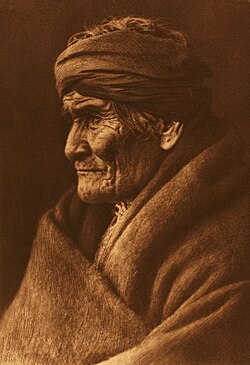
In 1905, Geronimo participated in President Theodore Roosevelt's inaugural parade. During a subsequent meeting, Geronimo requested that the Chiricahuas be allowed to return to their homeland in Arizona. Roosevelt refused, citing the lasting animosity of Arizona residents and telling Geronimo through an interpreter that he had a "bad heart" due to his history of burning villages and killing civilians.
Death and Final Reflections
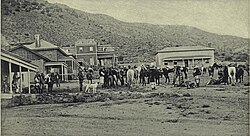
Geronimo died of pneumonia on February 17, 1909, at Fort Sill, still technically a prisoner of the United States. His final words, spoken to his nephew, revealed a lingering regret over his capitulation: "I should have never surrendered. I should have fought until I was the last man alive."
Key Facts
- Origin: Born to the Bedonkohe band of the Apache near Turkey Creek.
- Motivation: His lifelong hatred of Mexicans stemmed from the 1851 massacre at Janos, where his mother, wife, and children were killed.
- Tactics: Used the Sierra Madre Occidental Mountains as a base for raiding and evading capture.
- Surrender: Officially surrendered to General Nelson A. Miles on September 4, 1886.
- Prisoner Status: Spent the remainder of his life as a prisoner of war in Florida, Alabama, and Oklahoma.
- Public Life: Became a celebrity attraction at various World's Fairs and the 1905 Presidential Inauguration.
| Period/Date | Event | Location |
|---|---|---|
| March 5, 1851 | Massacre at Janos | Chihuahua, Mexico |
| 1858–1886 | Active resistance and escapes | SW USA / Northern Mexico |
| September 4, 1886 | Final Surrender | Skeleton Canyon, Arizona |
| 1886–1888 | Imprisonment | Florida (Fort Pickens) |
| 1894–1909 | Final Imprisonment | Fort Sill, Oklahoma |
| February 17, 1909 | Death by Pneumonia | Fort Sill, Oklahoma |
Frequently Asked Questions
Why did Geronimo hate the Mexican government more than the Americans?
His animosity was primarily rooted in the 1851 attack at Janos, where Mexican soldiers killed his mother, wife, and children. He also cited the betrayal at Casas Grandes in 1873, where Apache were intoxicated with mezcal and then slaughtered by Mexican troops.
How did Geronimo manage to evade the U.S. Army for so long?
Geronimo utilized his intimate knowledge of the rugged Sierra Madre Occidental Mountains. This terrain provided a natural defense and allowed his band to cross the border between the U.S. and Mexico quickly to avoid pursuit.
What role did Apache Scouts play in his capture?
Apache Scouts were recruited by the U.S. Army to track Geronimo. Because they shared the same skills and knowledge of the terrain, they were able to find hidden mountain strongholds that traditional cavalry could not locate.
Was Geronimo's surrender unconditional?
This remains a point of historical debate. Geronimo claimed in his memoirs that his surrender was conditional, while U.S. Army officials, including General Oliver O. Howard, maintained he surrendered as a dangerous outlaw without conditions.
Did Geronimo ever return to his homeland?
No. Despite a personal request made to President Theodore Roosevelt in 1905, Geronimo and the other Chiricahuas were denied permission to return to Arizona and remained prisoners until their deaths or official release.