German Wine: A Comprehensive Guide to Regions, Varieties, and Traditions
German wine is a cornerstone of European viticulture, primarily produced in the western regions along the river Rhine and its tributaries. With a history stretching back to the Celts and Romans, Germany has established itself as the ninth-largest wine-producing country in the world and the seventh by export market share. While globally renowned for its elegant white wines, the country boasts a diverse landscape of 104,000 hectares of vineyards, producing approximately 10 million hectoliters—or 1.3 billion bottles—annually.
The industry is characterized by a strong preference for white wines, which account for nearly two-thirds of total production. However, red wine production saw a significant surge in the 1990s and early 2000s due to domestic demand, and today, dark-skinned grape varieties occupy slightly more than one-third of the total vineyard surface.
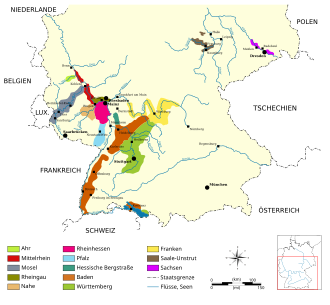
Key Facts
- Total Vineyard Area: Approximately 104,000 hectares.
- Annual Production: Roughly 10 million hectoliters (1.3 billion bottles).
- Primary State: Rhineland-Palatinate produces about 60% of all German wine.
- Dominant Variety: Riesling is the most prestigious and widely planted white grape.
- Leading Red Variety: Spätburgunder (Pinot noir).
- Administrative Structure: 13 defined quality wine regions known as Anbaugebiete.
The History of German Viticulture
Early Origins and Medieval Influence
Before the era of Charlemagne, viticulture was practiced mainly on the western side of the Rhine. Charlemagne is credited with bringing viticulture to the Rheingau, and the eastward expansion of vineyards coincided with the spread of Christianity. Consequently, monasteries and churches became the primary drivers of quality wine production during the Middle Ages.
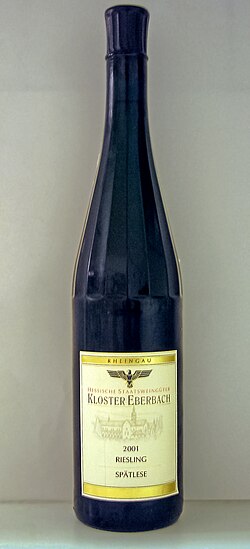
Notable examples include the Benedictine abbey founded by Archbishop Ruthard of Mainz (1089–1109), which later became Schloss Johannisberg, and the Cistercian monastery Kloster Eberbach, founded in 1135.
The Evolution of Sweet Wines
A pivotal moment in winemaking occurred in 1775 at Schloss Johannisberg. A delay in harvest permissions meant that Riesling grapes were affected by noble rot (a beneficial fungus that concentrates sugars and flavors). The resulting sweet wine was termed Spätlese (late harvest). This discovery led to the intentional production of late-harvest wines and the eventual creation of the Prädikat system, a classification based on the ripeness of the grapes at harvest, formally codified in 1971.
Geography and Wine Regions
Germany's wine landscape is divided into 13 Anbaugebiete (quality wine regions), which are further subdivided into 39 districts (Bereiche), 167 collective vineyard sites (Großlagen), and 2,658 individual vineyard sites (Einzellagen).
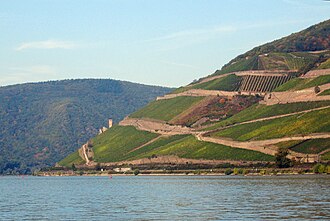
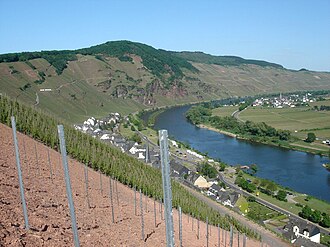
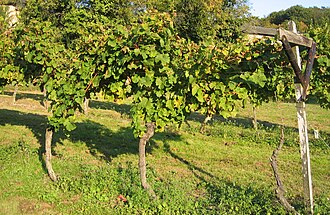
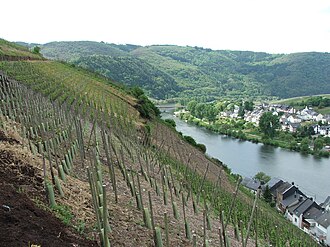
The terrain varies significantly, from the steep slopes of the Mosel and Rheingau to the broader plains of Rheinhessen. These geographical differences influence the training of the vines; for example, the Einzelpfahlerziehung (individual wooden stake) method is common in the Mosel region.
Regional Production Overview
| Region | Area (ha) | % White | % Red | Primary Varieties |
|---|---|---|---|---|
| Rheinhessen | 27,499 | 74% | 26% | Riesling, Müller-Thurgau, Dornfelder |
| Palatinate | 23,793 | 68% | 32% | Riesling, Dornfelder, Pinot gris |
| Baden | 15,727 | 62% | 38% | Pinot noir, Pinot gris, Müller-Thurgau |
| Württemberg | 11,392 | 36% | 64% | Riesling, Trollinger, Lemberger |
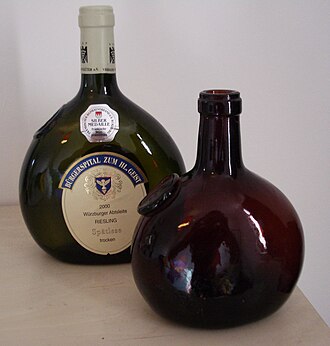
| Mosel | 8,536 | 91% | 9% | Riesling, Müller-Thurgau, Elbling |
| Franconia | 6,173 | 83% | 17% | Silvaner, Müller-Thurgau, Bacchus |
Grape Varieties and Trends
Germany permits the cultivation of nearly 135 grape varieties, including 100 for white wine and 35 for red. While Riesling remains the gold standard for aromatic and fruity white wines, other varieties play significant roles.
![Per cent share of common grape varieties in Germany 1964–2007. Data taken from German Wine Statistics.[18][19]](/images/ca/82/ca822ea84bfbe2915cf3d39160075b0697086e20d932235fe3ffe5b16afaf564.png)
White Grape Varieties
- Riesling: The most prestigious variety, known for its versatility, ranging from bone-dry to intensely sweet.
- Müller-Thurgau: A high-yielding crossing that ripens faster than Riesling. While once the most planted variety, its popularity has declined due to a more neutral flavor profile.
- Silvaner: Particularly prominent in Franconia.
Red Grape Varieties
- Spätburgunder (Pinot noir): The leading red variety in Germany.
- Dornfelder: A common red variety used frequently in Rheinhessen and the Palatinate.
- Lemberger (Blaufränkisch): A significant variety in Württemberg.
Industry Structure and Production
The German wine industry is largely composed of small, craft-oriented vineyard owners. Many operate as hobbyists or supplement their income through hospitality, often running family-owned Gasthaus (guesthouses) with their own wines. To commercialize their grapes, smaller growers may sell to the open market, join a Winzergenossenschaft (winemaking cooperative), or sell in bulk for Sekt (sparkling wine) production.
Despite the prevalence of small estates, a small number of larger operations exist. The largest is the state-owned Hessische Staatsweingüter with 200 hectares. Most high-ranking wineries remain relatively small, often producing around 100,000 bottles per year across a variety of vineyard sites and sweetness levels.
Frequently Asked Questions
What is the Prädikat system?
The Prädikat system is a set of laws introduced in 1971 that classifies German wines based on the ripeness of the grapes at the time of harvest, ranging from basic quality to highly concentrated sweet wines.
What is noble rot and why is it important?
Noble rot is a fungus that affects grapes, dehydrating them and concentrating sugars and acids. It is essential for producing high-quality sweet wines, such as Spätlese and Auslese.
Which is the most important grape variety in Germany?
Riesling is widely considered the most important variety due to its aromatic purity, elegance, and global reputation for producing world-class white wines.
Is Germany only known for white wine?
While white wine accounts for nearly two-thirds of production, red wine is significant, with over 35% of vineyards now dedicated to red grapes, led by Spätburgunder (Pinot noir).
What are Anbaugebiete?
Anbaugebiete are the 13 officially defined quality wine-growing regions in Germany, which help categorize the wine based on its geographical origin.